Fake malaria drugs threaten crisis in Africa
January 17, 2012 in Diseases, Conditions, Syndromes
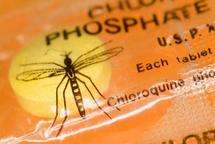
Fake drugs threaten control of malaria in Africa.
(Medical Xpress) -- The emergence of fake and poor quality anti-malarial drugs could dash hopes of controlling malaria in Africa, warn experts writing in the Malaria Journal. Millions of lives could be put at risk unless urgent action is taken, they argue.
The international team led by Oxford University researchers report cases where medicines are on sale in Africa that have been deliberately counterfeited by criminals or are of poor quality resulting from factory errors.
Not only are these drugs potentially harmful to the patient, but they risk promoting the emergence of drug resistance among the parasites that cause malaria.
The Wellcome Trust-funded researchers examined anti-malarials collected in 11 African countries between 2002 and 2010, which they believed to be either fake or substandard.
Their analysis showed that some counterfeits contained a mixture of the wrong pharmaceutical ingredients, some of which may initially alleviate malaria symptoms but would not cure malaria. Worse still, these unexpected ingredients could cause potentially serious side effects, particularly if they were to interact with other drugs the patient was taking, such as antiretroviral therapies for HIV.
Some of the fake drugs also contained small amounts of artemisinin derivatives, the most effective anti-malarial drugs available, perhaps to try to ensure that the drug would pass simple authenticity tests.
But taken at such low levels, the drug is unlikely to rid the body of malaria parasites, and could lead to the emergence of resistance to artemisinin.
The researchers also identified pollen found in some of the tablets which indicated that the counterfeits originated in eastern Asia.
In 2001, police in Guangzhou, China, arrested Nigerian and Chinese men for production of counterfeits of the anti-malarial halofantrine. No evidence was found from the pollen analysis of counterfeit pharmaceutical production in Africa.
However, production facilities for packaging materials for counterfeit anti-malarials have been seized in Nigeria.
PPublic health organizations must take urgent, coordinated action to prevent the circulation of counterfeit and substandard medicines and improve the quality of the medicines that patients receive," says lead researcher Dr. Paul Newton of Oxford University, who is based in Laos where he leads the Wellcome Trust-Mahosot Hospital-Oxford University Tropical Medicine Research Collaboration.
Malaria is estimated to kill around 800,000 people each year, mainly young children and pregnant women. The most effective anti-malarial drugs are the artemisinin derivatives. Fears over the development of resistance mean that they are recommended to be used with one or more other drugs as artemisinin-based combination therapies (ACTs).
Dr. Newton adds: "The enormous investment in the development, evaluation and deployment of anti-malarials is wasted if the medicines that patients actually take are, due to criminality or carelessness, of poor quality and do not cure.
"Malaria can be readily treated with the right drugs of good quality, but poor quality medicines, as well as increasing mortality and morbidity, risk exacerbating the economic and social impact of malaria on societies that are already poor. Worse still, they encourage drug resistance, potentially resulting in the failure of artemisinin treatments, with profound consequences for public health in Africa.'
Dr. Newton and colleagues argue that multiple parallel strategies are needed to tackle this problem. Their recommendations include increased investment in national medicine regulatory authorities in Africa and improving access to good quality, affordable artemisinin combination therapies.
"Failure to take action will put at risk the lives of millions of people, particularly children and pregnant women," says Dr. Newton.
Provided by
Oxford University
-
Fake malaria drugs a growing problem: experts
Dec 05, 2011 |
not rated yet |
0
-
Study finds evidence of fake malaria drugs being manufactured in China
Feb 12, 2008 |
not rated yet |
0
-
Drug-resistant malaria has emerged in Cambodia
Jul 29, 2009 |
not rated yet |
0
-
Natural compounds: the future of anti-malarial treatment
Mar 14, 2011 |
not rated yet |
0
-
Screening effort turns up multiple potential anti-malaria compounds
Aug 04, 2011 |
not rated yet |
0
-
Motion perception revisited: High Phi effect challenges established motion perception assumptions
Apr 23, 2013 |
3 / 5 (2) |
2
-
Anything you can do I can do better: Neuromolecular foundations of the superiority illusion (Update)
Apr 02, 2013 |
4.5 / 5 (11) |
5
-
The visual system as economist: Neural resource allocation in visual adaptation
Mar 30, 2013 |
5 / 5 (2) |
9
-
Separate lives: Neuronal and organismal lifespans decoupled
Mar 27, 2013 |
4.9 / 5 (8) |
0
-
Sizing things up: The evolutionary neurobiology of scale invariance
Feb 28, 2013 |
4.8 / 5 (10) |
14
-
Classical and Quantum Mechanics via Lie algebras
Apr 15, 2011
- More from Physics Forums - Independent Research
More news stories
UN reports 22 deaths worldwide from coronavirus
A new coronavirus has now claimed 22 lives worldwide out of 44 lab-confirmed cases, mostly in Saudi Arabia, World Health Organization officials said Thursday.
Diseases, Conditions, Syndromes
2 hours ago |
not rated yet |
0
Researchers suggest boosting body's natural flu killers
A known difficulty in fighting influenza (flu) is the ability of the flu viruses to mutate and thus evade various medications that were previously found to be effective. Researchers at the Hebrew University of Jerusalem have ...
Diseases, Conditions, Syndromes
3 hours ago |
not rated yet |
0
|
Swine flu pandemic of 2009 more deadly for younger adults, study finds
As the world prepares for what may be the next pandemic strain of influenza virus, in the H7N9 bird flu, a new UC Irvine study reveals that the 2009 H1N1 swine flu pandemic was deadliest for people under the age of 65, while ...
Diseases, Conditions, Syndromes
22 hours ago |
not rated yet |
0
Polio cases found in Kenya and Somalia, WHO says
The World Health Organization says the Horn of Africa is experiencing an outbreak of polio with cases confirmed in Kenya and Somalia.
Diseases, Conditions, Syndromes
22 hours ago |
not rated yet |
0
SARS-like virus claims new life in Saudi
A man who had contracted the coronavirus has died in Saudi Arabia, raising the death toll in the kingdom from the SARS-like virus to 17, the health ministry announced on its website on Wednesday.
Diseases, Conditions, Syndromes
22 hours ago |
not rated yet |
0
Drug reverses Alzheimer's disease deficits in mice, research confirms
An anti-cancer drug reverses memory deficits in an Alzheimer's disease mouse model, University of Pittsburgh Graduate School of Public Health researchers confirm in the journal Science.
Economic incentives increase blood donation without negative consequences
Can economic incentives such as gift cards, T-shirts, and time off from work motivate members of the public to increase their donations of blood?
Scientists discover molecule triggers sensation of itch
Scientists at the National Institutes of Health report they have discovered in mouse studies that a small molecule released in the spinal cord triggers a process that is later experienced in the brain as the sensation of ...
Multiple research teams unable to confirm high-profile Alzheimer's study
Teams of highly respected Alzheimer's researchers failed to replicate what appeared to be breakthrough results for the treatment of this brain disease when they were published last year in the journal Science.
Motion quotient: IQ predicted by ability to filter motion (w/ video)
A brief visual task can predict IQ, according to a new study. This surprisingly simple exercise measures the brain's unconscious ability to filter out visual movement. The study shows that individuals whose ...
Researchers find common childhood asthma unconnected to allergens or inflammation
Little is known about why asthma develops, how it constricts the airway or why response to treatments varies between patients. Now, a team of researchers at Weill Cornell Medical College, Columbia University Medical Center ...