Study reveals origins of esophageal cancer
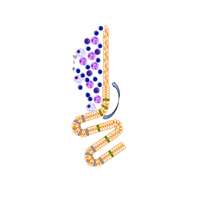
(Medical Xpress) -- Researchers at Columbia University Medical Center (CUMC) have identified the critical early cellular and molecular events that give rise to a type of esophageal cancer called esophageal adenocarcinoma, the fastest-rising solid tumor in the United States. The findings, published online today in Cancer Cell, challenge conventional wisdom regarding the origin and development of this deadly cancer and its precursor lesion, Barrett's esophagus, and highlight possible targets for new clinical therapies.
Lacking a good animal model of esophageal adenocarcinoma (EAC), researchers have been hard pressed to explain exactly where and how this cancer arises. What is known is that EAC is usually triggered by gastroesophageal reflux disease (GERD), in which bile acid and other stomach contents leak backwards from the stomach to the esophagus, the muscular tube that moves food from the mouth to the stomach. Over time, acid reflux can irritate and inflame the esophagus, leading to Barrett's esophagus, an asymptomatic precancerous condition in which the tissue lining the esophagus is replaced by tissue similar to the lining of the intestine. A small number of people with Barrett's esophagus eventually go on to develop EAC.
Using a new genetically engineered mouse model of esophagitis, the CUMC researchers have clarified critical cellular and molecular changes that occur during the development of Barrett's esophagus and EAC. In human patients, acid reflux often leads to overexpression of a molecule called interleukin-1 beta, an important mediator of the inflammatory response, reported study leader Timothy C. Wang, MD, the Dorothy L. and Daniel H. Silberberg Professor of Medicine at CUMC. Thus, Wang and his colleagues created a transgenic mouse in which interleukin-1 beta was overexpressed in the esophagus.
Overexpression of interleukin-1 beta in the mouse esophagus resulted in chronic esophageal inflammation (esophagitis) and expansion of progenitor cells that were sustained by the notch signaling pathway. Notch is a fundamental signaling system used by neighboring cells to communicate with each other in order to assume their proper developmental role. "When we inhibited notch signaling, that blocked proliferation and survival of the pre-malignant cells, so that's a new possible clinical strategy to use in Barrett's patients at high risk for cancer development," noted Dr. Wang.
For decades, investigators thought that the physiological changes associated with Barrett's esophagus originate in the lower esophagus. "However, our study shows that Barrett's esophagus actually arises in the gastric cardia, a small region between the lower part of the esophagus and the upper, acid-secreting portion of the stomach," said Dr. Wang. "What happens is that the bile acid and inflammatory cytokines activate stem cells at this transition zone, and they begin migrating up toward the esophagus, where they take on this intestinal-like appearance."
The researchers also demonstrated that these changes occur primarily in columnar-like epithelial cells, rather than in goblet cells, as was previously thought.
"All told, the findings present a new model for the pathogenesis of Barrett's esophagus and esophageal adenocarcinoma," said Dr. Wang.
Barrett's esophagus affects about 1 percent of adults in the United States. Men are affected by Barrett's esophagus twice as frequently as women, and Caucasian men are affected more frequently than men of other races. The average age at diagnosis is 50. At present, there is no way to determine which patients with the condition will develop EAC. EAC is increasing in incidence about 7 to 8 percent a year, making it the most rapidly rising solid tumor in the U.S.
Treatment with acid-reducing drugs can lessen symptoms of GERD and lower the chances of developing Barrett's esophagus and EAC. Low-grade EAC is highly treatable with endoscopic radiofrequency ablation, photodynamic therapy, or surgical resection. Patients with severe disease may require open surgery, in which most of the esophagus is removed. The overall five-year survival rate with advanced disease is about 25 percent.
More information: "Bile acid and inflammation activate gastric cardia stem cells in a mouse model of Barrett's-like metaplasia," Cancer Cell. www.sciencedirect.com/science/ … ii/S1535610811004740


