Many elderly now bring companion on doctor's visit
February 24, 2012 By Serena Gordon, HealthDay Reporter in Health
Findings might expand definition of patient's medical team, researcher says.
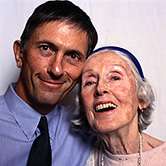
(HealthDay) -- About one-third of seniors still living on their own take a companion -- usually a spouse or other family member -- to their routine doctor's office visits, researchers report.
And they tend to bring the same companion to each visit, which may present the health care system with another important member of a patient's medical team, the study's authors suggested.
"This raises some possibilities for quality improvement initiatives for patients and their companions together," said lead study author Jennifer Wolff, an associate professor of health policy and management at the Johns Hopkins Bloomberg School of Public Health in Baltimore.
However, further research is necessary to define the companion's role and figure out how to best support and include the companion in a loved one's health care, she said.
For the study, the researchers looked at data from a nationally representative Medicare beneficiary study completed in 2006. This survey had information on almost 11,600 community-dwelling adults over 65 years old. The researchers also looked at a subset of more than 7,500 people from this group who had responded in 2005 and 2006 to determine the consistency of companion involvement.
The researchers found that nearly 19 percent of those who answered the survey were accompanied to physician office visits, and about 13 percent were accompanied to the doctor and received some sort of task assistance from the companion. That means a total of more than 31 percent took a companion with them to the doctor.
Twelve months later, three-quarters of these seniors were still accompanied to medical visits, almost always by the same person (88 percent).
Most of the time (about 93) these companions were family members, such as a spouse or adult child. Spouses were the companion more often than adult children.
The health of those who took a companion varied. A third reported being in excellent or very good health; another third said their health was good; and the final third reported being in fair or poor health, according to the study.
Most of those who took a companion (85 percent) were white, and many lived with either a spouse or an adult child.
For those who didn't need assistance with scheduling or other tasks, transportation was one reason for bringing a companion 42 percent of the time. For those who needed assistance, transportation was one of the reasons 69 percent of the time.
Other reasons cited for having a companion present during a medical visit included providing information to the doctor, taking notes, asking questions or explaining a doctor's instructions.
Results of the study were published recently in the Journal of the American Geriatrics Society.
Debra Greenberg, a senior social worker in the division of geriatrics at Montefiore Medical Center in New York City, called the study "a really nice beginning of an exploration of this topic." But, she said, there was little variety in this particular population.
"I work with a very diverse population, and there are significant cultural differences that have to be addressed," she said. "In some cultures, you just don't talk about death and dying. And, some of the things we value as health care providers, like advanced directives and living wills, in some cultures, they think it's complete hubris to say you have control over the end of life."
She said that in a geriatric practice, physicians and other care providers often depend on reports from the people who accompany the older people to their appointments.
Wolff said there's a need for more research into this area. For example, how best can companions add to the health care relationship? For now, Wolff said people should talk with their spouse or parents and ask what they hope to get out of their physician visits. They should also ask how they can help. Do they want you to help remind them of the questions they wanted addressed, or would they rather that the companion asked the questions? She said it's helpful to set a framework for the appointment ahead of time.
More information: Learn more about involving loved ones in doctor visits from the U.S. National Institute on Aging.
Copyright © 2012 HealthDay. All rights reserved.
-
Going to physician visits with older loved ones could improve care
Jan 23, 2012 |
not rated yet |
0
-
The doctor will see all of you now? Group doctor visits may be feasible for Parkinson's disease
Apr 27, 2011 |
not rated yet |
0
-
Majority of Marylanders without advance medical directives
Feb 17, 2010 |
not rated yet |
0
-
Americans face barriers to health care beyond cost
Aug 19, 2011 |
not rated yet |
0
-
New report: Community health plans improving care for patients with chronic illnesses
Nov 30, 2011 |
not rated yet |
0
-
Motion perception revisited: High Phi effect challenges established motion perception assumptions
Apr 23, 2013 |
3 / 5 (2) |
2
-
Anything you can do I can do better: Neuromolecular foundations of the superiority illusion (Update)
Apr 02, 2013 |
4.5 / 5 (11) |
5
-
The visual system as economist: Neural resource allocation in visual adaptation
Mar 30, 2013 |
5 / 5 (2) |
9
-
Separate lives: Neuronal and organismal lifespans decoupled
Mar 27, 2013 |
4.9 / 5 (8) |
0
-
Sizing things up: The evolutionary neurobiology of scale invariance
Feb 28, 2013 |
4.8 / 5 (10) |
14
-
Classical and Quantum Mechanics via Lie algebras
Apr 15, 2011
- More from Physics Forums - Independent Research
More news stories
Consumers largely underestimating calorie content of fast food
People eating at fast food restaurants largely underestimate the calorie content of meals, especially large ones, according to a paper published today in BMJ.
Health
7 hours ago |
not rated yet |
0
It's not your imagination: Memory gets muddled at menopause
Don't doubt it when a woman harried by hot flashes says she's having a hard time remembering things. A new study published online in Menopause, the journal of The North American Menopause Society (NAMS), helps confirm with o ...
Health
8 hours ago |
not rated yet |
0
Farm bill: Senate rejects GMO labeling amendment
The Senate has overwhelmingly rejected an amendment allowing states to require labeling of genetically modified foods.
Health
9 hours ago |
not rated yet |
1
McDonald's can't shake criticism about nutrition
(AP)—McDonald's once again faced criticism that it's a purveyor of junk food that markets to children at its annual shareholder meeting Thursday.
Health
9 hours ago |
not rated yet |
0
Economic incentives increase blood donation without negative consequences
Can economic incentives such as gift cards, T-shirts, and time off from work motivate members of the public to increase their donations of blood?
Health
11 hours ago |
not rated yet |
0
|
Controlling mood through the motions of mitochondria
(Medical Xpress)—Regulating the distribution of power in neurons is done by a system that makes the national electric grid look simple by comparison. Each neuron has several thousand mitochondria confined ...
Motion quotient: IQ predicted by ability to filter motion (w/ video)
A brief visual task can predict IQ, according to a new study. This surprisingly simple exercise measures the brain's unconscious ability to filter out visual movement. The study shows that individuals whose ...
Multiple research teams unable to confirm high-profile Alzheimer's study
Teams of highly respected Alzheimer's researchers failed to replicate what appeared to be breakthrough results for the treatment of this brain disease when they were published last year in the journal Science.
Scientists discover molecule triggers sensation of itch
Scientists at the National Institutes of Health report they have discovered in mouse studies that a small molecule released in the spinal cord triggers a process that is later experienced in the brain as ...
Researchers find common childhood asthma unconnected to allergens or inflammation
Little is known about why asthma develops, how it constricts the airway or why response to treatments varies between patients. Now, a team of researchers at Weill Cornell Medical College, Columbia University Medical Center ...
ACP issues recommendations for management of high blood glucose in hospitalized patients
High blood glucose is associated with poor outcomes in hospitalized patients, and use of intensive insulin therapy (IIT) to control hyperglycemia is a common practice in hospitals. But the recent evidence does not show a ...