Scientists identify most lethal known species of prion protein
February 9, 2012 in Medical research

Scientists identify most lethal known species of prion protein

Enlarge

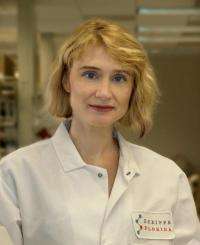
This is Scripps research professor Corinne Lasmézas. Credit: Photo by Randy Smith, courtesy of the Scripps Research Institute

Scientists from the Florida campus of The Scripps Research Institute have identified a single prion protein that causes neuronal death similar to that seen in "mad cow" disease, but is at least 10 times more lethal than larger prion species. This toxic single molecule or "monomer" challenges the prevailing concept that neuronal damage is linked to the toxicity of prion protein aggregates called "oligomers."

The study was published this week in an advance, online edition of the journal .

"By identifying a single molecule as the most of prion proteins, we've opened a new chapter in understanding how prion-induced neurodegeneration occurs," said Scripps Florida Professor Corinne Lasmézas, who led the new study. "We didn't think we would find from this toxic so close to what normally happens in the disease state. Now we have a powerful tool to explore the mechanisms of neurodegeneration."

In the study, the newly identified toxic form of abnormal prion protein, known as TPrP, caused several forms of ranging from apoptosis (programmed cell death) to autophagy, the self-eating of cellular components, as well as molecular signatures remarkably similar to that observed in the brains of prion-infected animals. The study found the most toxic form of prion protein was a specific structure known as alpha-helical.

New Paths to Explore

In addition to the insights it offers into prion diseases such as "mad cow" and a rare human form Creutzfeldt-Jakob disease, the study opens the possibility that similar neurotoxic proteins might be involved in neurodegenerative disorders such as Alzheimer's and Parkinson diseases.

In prion disease, infectious prions (short for proteinaceous infectious particles), thought to be composed solely of protein, have the ability to reproduce, despite the fact that they lack DNA and RNA. Mammalian cells normally produce what is known as cellular prion protein or PrP; during infection with a prion disease, the abnormal or misfolded protein converts the normal host into its disease form.

Lasmézas explains that prion diseases are similar to Alzheimer's and other protein misfolding diseases in that they are caused by the toxicity of a misfolded host protein. Recent work, as reported in The New York Times, also found that diseases such as Alzheimer's resemble prion diseases by spreading from cell to cell.

The new study adds another twist. "Until now, it was thought that oligomers of proteins are toxic in all these diseases," Lasmézas said. "Since we found for the first time that an abnormally folded monomer is highly toxic, it opens up the possibility that this might be true also for some other protein misfolding diseases as well."

More information: The first author of the study, "Highly Neurotoxic Monomeric α-Helical Prion Protein," is Minghai Zhou of Scripps Research. Other authors include Gregory Ottenberg and Gian Franco Sferrazza also of Scripps Research. For more information on the study, see www.pnas.org/conte… 109.abstract

Provided by The Scripps Research Institute search and more info website

4.8 /5 (9 votes)  

Filter


Move the slider to adjust rank threshold, so that you can hide some of the comments.


Display comments: newest first

that_guy
Feb 09, 2012

Rank: not rated yet
Science: Finding new a horrible ways for us to kill ourselves since 1280 bc. :p
Telekinetic
Feb 09, 2012

Rank: not rated yet
The researcher in the photo really should've worn a mask while handling the prions.
Rank 4.8 /5 (9 votes)
Relevant PhysicsForums posts

More news stories

Now we know why old scizophrenia medicine works on antibiotics-resistant bacteria

In 2008 researchers from the University of Southern Denmark showed that the drug thioridazine, which has previously been used to treat schizophrenia, is also a powerful weapon against antibiotic-resistant bacteria such as ...

Medical research created 17 hours ago | popularity 3.7 / 5 (3) | comments 0 | with audio podcast

SUMO wrestling cells reveal new protective mechanism target for stroke

Scientists investigating the interaction of a group of proteins in the brain responsible for protecting nerve cells from damage have identified a new target that could increase cell survival.

Medical research created 23 hours ago | popularity 5 / 5 (1) | comments 0

How serotonin receptors can shape drug effects, from LSD to migraine medication

New findings by researchers carrying out experiments at the U.S. Department of Energy Office of Science's Advanced Photon Source (APS) help explain why some drugs that interact with two kinds of human serotonin ...

Medical research created May 17, 2013 | popularity not rated yet | comments 0 | with audio podcast

Preventing blood poisoning

Peptide molecules derived from the body's natural immune system can help boost the body's defence against life-threatening blood poisoning, joint University research has uncovered.

Medical research created May 17, 2013 | popularity 4 / 5 (1) | comments 0 | with audio podcast

New mechanism to prevent type 2 diabetes in obese individuals

A new Montréal study conducted by Dr. May Faraj, associate research professor at the Université de Montréal and invited scientist at the IRCM, along with her research team and medical collaborators, shows ...

Medical research created May 17, 2013 | popularity not rated yet | comments 0 | with audio podcast


AIDS science at 30: 'Cure' now part of lexicon

Big names in medicine are set to give an upbeat assessment of the war on AIDS on Tuesday, 30 years after French researchers identified the virus that causes the disease.

For combat veterans suffering from post-traumatic stress disorder, 'fear circuitry' in the brain never rests

Chronic trauma can inflict lasting damage to brain regions associated with fear and anxiety. Previous imaging studies of people with post-traumatic stress disorder, or PTSD, have shown that these brain regions can over-or ...

Melon focus headband turns to Kickstarter for rollout plans

(Medical Xpress)—What if the quality of your work depends more on your focus on the piano keys or canvas or laptop than your musical or painting or computing skills? If target users can be convinced, they ...

Temporal processing in the olfactory system

The neural machinery underlying our olfactory sense continues to be an enigma for neuroscience. A recent review in Neuron seeks to expand traditional ideas about how neurons in the olfactory bulb might encode information about ...

Individuals who drink heavily and smoke may show 'early aging' of the brain

Treatment for alcohol use disorders works best if the patient actively understands and incorporates the interventions provided in the clinic. Multiple factors can influence both the type and degree of neurocognitive abnormalities ...

College women exceed NIAAA drinking guidelines more frequently than college men

In order to avoid harms associated with alcohol consumption, in 2009 the National Institute on Alcohol Abuse and Alcoholism issued guidelines that define low-risk drinking. These guidelines differ for men and women: no more ...