Skin tests catch metal sensitivity before joint replacement
February 24, 2012 in Other

Skin tests catch metal sensitivity before joint replacement

In affected patients, testing allows surgeons to avoid that metal when choosing implants.

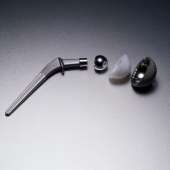
(HealthDay) -- Testing patients for metal hypersensitivity before they receive joint or bone implants helps identify those at increased risk for complications due to metal hypersensitivity, a new study shows.

The researchers noted that nickel is a common component in (a mixture of two or more metals) and is also a leading cause of contact (allergic skin reaction) associated with metals.

The study included 31 patients who underwent testing for metal before receiving joint or bone implants (preimplantation group) and 41 who were tested after they received an implant (postimplantation group).

Among those in the preimplantation group, 21 (68 percent) reacted to one metal and 15 reacted to more than one metal. For all patients who reacted to metals, surgeons used an implant that did not include metal. None of these patients developed skin problems or early joint loosening during follow-up.

Among those in the postimplantation group, those with a positive skin patch test were much more likely to have a clinical history of metal hypersensitivity than those without a positive result.

at the site of the implanted metal device was the most common reason why patients in this group were referred for a patch test. Ten patients had at least one positive patch test to a metal that was a component of their implant. Six of those patients had the implant removed and their symptoms ceased. The four patients who did not have their implants removed continued to experience problems.

"In conclusion, the results of this study support the value of patch testing for patients with a clinical history of metal hypersensitivity before in bone or a joint as a safe measure to avoid complications," wrote Dr. Natasha Atanaskova Mesinkovska and colleagues with the Cleveland Clinic, in a journal news release.

"The study confirms the need for surgeons and dermatologists to work together and establish guidelines with a goal to identify patients who would benefit from revisions of previously implanted metal," they added.

The study appeared online Feb. 20 in the journal Archives of Dermatology.

More information: The U.S. National Institute of Arthritis and Musculoskeletal and Skin Diseases has more about joint replacement.

Copyright © 2012 HealthDay. All rights reserved.

not rated yet  

Rank not rated yet
Relevant PhysicsForums posts

More news stories

Food laboratory accuracy remains a concern

Food microbiology laboratories continue to submit false negative results and false positive results on a routine basis. A retrospective study of nearly 40,000 proficiency test results over the past 14 years, presented today ...

Other created 2 hours ago | popularity not rated yet | comments 0

Wireless ultrasound transducers help physicians

Siemens has presented the world's first ultrasound system with wireless transducers. The system's transducers, which can be easily operated with one hand, transmit ultrasound images via radio waves to the ...

Other created 7 hours ago | popularity not rated yet | comments 0

Flesh-eating disease victim gets prosthetic hands

(AP)—A woman who lost both hands, her left leg and right foot after contracting a flesh-eating disease has been fitted with prosthetic hands.

Other created May 18, 2013 | popularity not rated yet | comments 0

Illinois Senate approves medical marijuana bill

(AP)—Medical marijuana use in Illinois is now in Gov. Pat Quinn's hands after the state Senate approved legislation.

Other created May 17, 2013 | popularity 5 / 5 (1) | comments 1

Nigerian court jails two over killer teething drug

A Nigerian court on Friday sentenced two officials from a pharmaceutical company to seven years in prison over the sale of an adulterated teething drug which killed 84 babies in 2008.

Other created May 17, 2013 | popularity not rated yet | comments 0


Do salamanders hold the solution to regeneration?

Salamanders' immune systems are key to their remarkable ability to regrow limbs, and could also underpin their ability to regenerate spinal cords, brain tissue and even parts of their hearts, scientists have ...

Scientists identify molecular trigger for Alzheimer's disease

Researchers have pinpointed a catalytic trigger for the onset of Alzheimer's disease – when the fundamental structure of a protein molecule changes to cause a chain reaction that leads to the death of neurons ...

Study shows premature birth interrupts vital brain development processes leading to reduced cognitive abilities

Researchers from King's College London have for the first time used a novel form of MRI to identify crucial developmental processes in the brain that are vulnerable to the effects of premature birth. This new study, published ...

Leading explanations for whooping cough's resurgence don't stand up to scrutiny

Whooping cough has exploded in the United States and some other developed countries in recent decades, and many experts suspect ineffective childhood vaccines for the alarming resurgence.

CT radiation risk less than risk of examination indicator

(HealthDay)—For young adults needing either a chest or abdominopelvic computed tomography (CT), the short-term risk of death from underlying morbidity is greater than the long-term risk of radiation-induced ...

Music therapy reduces anxiety, use of sedatives for patients receiving ventilator support

New research suggests that for some hospitalized ICU patients on mechanical ventilators, using headphones to listen to their favorite types of music could lower anxiety and reduce their need for sedative medications.