Diabetes groups issue new guidelines on blood sugar
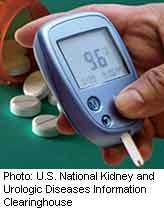
(HealthDay) -- Type 2 diabetes is a complex metabolic disorder, and treating the disease often requires a personalized, multi-pronged approach, say new expert guidelines on treating high blood sugar levels, issued Thursday.
The recommendations are a joint effort by the American Diabetes Association and the European Association for the Study of Diabetes.
"We're making a lot of progress in managing type 2 diabetes," said Dr. Vivian Fonseca, president of medicine and science for the American Diabetes Association. "The new guidelines are more patient-centered. The message is to choose an appropriate [blood sugar] goal based on the patient's current health status, motivation level, resources and complications."
"It is very possible to manage type 2 diabetes well and keep blood sugar under good control," he noted. "It's important that patients have a discussion with their doctor about what their [blood sugar] goals should be, and what is the best treatment or treatments to get them to that goal."
The new guidelines are scheduled to be published in the June issue of Diabetes Care, but were released online ahead of publication on April 19.
Fonseca said the new guidelines were necessary because the management of type 2 diabetes is becoming increasingly complex; there is a widening array of medications available to treat the disease, and new research studies are constantly being released highlighting both the benefits and the risks of current treatments.
The biggest change in the new guidelines is an emphasis on a patient-centered approach to treatment. For example, the blood sugar goal for someone who's young, healthy and motivated to manage type 2 diabetes will be lower than it is for someone who's elderly and has additional health problems.
Blood sugar goals are usually expressed in terms of hemoglobin A1C levels (HbA1C). HbA1C, often just referred to as A1C, is a measure of long-term blood sugar control. It gives an estimate of what the average blood sugar level has been for the past two to three months. A1C is expressed as a percentage, and in general, the goal for people with type 2 diabetes is to lower their A1C levels below 7 percent. Someone without diabetes generally has levels below 5.6 percent, according to the American Diabetes Association.
In the past, the below-7-percent goal was applied to most people with type 2 diabetes. But, the new guidelines note that more stringent goals, such as keeping A1C between 6 and 6.5 percent, might be appropriate for someone who has a long life expectancy, no history of heart disease and who hasn't experienced significant low blood sugar levels (hypoglycemia). Low blood sugar levels can be a potentially dangerous side effect of many diabetes treatments.
The new guidelines suggest that blood sugar targets should be looser (A1C between 7.5 and 8 percent) for people who are older than 65 or 70, because they're more at risk of having complications from hypoglycemia, as well as being more at risk of side effects from taking multiple medications.
Lifestyle changes remain an important part of any type 2 diabetes management plan in the new guidelines. The recommendations are to lose 5 percent to 10 percent of body weight, and to participate in modest exercise for at least two-and-a-half hours each week.
The medication metformin is also recommended as a first-line treatment for people with type 2 diabetes. Metformin works by making the body more receptive to the hormone insulin. Metformin therapy should begin as soon as someone is diagnosed with type 2 diabetes, unless they have a near-normal A1C and are highly motivated to make lifestyle changes, according to the guidelines. In such a case, doctors may choose to follow up with the patient in three to six months to see if the lifestyle changes have been effective. If not, metformin should be started.
The guidelines also recommend adding another drug to metformin therapy if blood sugar levels aren't under control after three months on metformin alone. Again, this is an area where the patient needs to be considered and consulted. Each additional treatment option has its own risks and benefits. Talk to your doctor about which might be right for you.
"The new guidelines take a patient-centered view: Treat the patient and not the blood sugar. The type of medication should be tailored to the pathophysiology of the patient," explained Dr. Joel Zonszein, director of the clinical diabetes center at Montefiore Medical Center in New York City.
"I feel that we need to have combination therapy much earlier in the disease, but the issue is that we don't have research data on combination therapy, and we need studies to know what are the best combinations. But, I believe it's important to be aggressive early in the disease to prevent complications," Zonszein said.
And, he added, although the current guidelines only cover the treatment of high blood sugar, it's also important to remember to control cholesterol and high blood pressure in people with type 2 diabetes.
More information: Learn more about the types of medications available to treat type 2 diabetes from the American Diabetes Association.
Copyright © 2012 HealthDay. All rights reserved.


