Gene mapping reveals architecture that controls expression of genes responsible for our sense of smell
May 18, 2012 in Genetics

On the scent of olfactory control

Enlarge

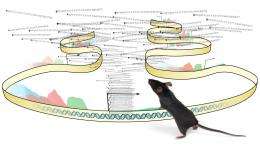
Figure 1: An artistic representation of how the nanoCAGE technique flags the gene promoters for the vast majority of mouse olfactory genes. Credit: 2012 Charles Plessy, RIKEN Omics Science Center

Within the nasal cavity, millions of sensory neurons in a postage-stamp-sized patch of tissue called the olfactory epithelium control our sense of smell. Thanks to the exquisitely controlled expression of some 300 different olfactory receptor genes, each neuron can detect a small number of distinct volatile odorants. How these genes are regulated, however, has long been a mystery.

Now, an international team led by RIKEN researchers has mapped the genomic architecture of the odorant receptor repertoire in mice, revealing the start points and promoter regions involved in controlling the expression of the vast majority of these genes. “Our study shows that these promoter sequences are strikingly similar between all the olfactory receptors,” says Charles Plessy of the RIKEN Omics Science Center in Yokohama, who led the study.

To chart all the promoters, Plessy and colleagues first had to devise an appropriate technique. Plessy’s collaborator, Piero Carninci also from the RIKEN Omics Science Center, had previously developed a method called cap-analysis gene expression (CAGE) that determines the location of transcription start sites across the whole genome. But CAGE requires large quantities of RNA, which are not always obtainable from particular types of tissues, including the olfactory epithelium. The researchers therefore modified CAGE to nanoCAGE, which requires as little as 10 nanograms of RNA of biological material per sample.

Both CAGE and nanoCAGE work by taking all the messenger RNA transcripts in a given sample, converting them into DNA tags and then comparing the output against a reference genome to find all the transcription start sites. The investigators can then decipher the conserved DNA regulatory sequences in the immediate vicinity of the starting points that form the core promoters.

Using this approach on the minute quantities of RNA found in the olfactory epithelium of mice, Plessy’s team plotted the promoters of almost 90% of the mouse olfactory receptor genes, as well as the expression of many non-coding regulatory RNAs (Fig. 1). Further bioinformatic analysis of the DNA surrounding the mapped promoters revealed a number of candidate transcription factor binding sites that help control gene expression, some of which the researchers also validated in mouse experiments.

Plessy and colleagues are now adapting the CAGE technique for even smaller biological samples: single cells. “Such a method would have wide applications in biology and medicine, and, of course, in the biology of olfactory receptors,” says Plessy. “With a single-cell technology we will have the potential to make a significant contribution to the field.”

More information: Plessy, C., et al. Promoter architecture of mouse olfactory receptor genes. Genome Research advance online publication, 22 December 2011 (doi: 10.1101/gr.126201.111).

Shiraki, T., et al. Cap analysis gene expression for high-throughput analysis of transcriptional starting point and identification of promoter usage. Proceedings of the National Academy of Sciences USA 100, 15776–15781 (2003).

Plessy, C., et al. Linking promoters to functional transcripts in small samples with nanoCAGE and CAGEscan. Nature Methods 7, 528–534 (2010).

Journal reference: Genome Research search and more info website Proceedings of the National Academy of Sciences search and more info website Nature Methods search and more info website

Provided by RIKEN search and more info website

5 /5 (1 vote)  

Filter


Move the slider to adjust rank threshold, so that you can hide some of the comments.


Display comments: newest first

JVK
May 19, 2012

Rank: not rated yet
This suggests to me that adaptation of the CAGE technique for single cells will allow them to detail how nutrient chemicals cause the receptor-mediated changes in intracellular signaling and stochastic gene expression that lead to de novo olfactory receptor gene expression. These are the changes that establish new nutrient dependent ecological niches accompanied by social niches that are standardized and controlled by pheromones. In the honeybee invertebrate model, and stickleback vertebrate model the nutrient chemicals and pheromones control brain development and speciation. Model organisms make clear the extension of the concept to nutrient chemical and pheromone-dependent human brain development and individual differences (especially sex differences) in behavior. So, why is this in the current news when it was first published in December?
Rank 5 /5 (1 vote)
Relevant PhysicsForums posts

More news stories

Researchers complete largest genetic sequencing study of human disease

Researchers from Queen Mary, University of London have led the largest sequencing study of human disease to date, investigating the genetic basis of six autoimmune diseases.

Genetics created 19 hours ago | popularity 4.7 / 5 (3) | comments 0 | with audio podcast

Researchers develop model for better testing, targeting of malignant peripheral nerve sheath tumors

University of Minnesota Medical School researchers from the Masonic Cancer Center, University of Minnesota, in partnership with the University's Brain Tumor Program, have developed a new mouse model of malignant peripheral ...

Genetics created May 20, 2013 | popularity 5 / 5 (1) | comments 0 | with audio podcast

Researchers identify new circadian clock component

Northwestern University scientists have shown a gene involved in neurodegenerative disease also plays a critical role in the proper function of the circadian clock.

Genetics created May 16, 2013 | popularity 3 / 5 (1) | comments 1 | with audio podcast

Returning genetic incidental findings without patient consent violates basic rights, experts say

Informed consent is the backbone of patient care. Genetic testing has long required patient consent and patients have had a "right not to know" the results. However, as 21st century medicine now begins to use the tools of ...

Genetics created May 16, 2013 | popularity 5 / 5 (1) | comments 3 | with audio podcast

Ethicists provide framework supporting new recommendations on reporting incidental findings in gene sequencing

In a paper published in Science Express, a group of experts led by bioethicists in the Center for Medical Ethics and Health Policy at Baylor College of Medicine provide a framework for the new American College of Medical Geneti ...

Genetics created May 16, 2013 | popularity not rated yet | comments 0


Researchers find possible 'master switch' in deadly brain cancer

(Medical Xpress)—Researchers at the University of Virginia School of Medicine have identified a promising target for treating glioblastoma, one that appears to avoid many of the obstacles that typically frustrate efforts ...

Depression linked to telomere enzyme, aging, chronic disease

(Medical Xpress)—The first symptoms of major depression may be behavioral, but the common mental illness is based in biology—and not limited to the brain.

Vaccine blackjack: IL-21 critical to fight against viral infections

(Medical Xpress)—Scientists at Emory Vaccine Center have shown that an immune regulatory molecule called IL-21 is needed for long-lasting antibody responses in mice against viral infections.

Fast-acting mothers' milk for healthier babies

Human breastmilk responds quickly to protect the child when there is an infection in mothers or babies, according to new international research led by The University of Western Australia.

Researchers develop sperm-sorting design that may aid couples undergoing in vitro fertilization

(Medical Xpress)—According to the World Health Organization, approximately 70 million couples experience infertility worldwide. Current data suggests that nearly one third of infertility disorders are due ...

Non-Hodgkin lymphoma survival doubles since early 1970s

More than half of patients diagnosed with Non-Hodgkin Lymphoma (NHL) are now surviving the disease thanks to improved diagnosis and treatment, according to a new report1 from Cancer Research UK.