Broken heart, broken bones: Falls among elderly tied to depression
June 15, 2012 in Health

Broken heart, broken bones: Falls among elderly tied to depression

Enlarge

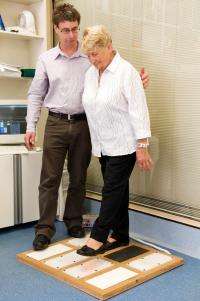
(Medical Xpress) -- A new NeuRA study has found that people suffering from depression are more likely to fall, pointing to a complex relationship between mental illness, a sense of balance, and falling in older people.

Falls are a major public health issue across the world as falling is a frequent cause of in older people.

Prof Stephen Lord at Australia (NeuRA) and colleagues studied a population of people 65 years of age and older in Taiwan.

“We’ve known that depression and falls are connected in older people for some time, but we were never able to determine whether depression itself or anti-depressants increase the rate of falling”, says Lord.

“But anti-depressants are not commonly taken by the people we studied and so for the first time we were able to measure lifestyle factors, rates of depression, and how often people fell without the effect of any depression-related medications”, Lord says.

This study means that in addition to enhancing vision, strength and balance, health programs around the world designed to prevent falling in older people also need to consider mental health.

“Now we know that depression and falls are interrelated, fall prevention strategies targeting older people need to also assess and treat depression to have the maximum impact”, Lord concluded.

This paper is published in the journal Age and Ageing.

Journal reference: Age and Ageing search and more info website

Provided by Neuroscience Research Australia search and more info website

not rated yet  

Rank not rated yet
Relevant PhysicsForums posts

More news stories

New research identifies risks, interventions for children's GI health

An increasing number of U.S. children are experiencing gastrointestinal issues that require interventions to resolve, according to research presented at Digestive Disease Week (DDW).

Health created 15 hours ago | popularity not rated yet | comments 0 | with audio podcast

Youth who have their first drink during puberty have higher levels of later drinking

Research shows that the earlier the age at which youth take their first alcoholic drink, the greater the risk of developing alcohol problems. Thus, age at first drink (AFD) is generally considered a powerful predictor of ...

Health created May 17, 2013 | popularity not rated yet | comments 0

British MPs concerned about parliamentary boozing

One quarter of British lawmakers believe there is an "unhealthy" drinking culture in the Houses of Parliament, according to a survey published on Friday.

Health created May 17, 2013 | popularity not rated yet | comments 0

Patient openness to research can depend on race and sex of study personnel

Researchers at the University of Cincinnati (UC) have found that the race and sex of study personnel can influence a patient's decision on whether or not to participate in clinical research.

Health created May 17, 2013 | popularity not rated yet | comments 0

Clinical support for patient self-management is rhetoric rather than reality

The processes to allow people to self-manage their own illness are not being used appropriately by health professionals to the benefit of their patients, new research suggests.

Health created May 17, 2013 | popularity not rated yet | comments 0


Consuming coffee linked to lower risk of detrimental liver disease, study finds

Regular consumption of coffee is associated with a reduced risk of primary sclerosing cholangitis (PSC), an autoimmune liver disease, Mayo Clinic research shows. The findings were being presented at the Digestive Disease ...

Ketamine shows significant therapeutic benefit in people with treatment-resistant depression

Patients with treatment-resistant major depression saw dramatic improvement in their illness after treatment with ketamine, an anesthetic, according to the largest ketamine clinical trial to-date led by researchers from the ...

Research examines new methods for managing digestive health

Research presented at Digestive Disease Week (DDW) explores new methods for managing digestive health through diet and lifestyle.

New research identifies practice changes to improve value and quality of GI procedures

There are significant cost and risk factors associated with two procedures commonly used to diagnose or treat gastrointestinal problems, according to research presented at Digestive Disease Week (DDW).

New smartphone application improves colonoscopy preparation

The use of a smartphone application significantly improves patients' preparation for a colonoscopy, according to new research presented today at Digestive Disease Week (DDW). The preparation process, which begins days in ...

US psychiatry gets makeover in new manual

The latest makeover to a massive psychiatric tome honored by some, reviled by others and even called the "Bible" of mental disorders is being released Saturday with a host of new changes.