Potential biomarker emerging for diabetic neuropathy
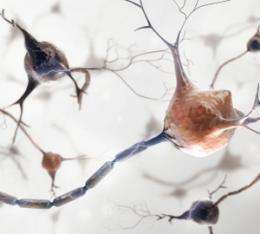
Nervous system
An emerging biomarker may eventually lead to new approaches for treating diabetics at risk of developing nerve damage, UNSW researchers have found.
The researchers say neuropathy in diabetic patients is under-diagnosed and early identification has been problematic. It is estimated that up to 50 per cent of diabetics end up with nerve damage.
They tested nerve excitability in diabetics with and without neuropathy and found those without irreversible nerve damage still showed excitability abnormalities well before the development of clinical symptoms.
Excitability testing provides a biomarker to identify the early development and severity of diabetic neuropathy, the key researcher Dr Cindy Lin said.
The research was led by UNSW and the School of Medical Sciences Dr Cindy Lin and is published in the journal Diabetes.
Professor Matthew Kiernan from UNSW says the research may lead to new therapeutic approaches for treating patients with diabetic neuropathy early.
It may yet prove possible to initiate therapy in diabetic patients well before they manifest the neurological symptoms and disability that inevitably reflects the presence clinical neuropathy, Professor Kiernan says in his commentary, also published in Diabetes.
Pharmacological manipulation of axonal membrane channels seems likely to provide further new therapeutic approaches for treating patients with diabetic neuropathy, he says.
Journal reference:
Diabetes
Provided by
University of New South Wales
-
To fix diabetic nerve damage, blood vessels and support cells may be the real targets of treatment
Jun 23, 2011 |
not rated yet |
0
-
AAN issues new guideline on best treatments for diabetic nerve pain
Apr 11, 2011 |
not rated yet |
0
-
Various metabolic risk factors could be linked to diabetes-related pain with major implications for treatment
May 17, 2012 |
not rated yet |
0
-
Bone marrow cells can heal nerves in diabetes model
Feb 04, 2009 |
not rated yet |
0
-
Erectile dysfunction study shows high prevalence of peripheral neuropathy
Nov 15, 2011 |
not rated yet |
0
-
Motion perception revisited: High Phi effect challenges established motion perception assumptions
Apr 23, 2013 |
3 / 5 (2) |
2
-
Anything you can do I can do better: Neuromolecular foundations of the superiority illusion (Update)
Apr 02, 2013 |
4.5 / 5 (11) |
5
-
The visual system as economist: Neural resource allocation in visual adaptation
Mar 30, 2013 |
5 / 5 (2) |
9
-
Separate lives: Neuronal and organismal lifespans decoupled
Mar 27, 2013 |
4.9 / 5 (8) |
0
-
Sizing things up: The evolutionary neurobiology of scale invariance
Feb 28, 2013 |
4.8 / 5 (10) |
14
-
Dipole term in multipole expansion
3 hours ago
-
Bubbles in a Pre-Boiling/Boiling pot of water
5 hours ago
-
Assumptions of Griffith's fracture theory
15 hours ago
-
Current leading voltage or vice versa concept
17 hours ago
-
Angular Frequency of AC voltage
20 hours ago
-
Modeling Rigid Body - Unsure about Euler angles and angular velocity
20 hours ago
- More from Physics Forums - Classical Physics
More news stories
Study shows that women who smoke during pregnancy increase the risk of both obesity and gestational diabetes in their da
Women who smoke during pregnancy increase the risk of both obesity and gestational diabetes, in their daughters, concludes research published in Diabetologia, the journal of the European Association for the Study of Diabet ...
Diabetes
23 hours ago |
not rated yet |
0
Rise in type 2 diabetes amongst young
The number of young people diagnosed with type 2 diabetes has seen the sharpest rise over the last twenty years compared to a background of a general increase across the board, new University research has ...
Diabetes
May 20, 2013 |
not rated yet |
0
Research uncovers a potential role of two proteins in diabetes
(Medical Xpress)—Flinders University researchers are breaking new ground in a decade-long journey to pinpoint the function of two closely related proteins.
Diabetes
May 20, 2013 |
5 / 5 (2) |
0
|
Exercise prevents fructose-induced hypertriglyceridemia
(HealthDay)—Moderate aerobic exercise prevents fructose-induced hypertriglyceridemia in healthy males, according to a study published online May 14 in Diabetes.
Diabetes
May 17, 2013 |
5 / 5 (1) |
0
|
DNA variant affects diabetes risk and treatment response
A DNA variant near a digestive enzyme does not only affect risk of developing diabetes but also affects the response to treatment, an international consortium of researchers including the University of Dundee has found.
Diabetes
May 17, 2013 |
not rated yet |
0
|
Reducing caloric intake delays nerve cell loss
Activating an enzyme known to play a role in the anti-aging benefits of calorie restriction delays the loss of brain cells and preserves cognitive function in mice, according to a study published in the May ...
Researchers find genetic risk factor for pulmonary fibrosis
A paper recently published in the New England Journal of Medicine and co-written by physicians and scientists at the University of Colorado School of Medicine finds that an important genetic risk factor for pulmonary fibros ...
Biomarkers discovered for inflammatory bowel disease
Using the Department of Defense Serum Repository (DoDSR), University of Cincinnati (UC) researchers have identified a number of biomarkers for inflammatory bowel disease (IBD), which could help with earlier diagnosis and ...
Changing cancer's environment to halt its spread
By studying the roles two proteins, thrombospondin-1 and prosaposin, play in discouraging cancer metastasis, a trans-Atlantic research team has identified a five-amino acid fragment of prosaposin that significantly reduces ...
Global recommendations on child medicine
Transparent information on the evidence supporting global recommendations on paediatric medicines should be easily accessible in order to help policy makers decides on what drugs to include in their national drug lists, according ...
Novel RNA-based classification system for colorectal cancer
A novel transcriptome-based classification of colon cancer that improves the current disease stratification based on clinicopathological variables and common DNA markers is presented in a study published in PLOS Medicine this w ...