New melanoma driver genes found in largest DNA sequencing study to date
July 29, 2012 By Helen Dodson in Genetics
The Yale study used DNA sequencing to obtain the most comprehensive picture yet of the molecular landscape of melanoma. (Illustration by Michael Helfenbein)
(Medical Xpress) -- Yale Cancer Center geneticists, biochemists, and structural biologists have painted the most comprehensive picture yet of the molecular landscape of melanoma, a highly aggressive and often deadly skin cancer. The study appears in the July 29 advance online publication of Nature Genetics.
Melanoma, precipitated mainly by excessive exposure to the suns ultra-violet (UV) radiation, causes the vast majority of all deaths related to skin cancer. There will be around 76,000 new cases of melanoma and 9,000 deaths from the disease in the United States this year.
The Yale study used powerful DNA sequencing technologies to examine 147 melanomas originating from both sun-exposed and sun-shielded sites.
The study revealed an excess of UV-induced mutations in sun-exposed melanomas. Most of these are passenger mutations that do not have a functional role in melanoma. We devised a mathematical model to sort out the relevant DNA alterations from over 25,000 total mutations, says lead author Michael Krauthammer, associate professor of pathology, who directed the bioinformatics effort of the study.
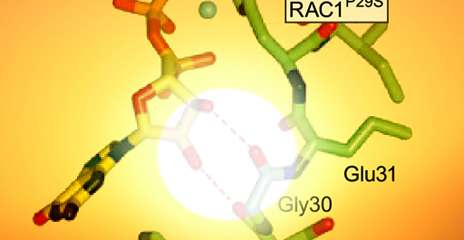
The analysis identified a frequent gain-of-function mutation in the RAC1 gene that has all the hallmarks of UV-damage. The study provided evidence that the mutant protein induces accelerated growth and movements among normal pigment cells, which are melanomas cells of origin. It likely occurs at an early stage of tumor development and promotes malignant cell growth and spread to distant sites, said corresponding author Ruth Halaban, senior research scientist at Yale School of Medicine and a member of Yale Cancer Center.
The Yale scientists say the RAC1 oncogenic mutation occurred in about 9% of melanomas from sun-exposed skin, and is the third most frequent mutation after the known BRAF and NRAS. They believe the prevalence of RAC1 mutation warrants development of therapies targeting that particular pathway.
The team also identified mutations that disable proteins known as tumor suppressors which suppress malignancy. Notably, the mutated protein known as PPP6C occurred only in tumors already mutated in BRAF and NRAS genes. Our study mapped out a new, cooperative pathway for cancer development, Halaban explained.
Finally, the study reveals new insights into the rarer melanomas from parts of the body shielded from the sun. Instead of mutations, these melanomas had duplicate copies of known oncogenes.
Journal reference:
Nature Genetics
Provided by Yale University
-
Sun exposure early in life linked to specific skin cancer gene mutation
Jun 09, 2007 |
not rated yet |
0
-
Researchers discover gene mutation that causes eye cancer
Dec 10, 2008 |
not rated yet |
0
-
Panel of melanoma mutations opens door to new treatment possibilities
Nov 15, 2011 |
not rated yet |
0
-
Second mutation in BRAF-mutated melanoma doesn't contribute to resistance
Apr 01, 2012 |
not rated yet |
0
-
Uncommon BRAF mutation in melanoma sensitive to MEK inhibitor drug therapy
Jul 16, 2012 |
not rated yet |
0
-
Motion perception revisited: High Phi effect challenges established motion perception assumptions
Apr 23, 2013 |
3 / 5 (2) |
2
-
Anything you can do I can do better: Neuromolecular foundations of the superiority illusion (Update)
Apr 02, 2013 |
4.5 / 5 (11) |
5
-
The visual system as economist: Neural resource allocation in visual adaptation
Mar 30, 2013 |
5 / 5 (2) |
9
-
Separate lives: Neuronal and organismal lifespans decoupled
Mar 27, 2013 |
4.9 / 5 (8) |
0
-
Sizing things up: The evolutionary neurobiology of scale invariance
Feb 28, 2013 |
4.8 / 5 (10) |
14
-
Classical and Quantum Mechanics via Lie algebras
Apr 15, 2011
- More from Physics Forums - Independent Research
More news stories
Researchers develop model for better testing, targeting of malignant peripheral nerve sheath tumors
University of Minnesota Medical School researchers from the Masonic Cancer Center, University of Minnesota, in partnership with the University's Brain Tumor Program, have developed a new mouse model of malignant peripheral ...
Genetics
May 20, 2013 |
5 / 5 (1) |
0
|
Researchers identify new circadian clock component
Northwestern University scientists have shown a gene involved in neurodegenerative disease also plays a critical role in the proper function of the circadian clock.
Genetics
May 16, 2013 |
3 / 5 (1) |
1
|
Returning genetic incidental findings without patient consent violates basic rights, experts say
Informed consent is the backbone of patient care. Genetic testing has long required patient consent and patients have had a "right not to know" the results. However, as 21st century medicine now begins to use the tools of ...
Genetics
May 16, 2013 |
5 / 5 (1) |
3
|
Ethicists provide framework supporting new recommendations on reporting incidental findings in gene sequencing
In a paper published in Science Express, a group of experts led by bioethicists in the Center for Medical Ethics and Health Policy at Baylor College of Medicine provide a framework for the new American College of Medical Geneti ...
Genetics
May 16, 2013 |
not rated yet |
0
Experts urge caution over use of new genetic sequencing techniques
The use of genome-wide analysis (GWA), where the entirety of an individual's DNA is examined to look for the genomic mutations or variants which can cause health problems is a massively useful technology for diagnosing disease. ...
Genetics
May 16, 2013 |
not rated yet |
0
New sleeping pill poised to hit US markets
An experimental sleeping pill from US drug company Merck is effective at helping people fall and stay asleep, according to reviewers at the US Food and Drug Administration, which could soon approve the new drug.
If you can remember it, you can remember it wrong
(Medical Xpress)—Native peoples in regions where cameras are uncommon sometimes react with caution when their picture is taken. The fear that something must have been stolen from them to create the photo ...
Reducing caloric intake delays nerve cell loss
Activating an enzyme known to play a role in the anti-aging benefits of calorie restriction delays the loss of brain cells and preserves cognitive function in mice, according to a study published in the May ...
B vitamins could delay dementia
(Medical Xpress)—Despite spending billions of dollars on research and development, drug companies have been unable to come up with effective treatments for dementia and Alzheimer's Disease (AD). Now, A. ...
Antidepressant reduces stress-induced heart condition
A drug commonly used to treat depression and anxiety may improve a stress-related heart condition in people with stable coronary heart disease, according to researchers at Duke Medicine.
Changing cancer's environment to halt its spread
By studying the roles two proteins, thrombospondin-1 and prosaposin, play in discouraging cancer metastasis, a trans-Atlantic research team has identified a five-amino acid fragment of prosaposin that significantly reduces ...