Adolescent smokers have artery damage
Adolescent smokers have thicker artery walls indicative of early development of atherosclerosis, according to research presented today at the ESC Congress. The findings from the Sapaldia Youth Study were presented by Dr Julia Dratva from Switzerland.
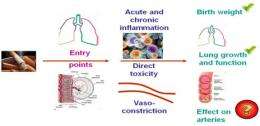
Early exposure to tobacco smoke is associated with various adverse health outcomes in children and adolescents, including low birth weight and impaired lung growth and function. Tobacco smoke is considered highly atherogenic in adults, but little is known about the impact of tobacco smoke exposure on cardiovascular health in adolescents. Children and adolescents are exposed to tobacco smoke through passive and active smoking.
Atherosclerosis is a multi-factorial disease which begins in childhood and in utero. Tobacco smoke exerts its effects through toxic compounds which cross the placental barrier and alveolar wall of the lungs. This leads to increased local and systemic inflammation.
The Swiss Study on Air Pollution And Lung and Heart Disease In Adults (SAPALDIA) is a multicentre study of nearly 10,000 subjects. The SAPALDIA Youth Study included 351 offspring of SAPALDIA participants aged 8 -20 years. It investigated the cardiovascular risk profile and the association between active smoking and carotid artery intima-media thickness (CIMT), an early indicator of atherosclerotic changes in the vessel wall.
For the current study presented at the ESC Congress, 288 of the offspring underwent a clinical examination following a standardized protocol: anthropometry, blood pressure, ultrasound CIMT assessment, and blood tests for cardiovascular biomarkers. Subjects reported their level of physical activity, smoking status and exposure to passive smoking. Cotinine testing was used to validate smoking status and exposure to passive smoke.
Regular current smoking (daily/weekly) was reported by 11% of the 288 offspring (mean age 15 years; 53% girls) and by 15% when including less frequent smokers (monthly). Mean smoking duration was 2.3+1.98 years in ever-smokers. Exposure to passive smoke up to 10 years of age was reported by 31% of subjects and current parental smoking by 25%. Three per cent of adolescents were obese, 13% overweight and 60% reported less than 4 hours of either strenuous or moderate activity per week. Parental history of cardiovascular disease or cardiovascular risk factors were present in 22% of the participants.
CIMT is an accepted indicator of atherosclerosis in all age groups. In this study the mean CIMT in all subjects was 0.50+0.08mm. Multivariate regression analyses showed a significant effect of regular current smoking, with an increase in CIMT of 0.043mm (95%CI=0.014-0.073). "The results remained consistent when adjusting additionally for parental smoking, which means that the association observed was not confounded by parental smoking," said Dr Dratva. "Smoking duration was positively associated with CIMT, showing that the longer subjects smoked, the greater their carotid artery intima-media thickness." The independent role of passive smoking on the artery wall in childhood is currently being investigated in the SAPALDIA Youth Study.
She added: "Our study in adolescents addresses important early risk factors of cardiovascular health in adolescents. After a relatively short duration of active smoking, the vascular structure already shows signs of structural changes, compared to non-smoking adolescents. These results give evidence of an early adverse impact of active tobacco exposure on the vasculature, which is indicative of early development of atherosclerosis."
Dr Dratva continued: "Urgent action is needed to help adolescent smokers kick the habit and stop others from taking up smoking. More research is required to determine whether the damage to the vascular structure of smoking adolescents is reversible if they quit smoking."


