High-risk heterosexuals should take HIV prevention pill, too
August 10, 2012 in HIV & AIDS

High-risk heterosexuals should take HIV prevention pill, too

More than 1 in 4 new HIV infections in U.S. in 2009 involved heterosexuals, research shows.

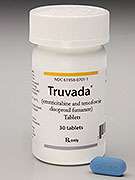
(HealthDay) -- Doctors should consider prescribing the HIV prevention pill Truvada to their heterosexual patients who are at high risk for the virus, not just high-risk gay and bisexual men, experts from the U.S. Centers for Disease Control and Prevention said on Thursday.

The CDC announcement comes on the heels of recent research that revealed that 27 percent of new HIV cases in the United States in 2009 involved heterosexuals who were not injection-drug users. Based on these findings, government health officials advised that the once-a-day pill can also help prevent in high-risk heterosexual men and women.

Last month, the U.S. approved the use of Truvada for the reduction of risk for sexual acquisition of HIV infection among adults, including both heterosexuals and gay or bisexual men.

The newly updated CDC guidelines are an attempt to prevent the spread of HIV through heterosexual sex. U.S. health officials noted that Truvada, when taken regularly in combination with other preventative measures, can offer an additional layer of protection for heterosexual men and women at high risk for infection with the virus that causes AIDS.

The CDC is not recommending Truvada for all heterosexuals who are sexually active, and they stress that the condom remains a good first line of defense against HIV. However, couples in which one member is HIV-positive and the other is uninfected may look to Truvada as an option in addition to . And if such a couple wanted to have a baby, Truvada might be a good option in that case as well, Dr. Dawn Smith, the CDC physician who was lead author of the new guidance, told the Associated Press.

advised, however, that doctors who consider prescribing the anti- for their high-risk heterosexual patients should be certain these men and women are not already infected with the virus. Doctors should also continuously monitor their patients' and provide this high-risk group with regular counseling on other ways to prevent the spread of HIV, such as practicing safe sex.

High-risk heterosexuals are "not a portion of the epidemic we want to ignore," Smith, of the CDC's National Center for HIV/AIDS, Viral Hepatitis, STD and TB Prevention, told AP.

When used as a preventive, the daily pill costs between $6,000 and $12,000 a year, although some private insurers and Medicaid programs may cover it, Smith added.

Although , made by Gilead Sciences, has been approved since 2004, the CDC authors noted that guidelines on the use of the drug will be updated as more information on its efficacy and safety for all groups at risk for HIV becomes available from additional studies.

In the United States, an estimated 48,100 new HIV infections occurred in 2009, the authors noted in background information in the report, which was published in the Aug. 10 issue of the CDC's Morbidity and Mortality Weekly Report.

More information:
Find out more about HIV/AIDS at AIDS.gov.

Journal reference: Morbidity and Mortality Weekly Report search and more info website

Copyright © 2012 HealthDay. All rights reserved.

not rated yet  

Rank not rated yet
Related Stories
Relevant PhysicsForums posts

More news stories

Engineered cytomegalovirus protects monkeys from HIV equivalent

(Medical Xpress)—A new study by researchers in the US has shown that an ancient virus can be modified to help in the fight against the simian immunodeficiency virus SIV, which is the equivalent in monkeys ...

HIV & AIDS created 19 hours ago | popularity 5 / 5 (3) | comments 0 | with audio podcast report

New microsphere-based methods for detecting HIV antibodies

Detection of HIV antibodies is used to diagnose HIV infection and monitor trials of experimental HIV/AIDS vaccines. New, more sensitive detection systems being developed use microspheres to capture HIV antibodies ...

HIV & AIDS created May 23, 2013 | popularity 5 / 5 (1) | comments 0

Fecal microbiota tx feasible for recurrent C. difficile in HIV

(HealthDay)—For HIV-infected individuals with recurrent Clostridium difficile infection, fecal microbiota therapy is feasible, according to a letter published in the May 21 issue of the Annals of Intern ...

HIV & AIDS created May 22, 2013 | popularity not rated yet | comments 0

Canada lifts ban on gay men donating blood

Canadian health authorities lifted Wednesday what was effectively a ban on gay men giving blood, announcing new rules making men who have not had sex with men in the past five years eligible.

HIV & AIDS created May 22, 2013 | popularity not rated yet | comments 1

AIDS scientists optimistic of AIDS cure, for some

Top AIDS scientists were optimistic Wednesday of finding a cure for the disease that has claimed 30 million lives—but said it might not work for all people.

HIV & AIDS created May 22, 2013 | popularity not rated yet | comments 0


Researchers identify first drug targets in childhood genetic tumor disorder

Two mutations central to the development of infantile myofibromatosis (IM)—a disorder characterized by multiple tumors involving the skin, bone, and soft tissue—may provide new therapeutic targets, according to researchers ...

Hormone levels may provide key to understanding psychological disorders in women

Women at a particular stage in their monthly menstrual cycle may be more vulnerable to some of the psychological side-effects associated with stressful experiences, according to a study from UCL.

Going live: Immune cell activation in multiple sclerosis

Biological processes are generally based on events at the molecular and cellular level. To understand what happens in the course of infections, diseases or normal bodily functions, scientists would need to ...

Help at hand for people with schizophrenia

How can healthy people who hear voices help schizophrenics? Finding the answer for this is at the centre of research conducted at the University of Bergen.

Alzheimer's disease, the soft target of the euthanasia debate

(Medical Xpress)—The way Alzheimer's disease is portrayed by advocacy groups and the media is having undue influence on the euthanasia debate, according to a Deakin University nursing ethics professor.

Depression raises diabetics' risk of severe low blood sugar episodes

(Medical Xpress)—Patients with diabetes who are depressed are much more likely to develop episodes of dangerously low blood sugars, or hypoglycemia, than are those who are not depressed, a new study has ...