Evidence to support that 'rooming in' for mother and baby after birth could be beneficial
September 14, 2012 by Stephanie Stephens in Health

Evidence to support that 'rooming in' for mother and baby after birth could be beneficial

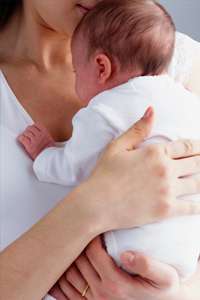
"Rooming in," keeping mother and her newborn in the same room 24/7 to encourage breastfeeding has been a popular initiative of The WHO/UNICEF Baby Friendly Hospital. A new review from The Cochrane Library finds some evidence that it does support breastfeeding, at least in the short term.

Using , the authors wanted to know if "rooming in" resulted in a longer duration of either "exclusive" or occasional breastfeeding up to at least six months of age.

"We really wanted to reassess the essential evidence, and in our minds, hoped to support the WHO recommendation," explained lead author Sharifah Halimah Jaafar, M.D., of the obstetrics and gynecology department at KPJ Ipoh Specialist Hospital in Ipoh, Perak, Malaysia.

The researchers initially considered 23 reports from 19 potential trials and identified only one that met specifications. It showed that the breastfeeding rate at four days after birth, before , was much lower in the mother-child group with separate care versus the rooming-in group. That trial, however, didn't provide evidence for breastfeeding for a longer period, even though early mother-infant continuous contact is known to have many advantages.

Many studies support mother-infant rooming-in practice because of its many benefits, both short and long term, Jaafar said. These benefits include better mother-infant bonding, increased frequency of breastfeeding since it enables feeding on demand, and reduction in the rate of and of other newborn complications.

"Interaction is so important in the first few weeks of life, a 2007 study found early 'skin-to-skin' contact between mother and baby may also benefit breastfeeding outcomes and reduce infant crying," Jaafar said. "It's also well known that separation can reduce frequency as well as amount of milk produced," she added.

"Humans are the only mammals that routinely separate mothers and infants in the first few days of life," said Alison Stuebe, M.D., M.Sc. and assistant professor of and gynecology at the University of North Carolina School of Medicine. "The mother-baby dyad is meant to be together."

Even though the studies are limited, it's very likely that separating infants from their mothers after birth for institutional reasons may have adverse effects, said Stuebe. "Nevertheless, in clinical practice, health care providers need to support rooming in—in the context of each mother-baby dyad's needs."

Rooming in should be the norm, but flexibility is needed to individualize care when circumstances require it, she said.

"If a mother is completely exhausted after 40 hours of labor, five hours of pushing, and a C-section, refusing to allow the baby to go to the nursery because hospital policy mandates rooming in may not be in the best interest of mother or baby," Stuebe said. "Policies that enforce a clinical practice 'always' or 'never' often have unintended consequences."

More information: Jaafar SH, Lee KS, Ho JJ. Separate care for new mother and infant versus rooming-in for increasing the duration of breastfeeding. Cochrane Database of Systematic Reviews 2012, Issue 9.Art.No.:CD006641.DOI: 10.1002/14651858.CD006641.pub2

Journal reference: Cochrane Library search and more info website

Provided by Health Behavior News Service search and more info website

5 /5 (1 vote)  

Rank 5 /5 (1 vote)
Related Stories
Relevant PhysicsForums posts

More news stories

New research identifies risks, interventions for children's GI health

An increasing number of U.S. children are experiencing gastrointestinal issues that require interventions to resolve, according to research presented at Digestive Disease Week (DDW).

Health created 7 hours ago | popularity not rated yet | comments 0 | with audio podcast

Youth who have their first drink during puberty have higher levels of later drinking

Research shows that the earlier the age at which youth take their first alcoholic drink, the greater the risk of developing alcohol problems. Thus, age at first drink (AFD) is generally considered a powerful predictor of ...

Health created May 17, 2013 | popularity not rated yet | comments 0

British MPs concerned about parliamentary boozing

One quarter of British lawmakers believe there is an "unhealthy" drinking culture in the Houses of Parliament, according to a survey published on Friday.

Health created May 17, 2013 | popularity not rated yet | comments 0

Patient openness to research can depend on race and sex of study personnel

Researchers at the University of Cincinnati (UC) have found that the race and sex of study personnel can influence a patient's decision on whether or not to participate in clinical research.

Health created May 17, 2013 | popularity not rated yet | comments 0

Clinical support for patient self-management is rhetoric rather than reality

The processes to allow people to self-manage their own illness are not being used appropriately by health professionals to the benefit of their patients, new research suggests.

Health created May 17, 2013 | popularity not rated yet | comments 0


US psychiatry gets makeover in new manual

The latest makeover to a massive psychiatric tome honored by some, reviled by others and even called the "Bible" of mental disorders is being released Saturday with a host of new changes.

New case of SARS-like virus in Saudi: ministry

A new case of the deadly coronavirus has been detected in Saudi Arabia where 15 people have already died after contracting it, the health ministry announced on Saturday on its Internet website.

AIDS science at 30: 'Cure' now part of lexicon

Big names in medicine are set to give an upbeat assessment of the war on AIDS on Tuesday, 30 years after French researchers identified the virus that causes the disease.

For combat veterans suffering from post-traumatic stress disorder, 'fear circuitry' in the brain never rests

Chronic trauma can inflict lasting damage to brain regions associated with fear and anxiety. Previous imaging studies of people with post-traumatic stress disorder, or PTSD, have shown that these brain regions can over-or ...

New colonoscope provides ground-breaking view of colon

A ground-breaking advance in colonoscopy technology signals the future of colorectal care, according to research presented today at Digestive Disease Week(DDW). Additional research focuses on optimizing the minimal withdrawal ...

Flesh-eating disease victim gets prosthetic hands

(AP)—A woman who lost both hands, her left leg and right foot after contracting a flesh-eating disease has been fitted with prosthetic hands.