Study supports costoplasty for rib hump deformity correction
Study supports costoplasty for rib hump deformity correction
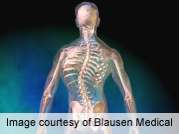
In the treatment of adolescent idiopathic scoliosis, the addition of costoplasty to pedicle screws and vertebral derotation may significantly improve correction of the rib hump deformity compared with pedicle screws and vertebral derotation alone, according to research published online Sept. 28 in the Journal of Spinal Disorders & Techniques.

(HealthDay)—In the treatment of adolescent idiopathic scoliosis, the addition of costoplasty to pedicle screws and vertebral derotation may significantly improve correction of the rib hump deformity compared with pedicle screws and vertebral derotation alone, according to research published online Sept. 28 in the Journal of Spinal Disorders & Techniques.

Marios G. Lykissas, M.D., Ph.D., of the University of Cincinnati, and colleagues used data from a multicenter registry to identify 36 adolescents with who had been treated with pedicle screws, direct vertebral rotation, and no costoplasty (group I) and 40 who had been treated with pedicle screws, vertebral rotation, and costoplasty (group II). The rib index and Cobb angle were measured and compared between groups I and II.

The researchers found that the average pre- and postoperative Cobb angles did not significantly differ between groups I and II (preoperative angles, 49.7 and 49.8 degrees, respectively; postoperative angles, 10.2 and 10.9 degrees, respectively). However, adding costoplasty was associated with a significant improvement in postoperative rib index, yielding a correction of 13.7 percent for group I and 28.3 percent for group II.

"A major concern to adolescent idiopathic patients and spine surgeons is rib hump deformity as a part of scoliosis deformity," the authors write. "Our study strongly infers that costoplasty combined with pedicle screws and vertebral derotation may significantly improve rib hump deformity as opposed to pedicle screws and vertebral derotation alone."

More information: Abstract
Full Text (subscription or payment may be required)

add to favorites email to friend print save as pdf

Related Stories

Pedicle breach rate 6.2 percent with 2D fluoroscopy

Jun 21, 2012

(HealthDay) -- A two-dimensional (2D) fluoroscopic technique is safe for percutaneous placement of pedicle screws during transforaminal lumbar interbody fusion (TLIF), with a pedicle breach rate of 6.2 percent, ...

Lowest fused vertebral level linked to motion in scoliosis

May 10, 2012

(HealthDay) -- For postoperative patients with adolescent idiopathic scoliosis (AIS), preservation of vertebral motion segments allows for greater distribution of functional motion, according to a study published ...

Recommended for you

Meningococcal disease ID'd in men who have sex with men

2 hours ago

(HealthDay)—Following reports of invasive meningococcal disease (IMD) among men who have sex with men (MSM), the New York City (NYC) Department of Health and Mental Hygiene (DOHMH) has recommended that ...

Measles epidemic sweeps northern Syria

5 hours ago

An epidemic of measles is sweeping through parts of northern Syria, with at least 7,000 people affected because the ongoing civil war has disrupted vaccination programmes, Doctors Without Borders said on Tuesday.

Whooping cough has lifelong health impact, study finds

6 hours ago

People born during whooping cough outbreaks are more likely to die prematurely even if they survive into adulthood, research at Lund University in Sweden has found. Women had a 20% higher risk of an early death, and men a ...

User comments

More news stories

Study suggests new approach to fight lung cancer

Recent research has shown that cancer cells have a much different – and more complex – metabolism than normal cells. Now, scientists at The University of Texas at Dallas have found that exploiting these differences might ...