Artificial liver to replace animal testing, potential to accelerate development of new drugs
November 13, 2012 in Medical research

Artificial liver to replace animal testing

Enlarge

Credit: Colin Hattersley

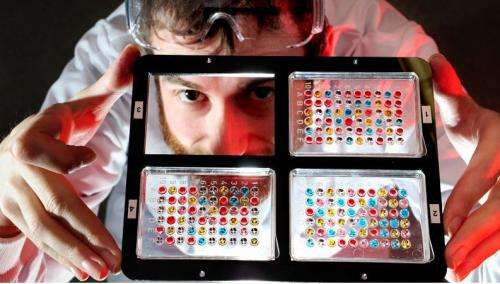
Scientists at Heriot-Watt University are working towards creating the world's first artificial human livers for drug testing to drastically cut the number of live animals used and get life-saving medicines into the clinic faster.

Dr Will Shu is leading the Heriot-Watt University team in the £100,000 project. Working closely with Roslin Cellab, the team aims to demonstrate how an artificial liver, created using , could become a new testing platform for discovery and development.

The team is working towards creating miniature human liver tissues and, eventually, 'livers-on-a-chip', using that will 'print' the cells in 3D onto testing surfaces.

Dr Will Shu said, "If we are able to advance this technique, the medical benefits could be enormous."

Testing new drugs currently requires large numbers of experimental animals. This work is expensive, time-consuming and is often inconclusive since drugs that pass animal testing usually fail during the even more expensive clinical stages of development, when the first human subjects are used.

Dr Jason King of Roslin Cellab said, "If successful, this technology will enable drug developers to test using models at a much earlier stage. It should highlight drug failures well before they reach the clinic and help target resources towards the most promising new ."

There is growing interest in the cell-printing technique from scientists internationally because 3D cells, such as those being developed by Dr Shu's team, outperform cells grown in 2D cultures, which until now have been the standard in the drug development sector.

The research is currently funded by the Scottish Universities Physics Alliance (SUPA) INSPIRE programme.

Roslin Cellab is a Roslin Foundation company that offers contract research and is now using human cells to develop liver models for pre-clinical testing.

Provided by Heriot-Watt University search and more info website

not rated yet  

Rank not rated yet
Related Stories
Relevant PhysicsForums posts

More news stories

Study suggests new source of kidneys for transplant

Nearly 20 percent of kidneys that are recovered from deceased donors in the U.S. are refused for transplant due to factors ranging from scarring in small blood vessels of the kidney's filtering units to the organ going too ...

Medical research created 13 hours ago | popularity 5 / 5 (2) | comments 0 | with audio podcast

Discovery of circadian clock in mice hair reveals period of time when damage from radiotherapy can be quickly repaired

Discovering that mouse hair has a circadian clock - a 24-hour cycle of growth followed by restorative repair - researchers suspect that hair loss in humans from toxic cancer radiotherapy and chemotherapy ...

Medical research created 13 hours ago | popularity 5 / 5 (2) | comments 1 | with audio podcast

Do salamanders hold the solution to regeneration?

Salamanders' immune systems are key to their remarkable ability to regrow limbs, and could also underpin their ability to regenerate spinal cords, brain tissue and even parts of their hearts, scientists have ...

Medical research created 14 hours ago | popularity 4.8 / 5 (6) | comments 2 | with audio podcast

New study finds blind people have the potential to use their 'inner bat' to locate objects

New research from the University of Southampton has shown that blind and visually impaired people have the potential to use echolocation, similar to that used by bats and dolphins, to determine the location of an object.

Medical research created 17 hours ago | popularity not rated yet | comments 1 | with audio podcast

Germ-fighting vaccine system makes great strides in delivery

A novel vaccine study from South Dakota State University (SDSU) will headline the groundbreaking research that will be unveiled at the American Association of Pharmaceutical Scientists' (AAPS) National Biotechnology Conference ...

Medical research created 17 hours ago | popularity not rated yet | comments 0


Nobel laureate plays down flu pandemic scaremongering

A Nobel prize-winning scientist Tuesday played down "shock-horror scenarios" that a new virus strain will emerge with the potential to kill millions of people.

No new H7N9 cases in China for a week

No new human cases of the H7N9 virus have been recorded in China for a week, national health authorities said, for the first time since the outbreak began in March.

Genetic predictors of postpartum depression uncovered

Johns Hopkins researchers say they have discovered specific chemical alterations in two genes that, when present during pregnancy, reliably predict whether a woman will develop postpartum depression.

New immune system discovered

(Medical Xpress)—A research team, led by Jeremy Barr, a biology post-doctoral fellow, unveils a new immune system that protects humans and animals from infection.

The compound in the Mediterranean diet that makes cancer cells 'mortal'

New research suggests that a compound abundant in the Mediterranean diet takes away cancer cells' "superpower" to escape death. By altering a very specific step in gene regulation, this compound essentially re-educates cancer ...

Child maltreatment increases risk of adult obesity

Children who have suffered maltreatment are 36% more likely to be obese in adulthood compared to non-maltreated children, according to a new study by King's College London. The authors estimate that the prevention or effective ...