Blink if your brain needs a rest
December 28, 2012 by Melissa Healy in Neuroscience
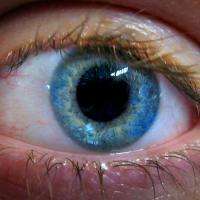
Why do we spend roughly 10 percent of our waking hours with our eyes closed - blinking far more often than is actually necessary to keep our eyeballs lubricated? Scientists have pried open the answer to this mystery, finding that the human brain uses that tiny moment of shut-eye to power down.
The mental break can last anywhere from a split second to a few seconds before attention is fully restored, researchers from Japan's Osaka University found. During that time, scans that track the ebb and flow of blood within the brain revealed that regions associated with paying close attention momentarily go offline. And in the brief break in attention, brain regions collectively identified as the "Default Mode Network" power up.
Discovered less than a decade ago, the default mode network is the brain's "idle" setting. In times when our attention is not required by a cognitive task such as reading or speaking, this far-flung cluster of brain regions comes alive, and our thoughts wander freely. In idle mode, however, our thoughts seldom stray far from home: We contemplate our feelings; we wonder what a friend meant by a recent comment; we consider something we did last week, or imagine what we'll do tomorrow.
Most of us take between 15 and 20 such moments of downtime per minute, and scientists have observed that most blinking takes place near or at the point of an "implicit stop": While reading or listening to another person, that generally comes at the end of a sentence; while watching a movie, for instance, we're most likely to blink when an actor turns to leave the scene or when the camera shifts to follow the dialogue.
The study, published this week in the journal Proceedings of the National Academies of Science, studied 20 healthy young subjects in a brain scanner as they watched "best bits" snippets from the British comedy "Mr. Bean." An earlier study had shown the researchers which implicit breakpoints in the "Mr. Bean" video most commonly elicited a spontaneous blink, so researchers knew when to look for changes in the brain's activation patterns.
Sure enough, when subjects blinked, the researchers detected a momentary stand-down within the brain's visual cortex and somatosensory cortex - both involved with processing visual stimuli - and in areas that govern attention. The circuitry of the Default Mode Network stepped up to fill the momentary lapse in attention, and then yielded again as order - and attention - was restored.
In a separate experiment, the researchers established that the momentary rest that blinking appears to represent is a deliberate act, and not just a response to an absence of stimuli. When researchers inserted roughly nine 165 milliseconds of blank screentime per minute into the "Mr. Bean" video, subjects' Default Mode Network did not activate in response. Although the video gave them a blink's worth of time to rest, subjects did not recognize a breakpoint in the action, and therefore remained attentive.
Though the current study didn't examine the relationship between blinking and deception, others have: While telling a lie, liars have been found to blink less - possibly because the act of deception requires rapt and uninterrupted attention to pull it off. In the seconds after telling a lie, however, the liar will blink far more frequently than a truth-teller. Perhaps the resulting downtime is necessary for the liar to consider whether the deceived person was buying the fib - or whether it was worth telling in the first place.
More information: Paper: www.pnas.org/conte… bstract.html
(c)2012 Los Angeles Times
Distributed by MCT Information Services
-
Breakdown of neural networks could help doctors track, better understand spread of Alzheimer's in brain
Sep 18, 2012 |
not rated yet |
0
-
Tuning out: How brains benefit from meditation
Nov 21, 2011 |
not rated yet |
0
-
Brain connectivity altered in type 2 diabetes
Aug 01, 2012 |
not rated yet |
0
-
Out of mind, out of sight: Blinking eyes indicate mind wandering
Apr 29, 2010 |
not rated yet |
0
-
Long-term meditation leads to different brain organization
May 24, 2012 |
not rated yet |
0
-
Motion perception revisited: High Phi effect challenges established motion perception assumptions
Apr 23, 2013 |
3 / 5 (2) |
2
-
Anything you can do I can do better: Neuromolecular foundations of the superiority illusion (Update)
Apr 02, 2013 |
4.5 / 5 (11) |
5
-
The visual system as economist: Neural resource allocation in visual adaptation
Mar 30, 2013 |
5 / 5 (2) |
9
-
Separate lives: Neuronal and organismal lifespans decoupled
Mar 27, 2013 |
4.9 / 5 (8) |
0
-
Sizing things up: The evolutionary neurobiology of scale invariance
Feb 28, 2013 |
4.8 / 5 (10) |
14
-
How can there be villous adenoma in colon, if there are no villi there
14 hours ago
-
How can there be a term called "intestinal metaplasia" of stomach
May 21, 2013
-
Pressure-volume curve: Elastic Recoil Pressure don't make sense
May 18, 2013
-
If you became brain-dead, would you want them to pull the plug?
May 17, 2013
-
MRI bill question
May 15, 2013
-
Ratio of Hydrogen of Oxygen in Dessicated Animal Protein
May 13, 2013
- More from Physics Forums - Medical Sciences
More news stories
Having both migraines, depression may mean smaller brain
(HealthDay)—Migraines and depression can each cause a great deal of suffering, but new research indicates the combination of the two may be linked to something else entirely—a smaller brain.
Neuroscience
4 hours ago |
5 / 5 (1) |
0
|
Researchers analyse hunting behaviour of fish larvae in virtual reality
Moving objects attract greater attention – a fact exploited by video screens in public spaces and animated advertising banners on the Internet. For most animal species, moving objects also play a major ...
Neuroscience
7 hours ago |
not rated yet |
0
|
Signs of motor disorders can appear years before disease manifestation
It is known that signs of neurological disorders such as Alzheimer's and Huntington's disease can appear years before the disease becomes manifest; these signs take the form of subtle changes in the brain and behavior of ...
Neuroscience
7 hours ago |
not rated yet |
0
Taming suspect gene reverses schizophrenia-like abnormalities in mice
Scientists have reversed behavioral and brain abnormalities in adult mice that resemble some features of schizophrenia by restoring normal expression to a suspect gene that is over-expressed in humans with ...
Neuroscience
9 hours ago |
5 / 5 (1) |
0
|
Scientists uncover molecular roots of cocaine addiction in the brain
Researchers at Johns Hopkins have unraveled the molecular foundations of cocaine's effects on the brain, and identified a compound that blocks cravings for the drug in cocaine-addicted mice. The compound, already proven safe ...
Neuroscience
9 hours ago |
not rated yet |
0
|
Slowing the aging process—only with antibiotics
Swiss scientists reveal the mechanism responsible for aging hidden deep within mitochondria—and dramatically slow it down in worms by administering antibiotics to the young.
Researchers complete largest genetic sequencing study of human disease
Researchers from Queen Mary, University of London have led the largest sequencing study of human disease to date, investigating the genetic basis of six autoimmune diseases.
Brain can be trained in compassion, study shows
Until now, little was scientifically known about the human potential to cultivate compassion—the emotional state of caring for people who are suffering in a way that motivates altruistic behavior.
Novel approach for influenza vaccination shows promise in early animal testing
A new approach for immunizing against influenza elicited a more potent immune response and broader protection than the currently licensed seasonal influenza vaccines when tested in mice and ferrets. The vaccine ...
Systematic screening of med adherence will ID barriers
(HealthDay)—Implementation of systematic monitoring for medication adherence will allow for identification of barriers to adherence and tailoring of interventions, according to a viewpoint piece published ...
Enzyme-activating antibodies revealed as marker for most severe form of rheumatoid arthritis
In a series of lab experiments designed to unravel the workings of a key enzyme widely considered a possible trigger of rheumatoid arthritis, researchers at Johns Hopkins have found that in the most severe ...
Dec 28, 2012
Rank: 1 / 5 (1)
Dec 28, 2012
Rank: not rated yet
Dec 28, 2012
Rank: 1 / 5 (3)
Nobody would try to write a story around the audience's blinking habits.
Dec 28, 2012
Rank: 5 / 5 (1)
Not that I think anyone should do it, just saying someone very well could. Oh, and there was a Doctor Who episode called Blink...
Dec 29, 2012
Rank: 1 / 5 (1)
Dec 29, 2012
Rank: not rated yet
while I'm driving and I feel sleepy, if voluntarily rapidly blink my eyes I perceive a rapid recovery of attention.
This may have some connection?
My opinion is that blink serve to reset circuits that are falling asleep or who are wandering away from reality.
Dec 29, 2012
Rank: not rated yet
Dec 29, 2012
Rank: not rated yet
In general, good music and good cinematography alternate between periods of excitement and relaxation, highs and lows.
Dec 29, 2012
Rank: not rated yet
It isn't the story that gets written around the blinking habits; it's the directing, and it doesn't have to account for each individual eyeblink, only allow periods of resting.
Dec 29, 2012
Rank: not rated yet
Dec 30, 2012
Rank: 1 / 5 (1)
I don't know if blind people blink less or not, but another biological function of blinking is to coat the eyeballs with tear fluid for lubrication and cleaning.
Dec 30, 2012
Rank: not rated yet
Meditators have known this for thousands of years. It's called "seeing the waterfall". :)
Jan 03, 2013
Rank: not rated yet