Enzymes may point toward better therapies for prediabetes
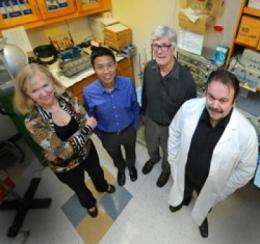
Two enzymes that are elevated in prediabetes could hold clues to helping the 79 million Americans with the condition avoid serious vascular complications and maybe even identify those most at risk for full-blown diabetes, researchers say.
The enzymes, arginase and indoleamine 2,3 dioxygenase, or IDO, also have in common degrading amino acids, responding to inflammation and suppressing immunity, said Dr. William Caldwell, Chair of the Department of Pharmacology and Toxicology at the Medical College of Georgia at Georgia Health Sciences University.
That common ground has a newly formed research team watching how and why these two enzymes increase and how they may contribute to vascular problems in both an animal model of diabetes and a cohort of prediabetic humans.
They theorize a vicious cycle where elevated glucose increases production of inflammatory factors like cytokines and reactive oxygen species which in turn elevate arginase and IDO. The latter then further elevates cytokines and reactive oxygen species which damage blood vessels.
"You just put cells in high glucose and they start producing reactive oxygen species and these cytokines. It's a toxic situation," said Caldwell, cardiovascular pharmacologist and a principal investigator on the one-year, $450,000 seed grant from National Institute of Diabetes and Digestive and Kidney Diseases.
The animal model – deficient in the satiety hormone leptin and at risk for vascular dysfunction – enables the researchers to watch the scenario play out from normal to prediabetic to diabetes.
As they find, for example, cytokines in the animal model, they look in the blood of obese prediabetic people to see if they also find them there, said Dr. Yanbin Dong, MCG geneticist, cardiologist and principal investigator. They've already documented significantly increased levels of proinflammatory cytokines in prediabetic individuals, said Dr. Rudolf Lucas, MCG vascular biologist and principal investigator. And, it works both ways: they found elevated arginase in prediabetics and went back to the obese mice and found it there as well, Dong said.
The results can be deadly to cells and organs as increased IDO and arginase trigger a sort of stress response where the body stops making new cells, which is particularly problematic in high turnover sites like the lining of blood vessels and immune cells. "It's a starvation response that decreases utilization," Caldwell said. "The idea is we don't want to grow new cells because we need the energy for what we already have going on." It's called senescence. "It's like as we become senile, things stop working so well," he added.
Senescence has been tied to high glucose levels. In the case of high arginase levels, for example, it's triggered by excessive arginine using too much L-arginine, a key amino acid. "When the body senses a key amino acid is going down, it starts to shut down some systems to save itself," Caldwell said.
And there's more bad news for the blood vessels: L-arginine is critical to production of nitric oxide, which is critical to blood vessel dilation, so not having enough of it also causes blood pressure to rise, blood flow to decrease and inflammation to increase. In the face of excessive IDO, too much of the essential amino acid L-tryptophan gets degraded, disrupting the usual immune function and triggering chronic immune system activation which perpetuates inflammation.
While oxidative stress and inflammation are obvious players, studies giving antioxidants and anti-inflammatory agents have shown little impact on disease progression. Hence the need for novel biomarkers and treatment targets, said Dr. Ruth Caldwell, MCG vascular cell biologist and a study principal investigator.
One of the many questions researchers are asking is whether IDO and arginine directly interact. They know IDO and arginine are targets of interferon, a cytokine the body makes in response to invaders to help trigger the immune response, said Dr. Andrew L. Mellor, MCG immunologist, Georgia Research Alliance Eminent Scholar in Immunogenetics and principal investigator. "One way to think about it is that interferon, because of inflammation, is inciting lots of things, amongst which IDO and arginase are target genes," he said. Both genes also affect amino acid metabolism, which is altered in diabetes, Mellor said.
They hope their perusing will also yield markers that indicate likelihood to develop diabetes and who will get more aggressive disease, Dong said.
"Prediabetes is an ever-growing epidemic," Lucas said. "To be able to evaluate from an early state what factors can contribute to later development of diabetes and cardiovascular problems could have a significant impact," Lucas said.
The American Diabetes Association says 25.8 million Americans have diabetes. According to the Diabetes Prevention Program, about 11 percent of people with prediabetes develop type 2 diabetes each year during an average three years of follow-up.


