A genetic defect in sex cells may predispose to childhood leukemia
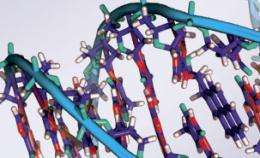
Researchers at the Sainte-Justine University Hospital Center and the University of Montreal have found a possible heredity mechanism that predisposes children to acute lymphoblastic leukemia (ALL), the most common type of blood cancer in children. According to their findings published in Genome Research, the presence of a genetic defect in the egg or sperm from which children having ALL arise may be a prerequisite for the disease to develop. A significant number of children with ALL are thought to inherit a rare PRDM9 gene variant responsible for the abnormal sex cells–a gene variant that puts their own children at risk of having ALL-predisposed offspring.
"Our findings indicate ALL susceptibility to be partially hereditary. However, it is not classic heredity in the sense that the abnormal genetic variant does not need to be passed from parent to child for offspring to have the disease," explains Julie Hussin, a doctoral student in Genomics under the direction of Dr. Philip Awadalla, a genetics researcher.
"Instead, the genetic defect in the egg or sperm from which the children developed is thought to predispose them to leukemia," continues Julie Hussin. "However, only the children who inherit the genetic variant run the risk of transmitting ALL predispositions to their offspring." According to the study, more than three fourth of families with affected children have an atypical form of the PRDM9 gene, but only half the patients inherited this genetic variant. The defect is expressed by chromosome recombinations at unusual points during gamete formation (eggs in girls, sperm in boys).
While an abnormal gamete may lead to ALL development, this condition alone is not enough. "Triggering the process of cancer cell proliferation inevitably requires a second hit, such as other mutations or environmental factors," explains Julie Hussin.
Until now, few pediatric cancer studies have analyzed data from parents, as scientists generally focus on studying children, their tumors or their environment, especially during pregnancy. "Parents have to be included in these studies. Our findings demonstrate the importance of including parents' genetic information for the understanding of childhood leukemia, as well as other early childhood diseases," added Dr. Philip Awadalla, the lead principal investigator on the study.
The findings were replicated in a cohort of American children with ALL through a collaboration of the Sainte-Justine University Hospital Center in Montreal, Canada, and St. Jude Children's Research Hospital in Memphis, USA.
More information: Rare allelic forms of PRDM9 associated with childhood leukemogenesis in Genome Research, December 5, 2012. genome.cshlp.org/c… 112.abstract
Journal reference:
Genome Research
Provided by
University of Montreal
-
Genetic make-up of children explains how they fight malaria infection
Sep 12, 2012 |
not rated yet |
0
-
Inherited risk factors for childhood leukemia are more common in Hispanic patients
Jan 30, 2012 |
not rated yet |
0
-
Gene responsible for relapses in young leukemia patients
Oct 26, 2011 |
not rated yet |
0
-
Gene hunters fine-tune marker for common obesity gene
Mar 12, 2008 |
not rated yet |
0
-
Inherited risk factors increase odds of developing childhood acute lymphoblastic leukemia
Aug 16, 2009 |
not rated yet |
0
-
Motion perception revisited: High Phi effect challenges established motion perception assumptions
Apr 23, 2013 |
3 / 5 (2) |
2
-
Anything you can do I can do better: Neuromolecular foundations of the superiority illusion (Update)
Apr 02, 2013 |
4.5 / 5 (11) |
5
-
The visual system as economist: Neural resource allocation in visual adaptation
Mar 30, 2013 |
5 / 5 (2) |
9
-
Separate lives: Neuronal and organismal lifespans decoupled
Mar 27, 2013 |
4.9 / 5 (8) |
0
-
Sizing things up: The evolutionary neurobiology of scale invariance
Feb 28, 2013 |
4.8 / 5 (10) |
14
-
Classical and Quantum Mechanics via Lie algebras
Apr 15, 2011
- More from Physics Forums - Independent Research
More news stories
Patenting the human genome
Can human genes be patented? That was the question posed by Alan J. Snyder, vice president and associate provost for research and graduate studies at Lehigh, and Lee Kaplan, scientific director of cellular and molecular genetics ...
Genetics
5 hours ago |
4 / 5 (1) |
0
Researchers complete largest genetic sequencing study of human disease
Researchers from Queen Mary, University of London have led the largest sequencing study of human disease to date, investigating the genetic basis of six autoimmune diseases.
Genetics
May 22, 2013 |
4.5 / 5 (4) |
0
|
Researchers develop model for better testing, targeting of malignant peripheral nerve sheath tumors
University of Minnesota Medical School researchers from the Masonic Cancer Center, University of Minnesota, in partnership with the University's Brain Tumor Program, have developed a new mouse model of malignant peripheral ...
Genetics
May 20, 2013 |
5 / 5 (1) |
0
|
Researchers identify new circadian clock component
Northwestern University scientists have shown a gene involved in neurodegenerative disease also plays a critical role in the proper function of the circadian clock.
Genetics
May 16, 2013 |
3 / 5 (1) |
1
|
Returning genetic incidental findings without patient consent violates basic rights, experts say
Informed consent is the backbone of patient care. Genetic testing has long required patient consent and patients have had a "right not to know" the results. However, as 21st century medicine now begins to use the tools of ...
Genetics
May 16, 2013 |
5 / 5 (1) |
3
|
Hormone levels may provide key to understanding psychological disorders in women
Women at a particular stage in their monthly menstrual cycle may be more vulnerable to some of the psychological side-effects associated with stressful experiences, according to a study from UCL.
ACOG: Hormone therapy not recommended to prevent CHD
(HealthDay)—Menopausal hormone therapy should not be used for prevention of coronary heart disease, according to a Committee Opinion from the American College of Obstetricians and Gynecologists (ACOG) published ...
Storm chasers: born to be wild?
(HealthDay)—We've all seen them: the surfers who race to the beach when a hurricane hits, the guy who decides to ride out the storm in his overmatched boat, the tornado chasers who fearlessly steer their ...
Audiologists recommend smart phone apps to monitor noise levels
After studying noise in one French Quarter neighborhood of New Orleans to determine whether or not noise levels exceeded municipal ordinances, Annette Hurley, PhD, Assistant Professor of Audiology at LSU Health Sciences Center ...
Modulating the immune system to combat metastatic cancer
Cancer cells spread and grow by avoiding detection and destruction by the immune system. Stimulation of the immune system can help to eliminate cancer cells; however, there are many factors that cause the immune system to ...
New fluorescent tools for cancer diagnosis
In recent years, microRNAs (miRNAs) and other non-coding RNAs are small molecules that help control the expression of specific proteins. In recent years they have emerged as disease biomarkers. miRNA profiles have been used ...