R.E.N.A.L. nephrometry score predicts treatment efficacy
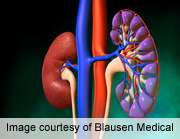
(HealthDay)—The R.E.N.A.L. (radius, exophytic/endophytic, nearness to collecting system or sinus, anterior/posterior and location relative to polar lines) nephrometry scoring system predicts the efficacy of treatment and major complications that occur after percutaneous renal ablation for treatment of tumors, according to research published in the January issue of The Journal of Urology.
Grant D. Schmit, M.D., of the Mayo Clinic in Rochester, Minn., and colleagues applied the R.E.N.A.L. criteria to 751 renal tumors in 627 patients to examine the correlation with oncological outcomes and complications after percutaneous ablation. Fifty-seven percent of tumors were treated with cryoablation and 43 percent were treated with radio frequency ablation.
The researchers found that the mean score for renal tumors treated with cryoablation was significantly higher than for those treated with radio frequency ablation (7.2 ± 1.9 versus 6.1 ± 1.8). Over an average follow-up period of 27.9 months, 28 local treatment failures occurred. R.E.N.A.L. nephrometry score was significantly associated with local treatment failure, with a mean score of 7.6 ± 2.2 in cases of failure versus 6.7 ± 1.9 in cases without failure. R.E.N.A.L. score was also significantly associated with major complications, with a mean score of 8.1 ± 2.0 in cases with a major complication versus 6.8 ± 1.9 in cases without a major complication.
"The R.E.N.A.L. nephrometry scoring system predicts oncological outcomes and complications following percutaneous renal ablation," the authors write. "As such, this tool may be used to facilitate the standardization of comparisons of treatment efficacy and safety across various approaches to small renal tumors."
One author disclosed financial ties to the medical device and technology industries.
More information:
Abstract
Full Text
Copyright © 2012 HealthDay. All rights reserved.


