Economic analysis finds penicillin, not 'the pill', may have launched the sexual revolution
(Medical Xpress)—The 1950s were not as prudish as they seemed on the surface, says economist Andrew Francis.
PThe rise in risky, non-traditional sexual relations that marked the swinging '60s actually began as much as a decade earlier, during the conformist '50s, suggests an analysis recently published by the Archives of Sexual Behavior.
"It's a common assumption that the sexual revolution began with the permissive attitudes of the 1960s and the development of contraceptives like the birth control pill," notes Emory University economist Andrew Francis, who conducted the analysis. "The evidence, however, strongly indicates that the widespread use of penicillin, leading to a rapid decline in syphilis during the 1950s, is what launched the modern sexual era."
As penicillin drove down the cost of having risky sex, the population started having more of it, Francis says, comparing the phenomena to the economic law of demand: When the cost of a good falls, people buy more of the good.
"People don't generally think of sexual behavior in economic terms," he says, "but it's important to do so because sexual behavior, just like other behaviors, responds to incentives."
Syphilis reached its peak in the United States in 1939, when it killed 20,000 people. "It was the AIDS of the late 1930s and early 1940s," Francis says. "Fear of catching syphilis and dying of it loomed large."
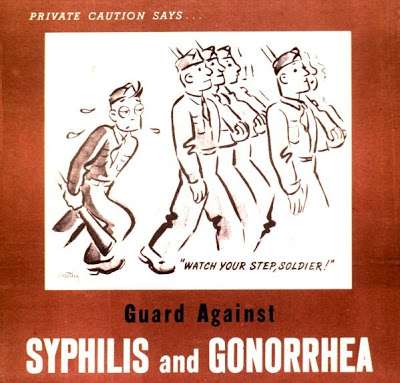
Penicillin was discovered in 1928, but it was not put into clinical use until 1941. As World War II escalated, and sexually transmitted diseases threatened the troops overseas, penicillin was found to be an effective treatment against syphilis.
"The military wanted to rid the troops of STDs and all kinds of infections, so that they could keep fighting," Francis says. "That really sped up the development of penicillin as an antibiotic."
Right after the war, penicillin became a clinical staple for the general population as well. In the United States, syphilis went from a chronic, debilitating and potentially fatal disease to one that could be cured with a single dose of medicine.
From 1947 to 1957, the syphilis death rate fell by 75 percent and the syphilis incidence rate fell by 95 percent. "That's a huge drop in syphilis. It's essentially a collapse," Francis says.
In order to test his theory that risky sex increased as the cost of syphilis dropped, Francis analyzed data from the 1930s through the 1970s from state and federal health agencies. Some of the data was only available on paper documents, but the Centers for Disease Control and Prevention (CDC) digitized it at the request of Francis.
For his study, Francis chose three measures of sexual behavior: The illegitimate birth ratio; the teen birth share; and the incidence of gonorrhea, a highly contagious sexually transmitted disease that tends to spread quickly.
"As soon as syphilis bottoms out, in the mid- to late-1950s, you start to see dramatic increases in all three measures of risky sexual behavior," Francis says.
While many factors likely continued to fuel the sexual revolution during the 1960s and 1970s, Francis says the 1950s and the role of penicillin have been largely overlooked. "The 1950s are associated with prudish, more traditional sexual behaviors," he notes. "That may have been true for many adults, but not necessarily for young adults. It's important to recognize how reducing the fear of syphilis affected sexual behaviors."
A few physicians sounded moralistic warnings during the 1950s about the potential for penicillin to affect behavior. Spanish physician Eduardo Martinez Alonso referenced Romans 6:23, and the notion that God uses diseases to punish people, when he wrote: "The wages of sin are now negligible. One can almost sin with impunity, since the sting of sinning has been removed."
Such moralistic approaches, equating disease with sin, are counterproductive, Francis says, stressing that interventions need to focus on how individuals may respond to the cost of disease.
He found that the historical data of the syphilis epidemic parallels the contemporary AIDS epidemic. "Some studies have indicated that the development of highly active antiretroviral therapy for treating HIV may have caused some men who have sex with men to be less concerned about contracting and transmitting HIV, and more likely to engage in risky sexual behaviors," Francis says.
"Policy makers need to take into consideration behavioral responses to changes in the cost of disease, and implement strategies that are holistic and longsighted," he concludes. "To focus exclusively on the defeat of one disease can set the stage for the onset of another if preemptive measures are not taken."
More information: link.springer.com/article/10.1 … 07/s10508-012-0018-4


