Harmful effects of bisphenol A proved experimentally
Weak concentrations of bisphenol A are sufficient to produce a negative reaction on the human testicle. This has just been shown experimentally for the first time by René Habert and his colleagues (UMR Cellules souches et Radiations [UMR Stem Cells and Radiation], Inserm U 967 – CEA – Paris Diderot University) in an article that appeared in the journal entitled Plos One.
Bisphenol A (BPA) is a chemical compound that is included in the composition of plastics and resins. It is used, for example, in the manufacture of food containers such as bottles and babies' feeding bottles. It is also found in the protective films used inside food and drink cans and on till receipts where it used as a discloser. Significant levels of BPA have also been found in human blood, urine, amniotic fluid and placentas. Recent studies have shown that this industrial component has harmful effects on reproductive ability, development and the metabolism of laboratory animals. BPA is strongly suspected of having the same effects on humans.
As a precautionary measure, the manufacture and sale of babies' feeding bottles containing bisphenol A have been banned in Europe since January 2011. This ban will be extended in France to all food containers from July 2015. It will also be important to ensure that in the future, bisphenol A is not replaced by substitutes that have the same action.
In an article published in PLOS ONE, René Habert and his colleagues provide the first experimental proof that weak concentrations of bisphenol A are sufficient to produce a negative reaction on the human testicle. No experimental study has shown hitherto that bisphenol A has a deleterious effect on male human reproduction and the few epidemiological studies that exist remain contradictory.
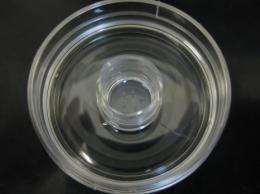
In collaboration with the Antoine-Béclère Hospital, Clamart, researchers kept petri dishes of human fœtal testicles alive in the presence of bisphenol A or in the absence thereof, using an original procedure developed by this team. In 2009, this procedure made it possible to show for the first time, that phtalates (a different category of endocrine disruptors that are found in PVC, plastics, synthetic materials, sprays, etc.) inhibit the development of future spermatozoa in the human fœtus.
In this new study, researchers observed that exposure of human fœtal testicles to bisphenol A reduces the production of testosterone, and of another testicular hormone that is necessary for the testicles to descend into the sacs in the course of fœtal development. A concentration equal to 2 micrograms per litre of bisphenol A in the culture medium was sufficient to produce these effects. This concentration is equal to the average concentration generally found in the blood, urine and amniotic fluid of the population.
Testosterone is known to be produced by the testicle during the life of the fœtus, imposing masculinisation of the internal and external genitals which, in the absence of testosterone, develops spontaneously in the female direction. Furthermore, it is likely that testosterone also plays a role in the development of the testicle itself. Consequently, the current exposure of pregnant women to bisphenol A may be one of the causes of congenital masculinisation defects (of the hypospadia and cryptorchidism types) the frequency of which has doubled overall in the past 40 years. According to René Habert, "it is also possible that bisphenol A contributes to a reduction in the production of sperm and the increase in the incidence of testicular cancer in adults that have been observed in recent decades".
Furthermore, researchers have compared the response to bisphenol A in human fœtal testicles to those in the fœtal testicles of rats and mice. "We have observed that the human species is far more sensitive to bisphenol A than the rat and the mouse. These results should encourage greater caution in regulatory toxicology in the extrapolation of data obtained on animals to define tolerable exposure thresholds in human health", explains René Habert.
Finally, the researchers show in this article that Bisphenol A acts through a mechanism that is non-standard and that remains unknown but that it is important to identify in order to better understand the action of endocrine disruptors.
More information: www.plosone.org/article/info%3Adoi/10.1371/journal.pone.0051579


