Fish like grouper, barracuda may pose food-poisoning risk
January 31, 2013 in Health

Fish like grouper, barracuda may pose food-poisoning risk

They can sometimes contain toxin that can't be detected before eating, CDC warns.

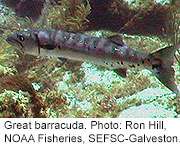
(HealthDay)—People who eat large, tropical predatory reef fish such as barracuda and grouper may be at risk for a form of food poisoning called ciguatera fish poisoning, U.S. health officials reported Thursday.

Illness occurs when people eat fish that contain toxins produced by a called Gambierdiscus toxicus, according to the U.S. .

Some symptoms of ciguatera poisoning—such as nausea, vomiting and diarrhea—resemble other types of food poisoning. But ciguatera poisoning also causes such as difficulty walking, weakness, tooth pain, and reverse temperature sensation (for example, cold things feel hot and hot things feel cold) that can persist for months, the CDC report said.

There's no cure for ciguatera but the symptoms can be treated and usually go away in days or weeks. However, symptoms can last for years in some people.

The CDC report said there was a significant increase in ciguatera poisoning cases in New York City among people who ate locally purchased barracuda or grouper in 2010 and 2011. Until then, ciguatera poisoning was fairly uncommon in the city.

During the period August 2010 through July 2011, city health officials received reports of six outbreaks and one single case of ciguatera fish poisoning, involving a total of 28 people. One of the patients was a physically active man who swam more than two miles a day before his illness. After the start of symptoms, he had trouble walking that lasted for several months, the CDC report said.

Ciguatoxins don't hurt the fish. And fish with the toxins don't look sick and don't appear, smell or taste different than fish without the toxins, the researchers noted.

Currently, there is no practical way to test fish for the toxins before they're sold. So prevention efforts depend on knowing which have that might contain the toxins, along with accurate diagnosis of patients and consistent reporting of cases to public health agencies, according to the report, which is published in the Feb. 1 issue of the CDC's Morbidity and Mortality Weekly Report.

More information: The U.S. Centers for Disease Control and Prevention has more about ciguatera.

Journal reference: Morbidity and Mortality Weekly Report search and more info website

Health News Copyright © 2013 HealthDay. All rights reserved.

not rated yet  

Rank not rated yet
Relevant PhysicsForums posts

More news stories

ER docs are key to reducing health care costs

Emergency physicians are key decisionmakers for nearly half of all hospital admissions, highlighting a critical role they can play in reducing health care costs, according to a new report from the RAND Corporation.

Health created 20 minutes ago | popularity not rated yet | comments 0

New research identifies risks, interventions for children's GI health

An increasing number of U.S. children are experiencing gastrointestinal issues that require interventions to resolve, according to research presented at Digestive Disease Week (DDW).

Health created May 18, 2013 | popularity not rated yet | comments 0 | with audio podcast

Youth who have their first drink during puberty have higher levels of later drinking

Research shows that the earlier the age at which youth take their first alcoholic drink, the greater the risk of developing alcohol problems. Thus, age at first drink (AFD) is generally considered a powerful predictor of ...

Health created May 17, 2013 | popularity not rated yet | comments 0

British MPs concerned about parliamentary boozing

One quarter of British lawmakers believe there is an "unhealthy" drinking culture in the Houses of Parliament, according to a survey published on Friday.

Health created May 17, 2013 | popularity not rated yet | comments 0

Patient openness to research can depend on race and sex of study personnel

Researchers at the University of Cincinnati (UC) have found that the race and sex of study personnel can influence a patient's decision on whether or not to participate in clinical research.

Health created May 17, 2013 | popularity not rated yet | comments 0


Blame your parents for bunion woes

A novel study reports that white men and women of European descent inherit common foot disorders, such as bunions (hallux valgus) and lesser toe deformities, including hammer or claw toe. Findings from the Framingham Foot ...

Whole-cell vaccine was more effective than acellular vaccine during CA pertussis outbreak

Whole-cell pertussis vaccines were more effective at protecting against pertussis than acellular pertussis vaccines during a large recent outbreak, according to a new Kaiser Permanente study published in Pediatrics.

Treatment of sleep apnea improves glucose levels in prediabetes

Optimal treatment of sleep apnea in patients with prediabetes improves blood sugar (glucose) levels and thus can reduce cardiometabolic risk, according to a study to be presented at the ATS 2013 International Conference in ...

Commonly used catheters double risk of blood clots in ICU and cancer patients

Touted for safety, ease and patient convenience, peripherally inserted central catheters have become many clinicians' go-to for IV delivery of antibiotics, nutrition, chemotherapy, and other medications.

Molecular marker from pancreatic 'juices' helps identify pancreatic cancer

Researchers at Mayo Clinic have developed a promising method to distinguish between pancreatic cancer and chronic pancreatitis—two disorders that are difficult to tell apart. A molecular marker obtained from pancreatic ...

Genetic diversity within tumors predicts outcome in head and neck cancer

A new measure of the heterogeneity – the variety of genetic mutations – of cells within a tumor appears to predict treatment outcomes of patients with the most common type of head and neck cancer. In the May 20 issue ...