Addressing a medical myth: Wait 30 minutes after eating before you swim
January 22, 2013 by Peter Milburn in Health
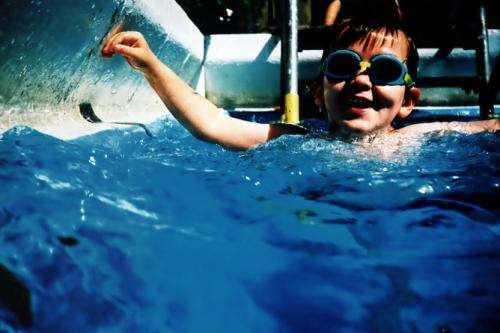
Swimming isn’t the best way to settle that full stomach but it’s unlikely to cause you to drown. Credit: Jaypeg
The old saying that you should wait at least 30 minutes after eating before you swim is based on the idea that after a big meal, blood will be diverted away from your arms and legs, towards your stomach's digestive tract. And if your limbs don't get enough blood flow to function, you're at risk of drowning.
But is it sound advice, or is it just parents wanting a 30-minute break to relax after a big lunch? For a fuelled-up child wanting to get back in the water, this can seem like eternity.
It's true that digestion redirects some of the blood from the muscles to aid in the digestive process. With a reduced blood flow, there is potentially less oxygen available to the working muscle and stomach, which is a potential cause of cramping – though some researchers discount this theory.
Cramps are involuntary, spasmodic contractions of skeletal muscle during or after exercise, usually related to fatigue. But cramping during exercise is more likely due to a combination of factors, such as dehydration, electrolyte imbalance and neurological fatigue, which are unique to each person.
The truth is, we have enough blood to keep all our body parts functioning after a big meal.
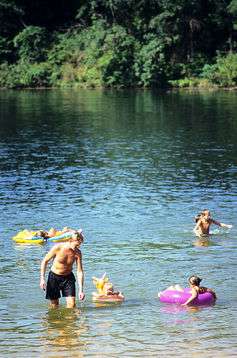
We have enough blood to keep all our body parts functioning after a big meal. Credit: Wisconsin Department of Natural Resources
Another suggested risk factor for swimming after eating is what's commonly referred to as a stitch (or exercise-related transient abdominal pain or ETAP in sports literature): sharp pain felt just below the rib cage. Stitches aren't well understood but are thought to be caused by cramping of the diaphragm due to restricted blood flow from pressure from the lungs above and abdomen below.With any vigorous exercise after eating, there could be some discomfort such as heartburn or vomiting, caused by unexpected reflux or involuntary regurgitation. This is more likely to occur when there's an increase in external pressure, such as while diving.
So what does the data say about the myth?
An examination of the Royal Lifesaving Association's Australian reports on drowning over the past few years gives no mention of lives being lost after eating. And neither the American Academy of Pediatrics, the United States' Consumer Product Safety Commission, nor the American Red Cross offer any guidelines or warning related to swimming after eating.
These organisations are far more concerned with the elevated risk of drowning due to drinking alcohol. Alcohol and drugs can severely impair judgement and physical ability, and increase the risk of spasm of the vocal cords if water enters the windpipe.
In the 2010-11 reporting period, 17% of all drownings in Australia were attributed to alcohol or drugs. Within the 18-to-34 age group, this figure was much higher – up to 45%. So it's important to be aware of the risk of alcohol and drugs when in, on and around the water.
While swimming on a full stomach can be uncomfortable and, if excessive, can lead to vomiting, it's unlikely to put you at greater risk of drowning. This will be great news for kids, but less so for their parents wanting to rest after lunch.
Common sense, however, suggests that swimming is not the best way to settle that full stomach. If you're keen to get back to the water quickly, opt for foods high in simple carbohydrates. They're not only good for you, they digest far more quickly than the fat and protein in a barbecued steak.
Source:
The Conversation
This story is published courtesy of the The Conversation (under Creative Commons-Attribution/No derivatives).
-
Study identifies scenarios that precede at-home pool drownings of young children
Oct 17, 2011 |
not rated yet |
0
-
Untreated heartburn may raise risk for esophageal cancer, study says
Jul 26, 2012 |
not rated yet |
0
-
Short, intense bursts of exercise could be better for our health than longer intervals
Sep 06, 2012 |
not rated yet |
0
-
Too much of a good thing? How drinking too much water can kill
Sep 28, 2012 |
not rated yet |
0
-
Exercise more beneficial on an empty stomach, research shows
Oct 30, 2012 |
not rated yet |
0
-
Motion perception revisited: High Phi effect challenges established motion perception assumptions
Apr 23, 2013 |
3 / 5 (2) |
2
-
Anything you can do I can do better: Neuromolecular foundations of the superiority illusion (Update)
Apr 02, 2013 |
4.5 / 5 (11) |
5
-
The visual system as economist: Neural resource allocation in visual adaptation
Mar 30, 2013 |
5 / 5 (2) |
9
-
Separate lives: Neuronal and organismal lifespans decoupled
Mar 27, 2013 |
4.9 / 5 (8) |
0
-
Sizing things up: The evolutionary neurobiology of scale invariance
Feb 28, 2013 |
4.8 / 5 (10) |
14
-
Classical and Quantum Mechanics via Lie algebras
Apr 15, 2011
- More from Physics Forums - Independent Research
More news stories
Consumers largely underestimating calorie content of fast food
People eating at fast food restaurants largely underestimate the calorie content of meals, especially large ones, according to a paper published today in BMJ.
Health
6 hours ago |
not rated yet |
0
It's not your imagination: Memory gets muddled at menopause
Don't doubt it when a woman harried by hot flashes says she's having a hard time remembering things. A new study published online in Menopause, the journal of The North American Menopause Society (NAMS), helps confirm with o ...
Health
7 hours ago |
not rated yet |
0
Farm bill: Senate rejects GMO labeling amendment
The Senate has overwhelmingly rejected an amendment allowing states to require labeling of genetically modified foods.
Health
8 hours ago |
not rated yet |
1
McDonald's can't shake criticism about nutrition
(AP)—McDonald's once again faced criticism that it's a purveyor of junk food that markets to children at its annual shareholder meeting Thursday.
Health
9 hours ago |
not rated yet |
0
Economic incentives increase blood donation without negative consequences
Can economic incentives such as gift cards, T-shirts, and time off from work motivate members of the public to increase their donations of blood?
Health
11 hours ago |
not rated yet |
0
|
Controlling mood through the motions of mitochondria
(Medical Xpress)—Regulating the distribution of power in neurons is done by a system that makes the national electric grid look simple by comparison. Each neuron has several thousand mitochondria confined ...
ACP issues recommendations for management of high blood glucose in hospitalized patients
High blood glucose is associated with poor outcomes in hospitalized patients, and use of intensive insulin therapy (IIT) to control hyperglycemia is a common practice in hospitals. But the recent evidence does not show a ...
Motion quotient: IQ predicted by ability to filter motion (w/ video)
A brief visual task can predict IQ, according to a new study. This surprisingly simple exercise measures the brain's unconscious ability to filter out visual movement. The study shows that individuals whose ...
Multiple research teams unable to confirm high-profile Alzheimer's study
Teams of highly respected Alzheimer's researchers failed to replicate what appeared to be breakthrough results for the treatment of this brain disease when they were published last year in the journal Science.
Scientists discover molecule triggers sensation of itch
Scientists at the National Institutes of Health report they have discovered in mouse studies that a small molecule released in the spinal cord triggers a process that is later experienced in the brain as ...
Researchers find common childhood asthma unconnected to allergens or inflammation
Little is known about why asthma develops, how it constricts the airway or why response to treatments varies between patients. Now, a team of researchers at Weill Cornell Medical College, Columbia University Medical Center ...