International consortium builds 'Google Map' of human metabolism
March 3, 2013 in Medical research
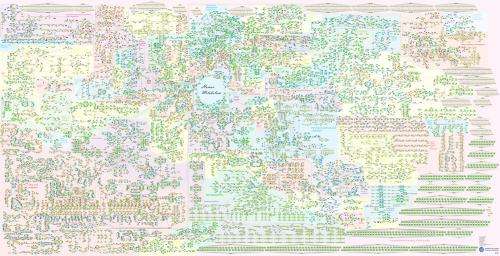
An international consortium of university researchers has produced the most comprehensive virtual reconstruction of human metabolism to date. Researchers liken Recon 2 to Google mapping for its ability to merge complex details into a single, interactive map. For example, researchers looking at how metabolism sets the stage for cancerous tumor growth could zoom in on the map for finely detailed images of individual metabolic reactions or zoom out to look at patterns and relationships among pathways or different sectors of metabolism. Credit: Anna Dröfn Daníelsdóttir, Freyr Jóhannsson, Soffía Jónsdóttir, Sindri Jarlsson, Jón Pétur Gunnarsson & Ronan M. T. Fleming from the University of Iceland.
Building on earlier pioneering work by researchers at the University of California, San Diego, an international consortium of university researchers has produced the most comprehensive virtual reconstruction of human metabolism to date. Scientists could use the model, known as Recon 2, to identify causes of and new treatments for diseases like cancer, diabetes and even psychiatric and neurodegenerative disorders. Each person's metabolism, which represents the conversion of food sources into energy and the assembly of molecules, is determined by genetics, environment and nutrition.
The researchers presented Recon 2 in a paper published online March 3 in the journal Nature Biotechnology.
Doctors have long recognized the importance of metabolic imbalances as an underlying cause of disease, but scientists have been ramping up their research on the connection as a result of compelling evidence enabled by the Human Genome Project and advances in systems biology, which leverages the power of high-powered computing to build vast interactive databases of biological information.
"Recon 2 allows biomedical researchers to study the human metabolic network with more precision than was ever previously possible. This is essential to understanding where and how specific metabolic pathways go off track to create disease," said Bernhard Palsson, Galletti Professor of Bioengineering at UC San Diego Jacobs School of Engineering.
"It's like having the coordinates of all the cars in town, but no street map. Without this tool, we don't know why people are moving the way they are," said Palsson.
He likened Recon 2 to Google mapping for its ability to merge complex details into a single, interactive map. For example, researchers looking at how metabolism sets the stage for cancerous tumor growth could zoom in on the "map" for finely detailed images of individual metabolic reactions or zoom out to look at patterns and relationships among pathways or different sectors of metabolism. This is not unlike how you can get a street view of a single house or zoom out to see how the house fits into the whole neighborhood, city, state, country and globe. And just as Google maps brings together a broad set of data – such as images, addresses, streets and traffic flow – into an easily navigated tool, Recon 2 pulls together a vast compendium of data from published literature and existing models of metabolic processes.
As a multi-scale representation of the human metabolic network, Recon 2 provides essential context for data being reviewed by researchers. Palsson and other scientists in the field have already successfully demonstrated the utility of such models in simple organisms such as yeast and E.coli. As a result, they have been able to engineer these organisms in the lab to improve the efficiency of ethanol production and predict drug resistance in bacteria.
One of the most promising applications for the network reconstruction is the ability to identify specific gene expressions and their metabolic pathways for targeted drug delivery. Large gene expression databases are available for human cells that have been treated with molecules extracted from existing drugs as well as drugs that are in development. Recon 2 allows researchers to use this existing gene expression data and knowledge of the entire metabolic network to figure how certain drugs would affect specific metabolic pathways found to create the conditions for cancerous cell growth, for example. They could then conduct virtual experiments to see whether the drug can fix the metabolic imbalance causing the disease.
Palsson's Systems Biology Research Group at UC San Diego built the first virtual reconstruction of the human metabolism network, known as Recon 1, in 2007 with a six-person team. It featured more than 3,300 known biochemical reactions documented in over 50 years of metabolic research. Recon 2, which contains more than 7,400 reactions, was built by bringing together researchers from dozens of institutions around the globe in a series of "jamboree" meetings to refine and consolidate the data used in the reconstruction. Palsson said this jamboree approach helped the group establish common standards to build a consensus reconstruction, simplify its usability for biomedical researchers, and increase its transparency. Recon 2 will facilitate many future biomedical studies and is freely available at http://humanmetabolism.org.
Recon 2 is already proving its utility, according to Ines Thiele, a professor at the University of Iceland and UC San Diego alumna, who led the Recon 2 effort. Thiele earned her Ph.D. in bioinformatics as a student of Palsson's and was part of the original Recon 1 team. Several other UC San Diego alumni, and former Palsson students, participated in the consortium from their new institutions, including Neema Jamshidi (Ph.D., 2008, M.D., 2009), who is now interning at UCLA; Jason Papin (Ph.D., 2004), a professor at the University of Virginia; and Nathan Price (Ph.D., 2005), who is a professor at the Institute for Systems Biology in Seattle, Wash.
Thiele said Recon 2 has successfully predicted alterations in metabolism that are currently used to diagnose certain inherited metabolic diseases.
"The use of this foundational resource will undoubtedly lead to a myriad of exciting predictions that will accelerate the translation of basic experimental results into clinical applications," said Thiele. "Ultimately, I envision it being used to personalize diagnosis and treatment to meet the needs of individual patients. In the future, this capability could enable doctors to develop virtual models of their patients' individual metabolic networks and identify the most efficacious treatment for various diseases including diabetes, cancer and neurodegenerative diseases."
As much as Recon 2 marks a significant improvement over Recon 1, there is still much work to be done, according to the research team. Thiele said Recon 2 accounts for almost 1,800 genes of an estimated 20,000 protein-coding genes in the human genome. "Clearly, further community effort will be required to capture chemical interactions with and between the rest of the genome," she said.
Journal reference:
Nature Biotechnology
Provided by
University of California - San Diego
-
Ubisoft going online with 'Ghost Recon' videogame
May 25, 2011 |
not rated yet |
0
-
Building a complete metabolic model
Sep 17, 2009 |
not rated yet |
0
-
Metabolism models may explain why Alzheimer's disease kills some neuron types first
Dec 06, 2010 |
not rated yet |
0
-
'Promiscuous' enzymes still prevalent in metabolism
Aug 30, 2012 |
not rated yet |
0
-
Comprehensive understanding of bacteria could lead to new insights into many organisms
Sep 25, 2009 |
not rated yet |
0
-
Motion perception revisited: High Phi effect challenges established motion perception assumptions
Apr 23, 2013 |
3 / 5 (2) |
2
-
Anything you can do I can do better: Neuromolecular foundations of the superiority illusion (Update)
Apr 02, 2013 |
4.5 / 5 (11) |
5
-
The visual system as economist: Neural resource allocation in visual adaptation
Mar 30, 2013 |
5 / 5 (2) |
9
-
Separate lives: Neuronal and organismal lifespans decoupled
Mar 27, 2013 |
4.9 / 5 (8) |
0
-
Sizing things up: The evolutionary neurobiology of scale invariance
Feb 28, 2013 |
4.8 / 5 (10) |
14
-
Why is zone 1 in liver more prone to ischemic injury?
May 23, 2013
-
How can there be villous adenoma in colon, if there are no villi there
May 22, 2013
-
How can there be a term called "intestinal metaplasia" of stomach
May 21, 2013
-
Pressure-volume curve: Elastic Recoil Pressure don't make sense
May 18, 2013
-
If you became brain-dead, would you want them to pull the plug?
May 17, 2013
-
MRI bill question
May 15, 2013
- More from Physics Forums - Medical Sciences
More news stories
Study reveals new mechanism for estrogen suppression of liver lipid synthesis
By discovering the new mechanism by which estrogen suppresses lipid synthesis in the liver, UC Irvine endocrinologists have revealed a potential new approach toward treating certain liver diseases.
Medical research
May 23, 2013 |
5 / 5 (1) |
0
|
MRI-based measurement helps predict vascular disease in the brain
Aortic arch pulse wave velocity, a measure of arterial stiffness, is a strong independent predictor of disease of the vessels that supply blood to the brain, according to a new study published in the June issue the journal ...
Medical research
May 23, 2013 |
not rated yet |
0
Antibiotics: A new understanding of sulfonamide nervous system side effects
Since the discovery of Prontosil in 1932, sulfonamide antibiotics have been used to combat a wide spectrum of bacterial infections, from acne to chlamydia and pneumonia. However, their side effects can include serious neurological ...
Medical research
May 23, 2013 |
3 / 5 (1) |
0
|
Scientists discover molecule triggers sensation of itch
Scientists at the National Institutes of Health report they have discovered in mouse studies that a small molecule released in the spinal cord triggers a process that is later experienced in the brain as ...
Medical research
May 23, 2013 |
5 / 5 (3) |
0
|
Discarded immune cells induce the relocation of stem cells
Spanish researchers have discovered that the daily clearance of neutrophils from the body stimulates the release of hematopoietic stem cells from the bone marrow into the bloodstream, according to a report published today ...
Medical research
May 23, 2013 |
5 / 5 (2) |
0
First drug to improve heart failure mortality in over a decade
Coenzyme Q10 decreases all cause mortality by half, according to the results of a multicentre randomised double blind trial presented today at Heart Failure 2013 congress. It is the first drug to improve heart failure mortality ...
Heart failure accelerates male 'menopause'
Heart failure accelerates the aging process and brings on early andropausal syndrome (AS), according to research presented today at the Heart Failure Congress 2013. AS, also referred to as male 'menopause', was four times ...
Death highest in heart failure patients admitted in January, on Friday, and overnight
Mortality and length of stay are highest in heart failure patients admitted in January, on Friday, and overnight, according to research presented today at the Heart Failure Congress 2013. The analysis of nearly 1 million ...
Feds fight morning-after pill age ruling in NY
(AP)—Department of Justice lawyers have again asked a federal appeals court in New York to delay lifting age restrictions and prescription requirements on an emergency contraceptive popularly known as the morning-after ...
Researchers identify first drug targets in childhood genetic tumor disorder
Two mutations central to the development of infantile myofibromatosis (IM)—a disorder characterized by multiple tumors involving the skin, bone, and soft tissue—may provide new therapeutic targets, according to researchers ...
Driving and hands-free talking lead to spike in errors, study shows
Talking on a hands-free device while behind the wheel can lead to a sharp increase in errors that could imperil other drivers on the road, according to new research from the University of Alberta.
Mar 03, 2013
Rank: 3.7 / 5 (3)
Mar 04, 2013
Rank: 1 / 5 (1)
DOGGONE RIGHT! There should be a high res version! What are they afraid of, we might learn too much about ourselves and never need a doctor again! DAYYUM this is PITIFUL!
word-to-ya-muthas!
Mar 04, 2013
Rank: not rated yet
At least on reactome it's possible to see it in a graphical mode.
Mar 04, 2013
Rank: not rated yet
"How does BioModels Database differ from Reactome?
Reactome is a database of reactions and pathways, not a database of quantitative models. The SBML files exported by Reactome (or KEGG for that matter) do not contain any quantitative information, whether quantities (amount or concentration of species) or kinetics. Reactome aims to describe the human cellular pathways accurately and in great details, not to distribute abstract quantitative description of their functions."