News tagged with health
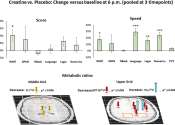
B vitamins could delay dementia
(Medical Xpress)—Despite spending billions of dollars on research and development, drug companies have been unable to come up with effective treatments for dementia and Alzheimer's Disease (AD). Now, A. ...
Neuroscience
May 21, 2013 |
4.9 / 5 (17) |
0
|
The compound in the Mediterranean diet that makes cancer cells 'mortal'
New research suggests that a compound abundant in the Mediterranean diet takes away cancer cells' "superpower" to escape death. By altering a very specific step in gene regulation, this compound essentially re-educates cancer ...
Cancer
May 20, 2013 |
4.9 / 5 (17) |
3
|
Effects of stress on brain cells offer clues to new anti-depressant drugs
Research from King's College London reveals the detailed mechanism behind how stress hormones reduce the number of new brain cells - a process considered to be linked to depression. The researchers identified a key protein ...
Neuroscience
May 06, 2013 |
3.9 / 5 (7) |
0
|
Can you put a price on health?
As health services strive to improve quality and reduce costs, researchers study the benefits – and the pitfalls – of 'pay for performance' in hospitals.
Health
4 hours ago |
not rated yet |
0
|
Phthalates: Study links chemicals widely found in plastics, processed food to elevated blood pressure in children, teens
Plastic additives known as phthalates (pronounced THAL-ates) are odorless, colorless and just about everywhere: They turn up in flooring, plastic cups, beach balls, plastic wrap, intravenous tubing and—according to the ...
Pediatrics
May 22, 2013 |
not rated yet |
1
|
Study finds vitamin C can kill drug-resistant TB (w/ video)
In a striking, unexpected discovery, researchers at Albert Einstein College of Medicine of Yeshiva University have determined that vitamin C kills drug-resistant tuberculosis (TB) bacteria in laboratory culture. The finding ...
Diseases, Conditions, Syndromes
May 21, 2013 |
4.4 / 5 (7) |
0
|
Early-life traffic-related air pollution exposure linked to hyperactivity
Early-life exposure to traffic-related air pollution was significantly associated with higher hyperactivity scores at age 7, according to new research from the University of Cincinnati (UC) and Cincinnati Children's Hospital ...
Attention deficit disorders
May 21, 2013 |
not rated yet |
0
|
Leading explanations for whooping cough's resurgence don't stand up to scrutiny
Whooping cough has exploded in the United States and some other developed countries in recent decades, and many experts suspect ineffective childhood vaccines for the alarming resurgence.
Diseases, Conditions, Syndromes
May 20, 2013 |
5 / 5 (1) |
0
|
Measles surges in UK years after flawed research (Update)
More than a decade ago, British parents refused to give measles shots to at least a million children because of now discredited research that linked the vaccine to autism. Now, health officials are scrambling ...
Diseases, Conditions, Syndromes
May 20, 2013 |
5 / 5 (1) |
0
H1N1 discovered in marine mammals
Scientists at the University of California, Davis, detected the H1N1 (2009) virus in free-ranging northern elephant seals off the central California coast a year after the human pandemic began, according ...
Diseases, Conditions, Syndromes
May 15, 2013 |
not rated yet |
1
|
Father absence in early childhood linked to depression in adolescent girls
(Medical Xpress)—New research from the Children of the 90s study at the University of Bristol shows that girls whose fathers were absent during the first five years of life were more likely to develop depressive ...
Psychology & Psychiatry
May 15, 2013 |
2 / 5 (1) |
0
|
Human disease leptospirosis identified in new species, the banded mongoose, in Africa
(Medical Xpress)—The newest public health threat in Africa, scientists have found, is coming from a previously unknown source: the banded mongoose. Leptospirosis, the disease is called. And the banded mongoose ...
Diseases, Conditions, Syndromes
May 14, 2013 |
not rated yet |
0
|
Flu in pregnancy may quadruple child's risk for bipolar disorder
Pregnant mothers' exposure to the flu was associated with a nearly fourfold increased risk that their child would develop bipolar disorder in adulthood, in a study funded by the National Institutes of Health. The findings ...
Psychology & Psychiatry
May 14, 2013 |
not rated yet |
0
|
Alzheimer's markers predict start of mental decline
(Medical Xpress)—Scientists at Washington University School of Medicine in St. Louis have helped identify many of the biomarkers for Alzheimer's disease that could potentially predict which patients will develop the disorder ...
Alzheimer's disease & dementia
May 14, 2013 |
3 / 5 (1) |
0
|
Study IDs key protein for cell death, offers way to kill cancer cells by forcing them into programmed-death pathway
When cells suffer too much DNA damage, they are usually forced to undergo programmed cell death, or apoptosis. However, cancer cells often ignore these signals, flourishing even after chemotherapy drugs have ...
Genetics
May 14, 2013 |
5 / 5 (9) |
0
|
Health
At the time of the creation of the World Health Organization (WHO), in 1948, Health was defined as being "a state of complete physical, mental, and social well-being and not merely the absence of disease or infirmity".
This definition invited nations to expand the conceptual framework of their health systems beyond issues related to the physical condition of individuals and their diseases, and it motivated us to focus our attention on what we now call social determinants of health. Consequently, WHO challenged political, academic, community, and professional organisations devoted to improving or preserving health to make the scope of their work explicit, including their rationale for allocating resources. This opened the door for public accountability [3].
Only a handful of publications have focused specifically on the definition of health and its evolution in the first 6 decades. Some of them highlight its lack of operational value and the problem created by use of the word "complete." Others declare the definition, which has not been modified since 1948, "simply a bad one." [4]. More recently, Smith suggested that it is "a ludicrous definition that would leave most of us unhealthy most of the time." [5].
In 1986, the WHO, in the Ottawa Charter for Health Promotion, said that health is "a resource for everyday life, not the objective of living. Health is a positive concept emphasizing social and personal resources, as well as physical capacities." Classification systems such as the WHO Family of International Classifications (WHO-FIC), which is composed of the International Classification of Functioning, Disability, and Health (ICF) and the International Classification of Diseases (ICD) also define health.
Overall health is achieved through a combination of physical, mental, emotional, and social well-being, which, together is commonly referred to as the Health Triangle.

For more information about Health, read the full article at
Wikipedia.
This text uses material from Wikipedia and is available under the GNU Free Documentation License.