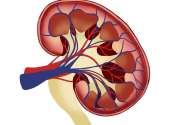
Polycystic Kidney Disease

FDA reports Samsca may cause liver damage

(HealthDay)—After reviewing data from recent large clinical trials, the U.S. Food and Drug Administration has determined that Samsca (tolvaptan) should not be used for longer than 30 days and should not ...

May 02, 2013
popularity not rated yet | comments 0

Polycystic kidney disease (PKD or PCKD, also known as polycystic kidney syndrome) is a cystic genetic disorder of the kidneys. There are two types of PKD: autosomal dominant polycystic kidney disease (ADPKD) and the less-common autosomal recessive polycystic kidney disease (ARPKD).

It occurs in humans and some other animals. PKD is characterized by the presence of multiple cysts (hence, "polycystic") typically in both kidneys; however 17% of cases initially present with observable disease in one kidney, with most cases progressing to bilateral disease in adulthood. The cysts are numerous and are fluid-filled, resulting in massive enlargement of the kidneys. The disease can also damage the liver, pancreas and, in some rare cases, the heart and brain. The two major forms of polycystic kidney disease are distinguished by their patterns of inheritance.

Polycystic kidney disease is one of the most common life-threatening genetic diseases, affecting an estimated 12.5 million people worldwide. In half of the people with polycystic kidney disease, there is no family history of the disease. In these cases, the gene coding for the disease occurs out of a spontaneous genetic mutation without either parent being a carrier of the gene.[citation needed]

This text uses material from Wikipedia licensed under CC BY-SA

Latest Spotlight News

New paper offers insights into how cancer cells avoid cell death

(Medical Xpress)—A new study by a team of researchers from the University of Notre Dame provides an important new insight into how cancer cells are able to avoid the cell death process. The findings may ...

Study shows cultural images may hinder proficiency in second language skills

(Medical Xpress)—A team of combined researchers from Columbia Business School and Singapore Management University has found that people who have learned a second language become less proficient at speaking ...

Key protein is linked to circadian clocks, helps regulate metabolism

Inside each of us is our own internal timing device. It drives everything from sleep cycles to metabolism, but the inner-workings of this so-called "circadian clock" are complex, and the molecular processes behind it have ...

The discerning fruit fly: Linking brain-cell activity and behavior in smell recognition

Behind the common expression "you can't compare apples to oranges" lies a fundamental question of neuroscience: How does the brain recognize that apples and oranges are different? A group of neuroscientists ...

Study suggests new approach to fight lung cancer

Recent research has shown that cancer cells have a much different – and more complex – metabolism than normal cells. Now, scientists at The University of Texas at Dallas have found that exploiting these differences might ...

Scientists catch EGFR passing a crucial message to cancer-promoting protein

Researchers have discovered and mapped the signaling network between two previously unconnected proteins, exposing a link that, if broken, could cut off cancer cell growth at its starting point.

Getting enough sleep could help prevent type 2 diabetes

Men who lose sleep during the work week may be able to lower their risk of developing Type 2 diabetes by getting more hours of sleep, according to Los Angeles Biomedical Research Institute (LA BioMed) research findings presented ...

Aspirin may fight cancer by slowing DNA damage

Aspirin is known to lower risk for some cancers, and a new study led by a UC San Francisco scientist points to a possible explanation, with the discovery that aspirin slows the accumulation of DNA mutations in abnormal cells ...

Scientists find potential genetic drivers behind male heart disease risk

(Medical Xpress)—University of Leicester scientists have discovered a potential genetic contributor to the increased risk of heart disease among men.

Expelled DNA that traps toxins may backfire in obese

(Medical Xpress)—The body's most powerful immune cells may have a radical way of catching their prey that could backfire on people who are overweight and others at risk for cancer, diabetes and chronic ...