New book explores stem cell therapies for heart disease
May 17, 2011 in Cardiology

New book explores stem cell therapies for heart disease

Enlarge

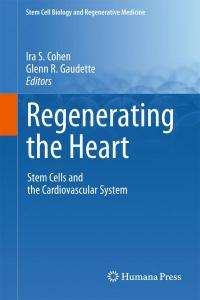
This is the cover of "Regenerating the Heart: Stem Cells and the Cardiovascular System," edited by Glenn Gaudette, associate professor of biomedical engineering at Worcester Polytechnic Institute (WPI), and Ira Cohen, professor of physiology and biophysics at Stony Brook (2011, Humana Press). Credit: Humana Press

A new book edited by researchers at Worcester Polytechnic Institute (WPI) and the Stony Brook University School of Medicine provides a comprehensive look at the science and application of cellular therapies aimed at the leading cause of death---heart disease. "Regenerating the Heart: Stem Cells and the Cardiovascular System" (Humana Press) is edited by Glenn Gaudette, associate professor of biomedical engineering at WPI, and Ira Cohen, professor of physiology and biophysics at Stony Brook.

Recognized leaders in the field, Cohen and Gaudette have collaborated on cardiac regeneration research projects since 2002, when Gaudette was a faculty member at Stony Brook. Last year Humana Press asked the team to develop and edit the new book to serve as a foundational text for the emerging field. "We were fortunate to have leading investigators in this field, from around the word, contribute original material for this book," Gaudette said. "It's a book for clinicians, investigators, and graduate students who want to understand the history of the field, and to see where the science is today across all the major approaches of using stem cells to heal the beating ."

According to the U.S. (CDC), heart disease is the leading killer of men and women, accounting for approximately one in four deaths in the United States each year. The CDC also reports that each year approximately 785,000 Americans have a first heart attack, while another 470,000 people who have already had one or more heart attacks have another. It is the magnitude of the potential impact on human health that motivated Gaudette and Cohen to focus on new therapies using stem cells to regenerate cardiac tissues damaged by or other diseases. "As we look forward to the twenty-first century, we see the potential of cell therapy to address many cardiovascular diseases," Cohen and Gaudette write in the book's introduction. "From , to atrioventricular nodal dysfunction (heart arrhythmia), the young but promising field of cell therapy is likely to play a significant role in developing a cure."

Gaudette is an expert on the mechanical aspects of cardiac function. His lab is exploring ways to coax bone marrow–derived stem cells to regenerate cardiac muscle and improve the heart's ability to pump blood. Cohen, an expert on the electrical signals that regulate heart rhythms, is using bone marrow–derived stem cells to develop an implantable biological pacemaker that could treat cardiac arrhythmias. In addition to editing the book, Cohen and Gaudette contributed chapters based on their own expertise.

The book is organized into four sections: boosting the heart's mechanical function, restoring normal heart rhythms, regenerating specific heart tissues like valves and blood vessels, and the emerging techniques being developed to deliver and assess various stem cells therapies for the heart. It includes chapters from three other WPI faculty members: Tanja Dominko, associate professor of biology and biotechnology, and Raymond Page and Marsha Rolle, assistant professors of biomedical engineering, wrote about work in their labs exploring various elements of tissue regeneration.

"We have learned greatly from the preparation of this text," Gaudette and Cohen write. "We thank the authors for their fine contributions and hope that [this book] contributes to the education of newly committed and veteran researchers alike."

More information: www.springer.com/l… -61779-020-1)

Provided by Worcester Polytechnic Institute search and more info website

not rated yet  

Rank not rated yet
Related Stories
Relevant PhysicsForums posts

More news stories

Free fatty acids linked to cardiac risk in late adulthood

(HealthDay)—Blood levels of free fatty acids are associated with insulin resistance during young adulthood and cardiovascular risk factors in later adulthood, according to a study published online May 13 ...

Cardiology created May 17, 2013 | popularity not rated yet | comments 0 | with audio podcast

Diagnosing heart attacks: There's an app for that

An experimental, inexpensive iPhone application transmitted diagnostic heart images faster and more reliably than emailing photo images, according to a research study presented at the American Heart Association's Quality ...

Cardiology created May 17, 2013 | popularity not rated yet | comments 0

Study suggests new role for ECMO in treating patients with cardiac arrest and profound shock

Extracorporeal membrane oxygenation (ECMO), a procedure traditionally used during cardiac surgeries and in the ICU that functions as an artificial replacement for a patient's heart and lungs, has also been used to resuscitate ...

Cardiology created May 17, 2013 | popularity not rated yet | comments 0

Stroke patients respond similarly to after-stroke care, despite age difference

Age has little to do with how patients should be treated after suffering a stroke, according to new research from the University of Georgia.

Cardiology created May 17, 2013 | popularity not rated yet | comments 0 | with audio podcast

Depression linked to almost doubled stroke risk in middle-aged women

Depressed middle-aged women have almost double the risk of having a stroke, according to research published in Stroke: Journal of the American Heart Association.

Cardiology created May 16, 2013 | popularity not rated yet | comments 0


Treatment of sleep apnea improves glucose levels in prediabetes

Optimal treatment of sleep apnea in patients with prediabetes improves blood sugar (glucose) levels and thus can reduce cardiometabolic risk, according to a study to be presented at the ATS 2013 International Conference in ...

Whole-cell vaccine was more effective than acellular vaccine during CA pertussis outbreak

Whole-cell pertussis vaccines were more effective at protecting against pertussis than acellular pertussis vaccines during a large recent outbreak, according to a new Kaiser Permanente study published in Pediatrics.

Blame your parents for bunion woes

A novel study reports that white men and women of European descent inherit common foot disorders, such as bunions (hallux valgus) and lesser toe deformities, including hammer or claw toe. Findings from the Framingham Foot ...

Genetic diversity within tumors predicts outcome in head and neck cancer

A new measure of the heterogeneity – the variety of genetic mutations – of cells within a tumor appears to predict treatment outcomes of patients with the most common type of head and neck cancer. In the May 20 issue ...

Molecular marker from pancreatic 'juices' helps identify pancreatic cancer

Researchers at Mayo Clinic have developed a promising method to distinguish between pancreatic cancer and chronic pancreatitis—two disorders that are difficult to tell apart. A molecular marker obtained from pancreatic ...

Commonly used catheters double risk of blood clots in ICU and cancer patients

Touted for safety, ease and patient convenience, peripherally inserted central catheters have become many clinicians' go-to for IV delivery of antibiotics, nutrition, chemotherapy, and other medications.