Alzheimer's prevention in your pantry
June 27, 2011 in Medical research
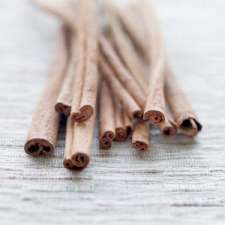
(Medical Xpress) -- Alzheimer's, the degenerative brain disorder that disrupts memory, thought and behavior, is devastating to both patients and loved ones. According to the Alzheimer's Association, one in eight Americans over the age of 65 suffers from the disease. Now Tel Aviv University has discovered that an everyday spice in your kitchen cupboard could hold the key to Alzheimer's prevention.
An extract found in cinnamon bark, called CEppt, contains properties that can inhibit the development of the disease, according to Prof. Michael Ovadia of the Department of Zoology at Tel Aviv University. His research, conducted in collaboration with Prof. Ehud Gazit, Prof. Daniel Segal and Dr. Dan Frenkel, was recently published in the journal PLoS ONE.
Taking a cue from the ancient world
Prof. Ovadia was inspired to investigate the healing properties of cinnamon by a passage in the Bible. It describes high priests using the spice in a holy ointment, he explains, presumably meant to protect them from infectious diseases during sacrifices. After discovering that the cinnamon extract had antiviral properties, Prof. Ovadia empirically tested these properties in both laboratory and animal Alzheimer's models.
The researchers isolated CEppt by grinding cinnamon and extracting the substance into an aqueous buffer solution. They then introduced this solution into the drinking water of mice that had been genetically altered to develop an aggressive form of Alzheimer's disease, and fruit flies that had been mutated with a human gene that also stimulated Alzheimer's disease and shortened their lifespan.
After four months, the researchers discovered that development of the disease had slowed remarkably and the animals' activity levels and longevity were comparable to that of their healthy counterparts. The extract, explains Prof. Ovadia, inhibited the formation of toxic amyloid polypeptide oligomers and fibrils, which compose deposits of plaque found in the brains of Alzheimer's patients.
In the test-tube model, the substance was also found to break up amyloid fibers, similar to those collected in the brain to kill neurons. According to Prof. Ovadia, this finding indicates that CEppt may not just fight against the development of the disease, but may help to cure it after Alzheimer's molecules have already formed. In the future, he says, the team of researchers should work towards achieving the same result in animal models.
Adding a dash of cinnamon
Don't rush to your spice cabinet just yet, however. It would take far more than a toxic level of the spice more than 10 grams of raw cinnamon a day to reap the therapeutic benefits. The solution to this medical catch-22, Prof. Ovadia says, would be to extract the active substance from cinnamon, separating it from the toxic elements.
"The discovery is extremely exciting. While there are companies developing synthetic AD inhibiting substances, our extract would not be a drug with side effects, but a safe, natural substance that human beings have been consuming for millennia," says Prof. Ovadia.
Though it can't yet be used to fight Alzheimer's, cinnamon still has its therapeutic benefits it can also prevent viral infections when sprinkled into your morning tea.
Provided by
Tel Aviv University
-
'Bird brains' are smart on Alzheimer's
Apr 18, 2011 |
not rated yet |
0
-
Loss of scent sense linked to Alzheimer's
Jul 04, 2007 |
not rated yet |
0
-
Levels of coumarin in cassia cinnamon vary greatly even in bark from the same tree
Nov 03, 2010 |
not rated yet |
0
-
An Alzheimer's vaccine in a nasal spray
Feb 28, 2011 |
not rated yet |
0
-
Appealing the death sentence for brain cells
May 29, 2008 |
not rated yet |
0
-
Motion perception revisited: High Phi effect challenges established motion perception assumptions
Apr 23, 2013 |
3 / 5 (2) |
2
-
Anything you can do I can do better: Neuromolecular foundations of the superiority illusion (Update)
Apr 02, 2013 |
4.5 / 5 (11) |
5
-
The visual system as economist: Neural resource allocation in visual adaptation
Mar 30, 2013 |
5 / 5 (2) |
9
-
Separate lives: Neuronal and organismal lifespans decoupled
Mar 27, 2013 |
4.9 / 5 (8) |
0
-
Sizing things up: The evolutionary neurobiology of scale invariance
Feb 28, 2013 |
4.8 / 5 (10) |
14
-
Why is zone 1 in liver more prone to ischemic injury?
May 23, 2013
-
How can there be villous adenoma in colon, if there are no villi there
May 22, 2013
-
How can there be a term called "intestinal metaplasia" of stomach
May 21, 2013
-
Pressure-volume curve: Elastic Recoil Pressure don't make sense
May 18, 2013
-
If you became brain-dead, would you want them to pull the plug?
May 17, 2013
-
MRI bill question
May 15, 2013
- More from Physics Forums - Medical Sciences
More news stories
Study reveals new mechanism for estrogen suppression of liver lipid synthesis
By discovering the new mechanism by which estrogen suppresses lipid synthesis in the liver, UC Irvine endocrinologists have revealed a potential new approach toward treating certain liver diseases.
Medical research
May 23, 2013 |
5 / 5 (1) |
0
|
MRI-based measurement helps predict vascular disease in the brain
Aortic arch pulse wave velocity, a measure of arterial stiffness, is a strong independent predictor of disease of the vessels that supply blood to the brain, according to a new study published in the June issue the journal ...
Medical research
May 23, 2013 |
not rated yet |
0
Antibiotics: A new understanding of sulfonamide nervous system side effects
Since the discovery of Prontosil in 1932, sulfonamide antibiotics have been used to combat a wide spectrum of bacterial infections, from acne to chlamydia and pneumonia. However, their side effects can include serious neurological ...
Medical research
May 23, 2013 |
3 / 5 (1) |
0
|
Scientists discover molecule triggers sensation of itch
Scientists at the National Institutes of Health report they have discovered in mouse studies that a small molecule released in the spinal cord triggers a process that is later experienced in the brain as ...
Medical research
May 23, 2013 |
5 / 5 (3) |
0
|
Discarded immune cells induce the relocation of stem cells
Spanish researchers have discovered that the daily clearance of neutrophils from the body stimulates the release of hematopoietic stem cells from the bone marrow into the bloodstream, according to a report published today ...
Medical research
May 23, 2013 |
5 / 5 (2) |
0
First drug to improve heart failure mortality in over a decade
Coenzyme Q10 decreases all cause mortality by half, according to the results of a multicentre randomised double blind trial presented today at Heart Failure 2013 congress. It is the first drug to improve heart failure mortality ...
Heart failure accelerates male 'menopause'
Heart failure accelerates the aging process and brings on early andropausal syndrome (AS), according to research presented today at the Heart Failure Congress 2013. AS, also referred to as male 'menopause', was four times ...
Death highest in heart failure patients admitted in January, on Friday, and overnight
Mortality and length of stay are highest in heart failure patients admitted in January, on Friday, and overnight, according to research presented today at the Heart Failure Congress 2013. The analysis of nearly 1 million ...
Feds fight morning-after pill age ruling in NY
(AP)—Department of Justice lawyers have again asked a federal appeals court in New York to delay lifting age restrictions and prescription requirements on an emergency contraceptive popularly known as the morning-after ...
Researchers identify first drug targets in childhood genetic tumor disorder
Two mutations central to the development of infantile myofibromatosis (IM)—a disorder characterized by multiple tumors involving the skin, bone, and soft tissue—may provide new therapeutic targets, according to researchers ...
Driving and hands-free talking lead to spike in errors, study shows
Talking on a hands-free device while behind the wheel can lead to a sharp increase in errors that could imperil other drivers on the road, according to new research from the University of Alberta.