Sleep apnea patient now sleeps well, thanks to new CPAP class
For some people suffering from obstructive sleep apnea, the remedy feels every bit as troublesome as the disorder. That’s how Robert Upchurch felt until he took advantage of a new class at the Stanford Sleep Medicine Center in Redwood City.
Upchurch, 48, who trains aircraft mechanics for United Airlines, was diagnosed with obstructive sleep apnea last August after an overnight evaluation at the sleep medicine center. Although the Hawaiian-born triathlete worked out almost every day, he had high blood pressure and was overweight. Both are common symptoms of obstructive sleep apnea, which stresses the heart and can slow down the body’s metabolism, leading to weight gain.
“I had forgotten what it was like to wake up rested,” he said. “I was always exhausted. I walked around tense as a rock. But for me, that was normal. At my evaluation at the Stanford Sleep Medicine Center, I woke up in the morning and told the doctors that I had slept well. They said, ‘No, you didn’t.’”
More than 12 million Americans suffer from this potentially fatal condition, which occurs when the muscles in the back of the throat relax during sleep, narrowing or completely collapsing the airway. (Apnea, a Greek word, means “without breath.”) When the brain senses that it’s not getting enough oxygen, it briefly wakes the person up. This pattern, which may repeat hundreds of times each night, leads to shallow sleep, daytime sleepiness or fatigue, and cognitive dysfunction. It also increases the risk of heart-related disease such as high blood pressure, heart attack, arrhythmias, heart failure and stroke.
Upchurch was set up with a continuous positive airway pressure, or CPAP, machine, which blows air into the upper respiratory tract through the nose to keep the airway open. But he found it uncomfortable. The air pressure felt too high, he said. He would wake up with a sore stomach and dry mouth. So he stopped using it.
Several months later, he received a notice in the mail about a new, monthly CPAP class to help sleep medicine center patients adjust to their machines. “CPAP has always been the gold standard for treatment of obstructive sleep apnea, but adherence to the treatment varies a lot — from 20-80 percent, depending on the study,” said Michelle Cao, DO, a Stanford Hospital pulmonologist and sleep expert who leads the class. “My goal was to try to help people who were having trouble with it solve their problems. I call it a CPAP boot camp.”
Upchurch went to a meeting of the class in April. There were about 10 other participants. They all brought their machines. “Everyone had a different question, but we were all learning from each other,” he said.
Upchurch told Cao about his troubles. She lowered the airflow pressure on his machine a few notches and also refitted his face mask, which looks a little like the oxygen mask a professional football player uses on the sidelines. She also showed him how to use the machine’s humidifier to help prevent his mouth from drying out.
“I could have just walked away from it, but going to that class made a huge difference,” he said. “Now I’m getting a much deeper sleep. I feel more energetic, and my upper body feels more limber and relaxed.”
Upchurch said he also has benefitted from the guidance he received at the center on adjusting his diet and his sleep schedule to help ensure better rest. In May, he ran the 100th annual Bay to Breakers, a seven-and-a-half mile race in San Francisco, and felt so energized afterward that he went to a nearby hotel pool to swim laps. Now, he is preparing for San Francisco Marathon on July 31.
The sleep medicine center offers a variety of other treatments for obstructive sleep apnea, including surgery to reduce anatomical obstruction in the nose, throat and/or tongue, and education about behavioral measures to alleviate the disorder, such as a change in sleeping position and weight loss.
Birthplace of sleep medicine
Established in 1972, the center, widely recognized as the birthplace of sleep medicine, treats both adults and children. Its faculty comprises some of the foremost medical experts on obstructive sleep apnea — a term coined by the center’s Christian Guilleminault, MD — as well as other sleep apneas, insomnia, restless legs syndrome, narcolepsy, idiopathic hypersomnia (disabling daytime sleepiness) and parasomnias, such as teeth-grinding and sleepwalking.
“Many of the pioneering discoveries in sleep medicine and basic sleep research were made by Stanford’s team of internationally recognized scientists,” noted Clete Kushida, MD, PhD, medical director of the sleep medicine center.
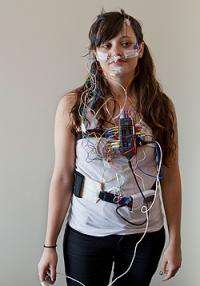
When Upchurch went for his sleep study, he spent the night in one of the center’s 18 beds, each of which is in a private room with state-of-the-art monitoring equipment and sound-proofing. (Four of the beds are used for research studies; the rest are dedicated to patients.) Before going to sleep, he was attached to a polysomnograph, which measures a range of physiological functions, including brain activity, eye movements, heart rhythm, breathing and muscle activity.
Now, the center is increasing the number of portable, or ambulatory, monitoring devices it makes available to patients, allowing sleep studies to be conducted at home. The technology in these devices has improved tremendously over the past several years, Kushida said, making them almost as accurate as the larger versions at the sleep medicine center. They are best-suited for patients thought to have a high probability of having obstructive sleep apnea, as well as for patients who need to spend the night in their own beds for reasons of comfort or health.
Cognitive behavioral therapy for insomnia
Insomnia is the most common sleep disorder, affecting some 10 to 14 percent of Americans. Insomnia most commonly begins during periods of stress related to work or family, but it can also emerge as a symptom of depression, anxiety, dementia or any number of physical conditions, such as abnormal thyroid function, asthma or chronic pain. Regardless of how it begins, when the problem persists it should be treated. Many people turn to prescription sleep medication, which often helps but also can lead to drug dependence or tolerance.
But studies have shown that cognitive behavioral therapy is as effective as sleep medication in the short run and much more effective in the long run. The Stanford Sleep Medicine Center has been at the forefront of the nonpharmacological treatment of insomnia, and it has the only Bay Area program — and one of the few such programs nationwide — devoted to cognitive behavioral therapy for sleeplessness.
The therapy equips patients with a set of mental tools to help them overcome their insomnia. “I think by and large, most people don’t know that this exists as an option, but it is incredibly effective,” said Rachel Manber, PhD, who has run the program for more than a decade. Currently, Manber is leading a national initiative to train psychologists in the Veterans Affairs Health Care System in cognitive behavioral therapy for insomnia.
The therapy helps patients establish their bed as a cue for sleep and weaken it as a cue for wakefulness. It also teaches them strategies for reducing thoughts and worries that interfere with sleep.
“It’s gratifying for me to see people get better,” Manber said. “And they get better quickly.”


