Scleroderma study identifies roadblocks to employment
Systemic scleroderma has slowed Tracy Zinn but it has not stopped her from working. Thanks in part to determination and an accommodating employer, Zinn is now in her 13th year as an account executive for a firm that produces educational software. But, many with the incapacitating disease are not as fortunate.
In the United States, the work disability rate for people with systemic scleroderma, also known as systemic sclerosis, is two to three times that of people with some other rheumatic conditions, according to research data from investigators at The University of Texas Health Science Center at Houston (UTHealth) Medical School.
Systemic scleroderma is a chronic autoimmune disease affecting about 100,000 people in the United States. It is associated with hardening of the skin and can also lead to thickening of blood vessels, lungs and other organs. Depending on which organ is affected, the disease can be fatal.
To help people with systemic scleroderma obtain or hold onto jobs, researchers investigated determinants of work disability in one of the largest longitudinal cohorts of systemic scleroderma patients in the country – the Genetics versus Environment in Scleroderma Outcome Study (GENISOS).
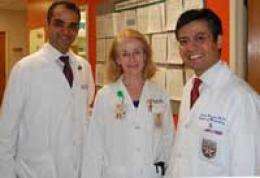
Researchers found that demographic, clinical and psychosocial factors contribute to systemic scleroderma-related work disability, said Shervin Assassi, M.D., M.S., the study's senior author and an assistant professor of medicine at the UTHealth Medical School. Findings are online and are scheduled to be in the August print issue of Seminars in Arthritis and Rheumatism.
Lower educational level, more severe fatigue and lung involvement (thickening in the lung tissue and vessels), as well as less social support, were associated with work disability in the early stages of the disease. In patients who were working when they entered the GENISOS study, non-Caucasians in addition to those with more severe fatigue and lung involvement were at higher risk of developing a work disability due to their health.
The silver lining of the study is that progress is being made in addressing at least one of the medical factors and actions can be taken to address two of the non-medical factors in some circumstances.
"Severity of lung involvement is the most prominent clinical factor that predicts work disability among patients with scleroderma," he said. "We are presently investigating clinical, genetic and other biological markers that can predict the course of scleroderma lung disease."
Maureen Mayes, M.D., M.P.H., a study co-author, professor and Elizabeth Bidgood Chair in Rheumatology at the UTHealth Medical School, said the study suggests that retraining may be an option for people no longer able to perform their current duties.
Further, additional support may help people keep or get a job, said Roozbeh Sharif, M.D., lead author and a postdoctoral fellow at the UTHealth Medical School.
"Patients who had a better interpersonal support system from their family members and friends had a lower chance of developing work disability," he said. "These findings further emphasize the important impact of psychosocial factors on the scleroderma patient and underscore the beneficial role of strong social support from family, friends and patient support groups."
Systemic scleroderma often begins with numbness in fingers and toes, a condition known as Raynaud's disease. It is sometimes followed by tightening of the skin on the face, arms and legs.
Diagnosed with systemic scleroderma in 2005, Zinn recalled being told by a doctor that, "You are probably not going to die from it. But, you are going to have to live with it."
Zinn works out of her home office and relies heavily on the phone to keep up with her customers. She has had six fusion surgeries on her fingers in the past 18 months so the use of her hands is limited. She uses a voice activated word processer to produce reports and send emails. "I've met my quota nine out of 13 years but not without help from many people, especially my sales partner, Lisa Gonzales, in these last 3 years," she said. A caregiver helps Zinn with other home activities.
A graduate of Evangel University in Springfield, Mo., where she played basketball and tennis, Zinn said she limits her schedule to deal with the fatigue. "I would like to work as long as I can," she said.
Another woman with systemic scleroderma also said fatigue is an issue. She is a teacher and asked to remain anonymous.
"Fatigue is a common factor in my day-to-day life since my diagnosis and sometimes my energy levels are high and sometimes really low," the teacher said. "On the low days, I have to take it easy. I get tired easily at the end of the day and I have had to shorten my lectures in class due to the fatigue."
She added, "My Raynaud's reacts pretty quickly to the cold temperature in the school and I have to wear gloves to bring it back to core. I am still able to do everything else but now I have to learn to take it easy as well and not run around like I used to."
The work disability study was based on an analysis of 284 people in the GENISOS cohort. About 44 percent had a work disability when they enrolled. After approximately 4.5 years of follow-up, the work disability rate rose to 62 percent. The ongoing study is conducted at UTHealth, The University of Texas Health Science Center San Antonio and the University of Texas Medical Branch at Galveston (UTMB).


