Israeli researchers create artificial rat cerebellum
September 28, 2011
by Bob Yirka
in Medical research
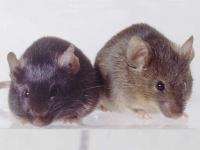
(Medical Xpress) -- Taking another step towards creating devices that could be meshed with brain function to help those with brain damage, or perhaps one day, to improve on abilities, researchers at Tel Aviv University, led by Professor of Psychobiology Matti Mintz, have developed an adjunct to a part of a rat brain. The team, who will be presenting their results this month at a biotechnology meeting in the UK, has created a computer chip that is able to emulate one of the functions of the rat cerebellum.
The cerebellum is the small odd looking part of the brain that looks like a separate organ. It sits below most of the rest of the brain and is able to communicate directly with the brain stem. One of its main purposes is to aid in helping learn how to perform new types of physical activities, such as surfing, riding a bike or walking a tightrope. The researchers focused on this part of the brain both because its actions are better understood than other parts of the brain, and because they could rather easily measure results in mimicking its actions.
They began their experiment by studying brain signals as they arrived at the cerebellum and then watched as those signals were converted to other types of signals that were sent back out. In so doing they were able to recognize the signal for a particular event as well as the signals the cerebellum would send back to the rest of the brain in response. Next, they created a computer chip that was both able to recognize the incoming signal for a certain activity and then generate the appropriate response. After that they disabled the cerebellum of a rat and hooked up their chip as a temporary replacement; but before switching it on, they tested the rat by directing a puff of air at one of its eyes while simultaneously sounding a tone; the idea being to teach it to blink upon hearing the tone. With its cerebellum disconnected, the rat did not learn to blink upon hearing the tone. After switching the chip on however, the rat did learn to blink upon hearing the tone, just as it would have using its normal cerebellum to do the job.
While this experiment is clearly just one simple example of being able to mimic the function of one simple brain activity, it shows that it can be done, and more to the point, its the first time that two-way communications between the brain and an artificial device has been achieved. It most assuredly will open the door to all kinds of future possibilities. Hopefully, after a lot more work is done in this area, researchers might one day be able to replicate some of the functions that are lost due to brain damage in people; a godsend to victims of trauma and/or stroke.
More information:
via Newscientist, Daily Mail
© 2011 PhysOrg.com
-
Scientists discover why we never forget how to ride a bicycle
Jul 17, 2009 |
not rated yet |
0
-
The cerebellum provides clues to the nature of human intelligence
Mar 08, 2011 |
not rated yet |
0
-
Research shows emotional stress can change brain function
Jan 12, 2011 |
not rated yet |
0
-
Response to immune protein determines pathology of multiple sclerosis
Oct 13, 2008 |
not rated yet |
0
-
A pacemaker for your brain
Jun 28, 2010 |
not rated yet |
0
-
Motion perception revisited: High Phi effect challenges established motion perception assumptions
Apr 23, 2013 |
3 / 5 (2) |
2
-
Anything you can do I can do better: Neuromolecular foundations of the superiority illusion (Update)
Apr 02, 2013 |
4.5 / 5 (11) |
5
-
The visual system as economist: Neural resource allocation in visual adaptation
Mar 30, 2013 |
5 / 5 (2) |
9
-
Separate lives: Neuronal and organismal lifespans decoupled
Mar 27, 2013 |
4.9 / 5 (8) |
0
-
Sizing things up: The evolutionary neurobiology of scale invariance
Feb 28, 2013 |
4.8 / 5 (10) |
14
-
Pressure-volume curve: Elastic Recoil Pressure don't make sense
May 18, 2013
-
If you became brain-dead, would you want them to pull the plug?
May 17, 2013
-
MRI bill question
May 15, 2013
-
Ratio of Hydrogen of Oxygen in Dessicated Animal Protein
May 13, 2013
-
Alcohol and acetaminophen
May 13, 2013
-
Marie Curie's leukemia
May 13, 2013
- More from Physics Forums - Medical Sciences
More news stories
Discovery of novel medicine for treatment of chronic wounds
Every 20 seconds, a limb is lost as a consequence of diabetic foot ulcer that does not heal. To date, medical solutions that can change this situation are very limited. In his doctoral thesis Yue Shen from the Industrial ...
Medical research
45 minutes ago |
not rated yet |
0
Lymphatic fluid takes detour
When tumours metastasise, they can block lymphatic vessels, as researchers from ETH Zurich have discovered using a new method. The lymphatic fluid subsequently has to find a new path through the tissue. Such ...
Medical research
46 minutes ago |
not rated yet |
0
|
Computational tool translates complex data into simplified 2-dimensional images
In their quest to learn more about the variability of cells between and within tissues, biomedical scientists have devised tools capable of simultaneously measuring dozens of characteristics of individual ...
Medical research
18 hours ago |
5 / 5 (3) |
0
|
Now we know why old scizophrenia medicine works on antibiotics-resistant bacteria
In 2008 researchers from the University of Southern Denmark showed that the drug thioridazine, which has previously been used to treat schizophrenia, is also a powerful weapon against antibiotic-resistant bacteria such as ...
Medical research
May 17, 2013 |
4 / 5 (4) |
0
|
SUMO wrestling cells reveal new protective mechanism target for stroke
Scientists investigating the interaction of a group of proteins in the brain responsible for protecting nerve cells from damage have identified a new target that could increase cell survival.
Medical research
May 17, 2013 |
5 / 5 (1) |
0
Research uncovers a potential role of two proteins in diabetes
(Medical Xpress)—Flinders University researchers are breaking new ground in a decade-long journey to pinpoint the function of two closely related proteins.
Vitamin D could provide new and effective treatments for asthma
(Medical Xpress)—Scientists at King's College London have discovered that Vitamin D has the potential to significantly reduce the symptoms of asthma. The study, led by Professor Catherine Hawrylowicz from ...
Rethinking treatment goals improves results for 'untreatable' anorexics
(Medical Xpress)—Patients with the most severe and dangerous form of chronic anorexia are more likely to make a significant improvement towards recovery and stay in therapy if traditional psychological treatments are re-focused ...
Novel mechanism allows Legionella to hide in body
(Medical Xpress)—The feared Legionella pneumophila is responsible for legionellosis, an infectious disease that can lead to pneumonia. To infect humans, this pathogen has developed a complex method that allows it to camouflage ...
Genetic screening could reveal hidden high risk for coronary heart disease
Finnish researchers have shown that genetic marker information can improve risk evaluation of coronary heart disease. The study comprised over 24,000 Finnish subjects and was led by Professor Samuli Ripatti. The results revealed ...
Powerful imaging tool unlocks kidneys' secrets
(Medical Xpress)—A powerful new way of imaging kidneys is providing scientists with insights into the importance of the body's filtering system and how it is affected by cardiovascular disease, stroke and ...
Sep 28, 2011
Rank: 5 / 5 (3)
Sep 28, 2011
Rank: not rated yet
Sep 28, 2011
Rank: not rated yet
Sep 29, 2011
Rank: not rated yet