MVA-B Spanish HIV vaccine shows 90 percent immune response in humans
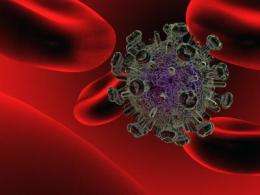
Phase I clinical trials developed by Spanish Superior Scientific Research Council (CSIC) together with Gregorio Maranon Hospital in Madrid and Clínic Hospital in Barcelona, reveals MVA-B preventive vaccine's immune efficiency against Human's immunodeficiency virus (HIV). 90% of the volunteers who went through the tests developed an immunological response against the virus and 85% has kept this response for at least one year. Safety and efficiency of this treatment have been described in articles for Vaccine and Journal of Virology science magazines.
The success of this vaccine, CSIC's patent, is based on the capability of human's immune system to learn how to react over time against virus particles and infected cells. "MVA-B vaccine has proven to be as powerful as any other vaccine currently being studied, or even more", says Mariano Esteban, head researcher from CSIC's National Biotech Centre.
In 2008, MVA-B already showed very high efficiency in mice as well as macaque monkeys against Simian's immunodeficiency virus (SIV). Due to it's high immunological response in humans, Phase I clinic trials will be conducted with HIV infected volunteers, to test its efficiency as a therapeutic vaccine.
Weapon's origins
Back in 1999, Esteban's research team began to work in the development and preclinical studies of MVA-B, which name comes from its composition, based in Modified Ankara Vaccinia virus. MVA-B is an attenuated virus, which has already been used in the past to eradicate smallpox, and also as a model in the research of many other vaccines. The "B" stands for the HIV subtype it is meant to work against, the most common in Europe.
Development of MVA-B is based in the insertion of four HIV genes (Gag, Pol, Nef & Env) in Vaccina's genetic sequence. A healthy immunitary system is able to react against MVA.
On the other hand, the inserted HIV genes in its DNA are not able to self-replicate, which guarantees the safety of the clinical trial.
30 healthy volunteers participated in this clinical trial. 24 of them were treated with MVA-B, while the other 6 were treated with a placebo, following a double-blind testing method. 3 doses of the vaccine were given via intramuscular route in weeks 0, 4 and 16. The effects were studied in peripheral blood until the trial ended on week 48.
Combat battalion
Inoculating the vaccine in a healthy volunteer is intended to train it's immune system to detect and learn how to combat those virus components. According to Esteban " it is like showing a picture of the HIV so that it is able to recognise it if it sees it again in the future".
Lymphocytes T and B are the main cells in this experiment, the soldiers in charge of detecting the foreign substances in the body and sending the right coordinates to destroy them.
"Our body is full of lymphocytes, each of them programmed to fight against a different pathogen" says Esteban. For that reason "Training is needed when it involves a pathogen, like the HIV one, which cannot be naturally defeated".
Lymphocytes B are responsible for the humoral immune response, producing antibodies which attack the HIV particles before they penetrate and infect the cell, anchoring themselves to the external structure and blocking it. 48th week blood tests reveal 72,7% of the treated volunteers hold specific antibodies against HIV.
On the other side, lymphocytes T control cell's immune response, in charge of detecting and destroying HIV infected cells. In order to verify their defence response to the vaccine, production of interferon gamma immunitary protein was measured.
Tests performed on the 48th week, 32 weeks after the last inoculation of the vaccine, show the production of lymphocytes T CD4+ and CD8+ of the vaccinated group is 38,5% and 69,2%, respectively, while it stays at 0% in the control group.
Action in several fronts
Besides interferon gamma, other immune proteins (cytokines and chemokines) are produced by the body when the presence of a pathogen is detected. Each of these proteins tends to attack a different enemy front. When T lymphocytes' defence action is able to generate several of these proteins it is called a polyfunctional action. CSIC's researcher adds "The importance of polyfunctionality has to do with the capability of pathogens to develop resistance to the immune systems attacks. The higher the polyfunctionality, the lower the resistance".
The defence spectrum of T lymphocytes in vaccinated subjects was measured based on the production of 3 other immunitary proteins. Tests indicate the vaccine generates up to 15 types of lymphocyte T CD4+ and CD8+ populations. 25% of CD4+ type and 45% of CD8+ type are able to produce two or more different proteins, proving their polyfunctionality.
War veterans
For a vaccine to become really effective, besides its immune system's defence capability, generating a long lasting response against future attacks is the key. For this purpose, the body needs to be able to keep a basic level of memory T lymphocytes. These lymphocytes, generated after a first pathogen attack, are veteran soldiers, which can circulate the body for years, prepared to respond to a new enemy's incursion.
48th week blood tests ran on vaccinated subjects show over 50% of CD4+ and CD8+ lymphocytes were memory T lymphocytes in the 85% of the patients who kept an immune response at this point of the trials.
In Esteban's opinión "MVA-B immune profile meets, initially, the requirements for a promising HIV vaccine". MVA-B is not capable of removing the virus from the body as once a cell is infected, virus' genetic data is integrated and replicated with the cell. However, the immune response induced by the vaccine could keep the virus under control, "if the virus enters the body and tries to develop in a cell, the immune system is ready to inactivate the virus and destroy the infected cell".
According to CSIC's researcher: "If this genetic cocktail passes Phase II and Phase III future clinic trials, and makes it into production, in the future HIV could be compared to herpes virus nowadays". Virus would not cause a disease anymore and would become a minor chronic infection, which would only show its effects in a low defence scenario, with a much lower contagious profile.


