Blood-based genomic test better than imaging test for ruling out obstructive coronary artery disease
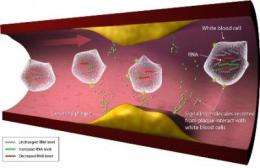
A blood-based gene expression test was found to be more effective for ruling out obstructive coronary artery disease in stable symptomatic patients than myocardial perfusion imaging (MPI), a common test that uses a radioactive agent to evaluate the blood flow and function of the heart.
Study results were presented today at the American Heart Association Scientific Sessions 2011 conference in Orlando, Fla.
"In this real-world patient population, the gene expression test demonstrates very high sensitivity and negative predictive value, enabling clinicians to rule out patients who do not have obstructive coronary artery disease with high accuracy," said Dr. Gregory S. Thomas, clinical professor of medicine and director of nuclear cardiology education at the UC Irvine School of Medicine, who presented the findings. "The use of this test, followed by MPI for higher scores, may optimize diagnostic performance and utilization of health care resources."
Gene expression testing provides valuable tissue and cell-specific information about the molecular mechanisms involved in disease processes, enabling evaluation of an individual patient's disease state, activity, and/or progression at a given point in time. Unlike genetic tests, which measure genetic variations, mutations, traits and predispositions—factors that are constant over a person's lifetime—gene expression testing assesses a dynamic process, integrating both genetic predisposition and additional behavioral and environmental influences on current disease state.
The COMPASS study enrolled 537 stable patients with symptoms suggestive of coronary artery disease who had been referred to MPI at 19 U.S. sites. A blood sample was obtained in all patients prior to MPI, and gene expression testing was then performed, with study investigators blinded to gene expression test results. Following MPI, patients were referred either to invasive angiography or to CT angiography (CTA), gold-standard measurements for diagnosis of coronary artery disease. A total of 431 patients were eligible for analysis, having completed gene expression testing, MPI and either invasive angiography or CTA.
In the COMPASS study, the gene expression test was superior to MPI in diagnostic accuracy, sensitivity (89 percent vs. 27 percent, p<0.001) and negative predictive value (96 percent vs. 88 percent, p<0.001) and demonstrated excellent performance for ruling out obstructive coronary artery disease relative to both invasive angiography and CTA.
Better methods for risk stratification of patients with obstructive coronary artery disease are needed. A study published in the March 11, 2010 issue of The New England Journal of Medicine found that in nearly 400,000 patients who underwent elective invasive angiographic procedures, 62 percent were found to have no obstructive coronary artery blockage.
The gene expression test used in the study, called Corus CAD (CardioDx, Palo Alto, Calif.), measures the RNA levels of 23 genes from a whole blood sample. Because these RNA levels are increased or decreased when obstructive coronary artery disease is present, the Corus CAD score indicates the likelihood that an individual patient does not have obstructive coronary artery disease.
"Chest pain symptoms account for two percent of all visits to the doctor's office each year," said Dr. Mark Monane, chief medical officer of CardioDx. "Corus CAD has now been validated in more than 1,100 patients in three separate studies. For physicians, methods to improve the diagnosis of symptoms suggestive of coronary artery disease represent a huge unmet need, and the Corus CAD test may help clinicians make better decisions. For patients, the test may lead to better diagnostic accuracy as well as avoidance of unnecessary procedures. For payers, we believe that Corus CAD can address a major expense category."


