New prenatal screening test is easier but raises ethical issues
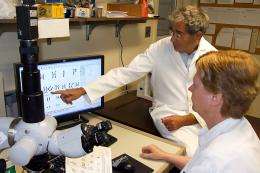
(Medical Xpress) -- New technology and innovations in genetic sequencing are dramatically changing the field of prenatal diagnosis and testing. Peter Benn, professor and director of the Diagnostic Human Genetics Laboratories at the Health Center, is at the forefront of researching and monitoring those changes and is known as an international expert on the topic.
The most recent and controversial changes involve a new test to screen for Down syndrome. The non-invasive procedure could make prenatal testing easier, but it comes with ethical issues and practical problems associated with providing the new test. That’s where Benn, with more than 30 years experience in the field, offers an important voice to the issue.
Benn is chair of an International Society for Prenatal Diagnosis (ISPD) committee that recommends caution and counseling before women receive the test.
The new test is called MaterniT21 and is now available in major health facilities around the country. All it requires is a small sample of the mother’s blood. Through a complex form of DNA sequencing, the test can detect a large proportion of Down syndrome-affected pregnancies. A study published in the journal Genetics in Medicine indicates a Down syndrome detection rate of 98.6 percent.
Up until now, women had to undergo potentially risky procedures called amniocentesis or chorionic villus sampling to detect genetic abnormalities. These invasive tests require tapping into the mother’s womb with a needle and carry a small risk of miscarriage.
Benn says ISPD recognizes that the development of the new test will offer substantial opportunities to improve screening. But for now, the committee recommends caution against the ad-hoc use of the test in women at lower risk of Down syndrome-affected pregnancies.
For women who are found to be at high risk using one of the currently accepted prenatal screening protocols, Benn recommends detailed genetic counseling to explain the benefits and limitations of the new test.
Gender Issues
The development of other easier and earlier prenatal screening methods also raise serious concerns about non-medical uses. For example, fetal sex identification for the purpose of gender selection.
Benn and colleagues at the Health Center, bioethicist Audrey Chapman and maternal-fetal medicine expert Dr. James Egan, worked together on a study to determine whether there is gender selection based on ultrasound results.
Their findings, published in the journal Prenatal Diagnosis, found that Asian-American mothers, especially with third pregnancies, had more boys than girls in ratios strongly suggesting prenatal sex selection, similar to that which occurs in China and India.
New screening tests have been developed that allow parents to find out their child’s sex even earlier than with ultrasound. Benn wonders whether that may lead to an even greater gender imbalance in countries such as China and India.
Some fetal DNA test-manufacturers are trying to discourage sex selection by not selling in China and India, and requiring customers to sign waivers saying that is not their motivation.
But the simplicity of the testing may make it tough to regulate. “If you can send off a blood sample to a laboratory and find out the sex of the baby and go somewhere else to request a pregnancy termination – no one will ask why,” explains Benn.
Rocket Scientist or Rock Star?
While the new MaterniT21 test is currently aimed at testing for Down syndrome, the technology is in place to identify many more conditions. That means an enormous amount of information will be available about an unborn baby. “Just think of the implications,” adds Benn.
If testing for mild or late-onset genetic conditions becomes a routine part of prenatal exams, parents will then have to make the difficult decision of whether to carry the ‘unhealthy’ fetus to term.
But it goes beyond genetic abnormalities or gender, it’s everything. What would you like to know about your baby – sports ability, physical appearance, intelligence? And what if your baby doesn’t have the characteristics you had hoped for?
“As the technology has developed, there are these really big ethical issues that are emerging and most clinicians are not ready to deal with them,” says Benn. “Part of my interest has been to draw attention to these ethical issues and in having a discussion about what is the right way to use the new technology.”


