More years to life and life to years through increased motivation for an active life
November 1, 2011 in Health

More years to life and life to years through increased motivation for an active life

Enlarge

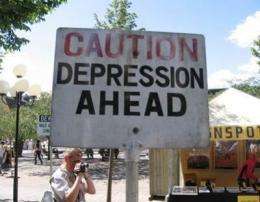
This is a sign. Credit: Photo: Magnus Lindwall

Regular physical activity is associated with a lower risk of suffering depression in old age. This is shown by one of the largest studies on elderly Europeans to have been carried out, by researchers at the University of Gothenburg, Sweden, among others. Research also shows that self-determined motivation and perceived competence are important factors in persuading elderly people to exercise more.

"We do not yet know for sure what the between physical activity and depression is like. What is clear is that elderly people who are are less depressed, but higher levels of depression can also lead to less exercise, and this suggests there is a mutual influence," says Magnus Lindwall, docent (associate professor) in exercise and at the University of Gothenburg.

In a recently published study Lindwall, together with research colleagues, has studied 17,500 elderly people with an average of 64 from 11 European countries who are taking part in the large EU-funded population study Survey of Health, Ageing and Retirement (SHARE). The subjects in the study were followed up over a period of two and a half years, among other things with regard to physical activity and depression.

"This study is one of the first to look at both how physical activity affects future depression and vice-versa, and how change in physical activity is associated with change in depression over time," says Lindwall.

"An important question for the researchers to answer has been what motivates elderly people to be physically active. Modern motivational theories propose, for example, that individuals who feel that they are competent, that they can take decisions for themselves and have freedom of choice and that they feel social relatedness linked to physical activity experience a more internal and a less controlled form of motivation for exercise. This form of motivation, unlike a non-self-determining external form of motivation, is also associated with the maintenance of long-term regular physical activity, which also improves the prospects for the positive effects that physical activity can have on both physical and mental health.

"Right now we are developing and testing a structured programme to increase motivation for physical activity among the elderly based on the theories that today has strong support in the research," says Lindwall.

The results support the recommendations to use physical activity as a powerful preventive measure against mental ill-health in the elderly.

"But is required, otherwise there is a great risk of the long-term favourable effects on health being lost. It is therefore important to identify the barriers, for example depression, that prevent the elderly from being physically active and focus on how to increase the motivation of for ," says Lindwall.

Provided by University of Gothenburg search and more info website

5 /5 (2 votes)  

Rank 5 /5 (2 votes)
Relevant PhysicsForums posts

More news stories

Life expectancy gap widens between those with mental illness and general population

The gap between life expectancy in patients with a mental illness and the general population has widened since 1985 and efforts to reduce this gap should focus on improving physical health, suggest researchers in a paper ...

Health created 9 hours ago | popularity not rated yet | comments 0

Failure to use linked health records may lead to biased disease estimates

Failure to use linked electronic health records may lead to biased estimates of heart attack incidence and outcome, warn researchers in a paper published in BMJ today.

Health created 9 hours ago | popularity 5 / 5 (1) | comments 0

Dietary advice on added sugar is damaging our health, warns heart expert

Dietary advice on added sugar is damaging our health, warns a cardiologist in BMJ today. Dr. Aseem Malhotra believes that "not only has this advice been manipulated by the food industry for profit but it is actually a risk ...

Health created 9 hours ago | popularity 5 / 5 (4) | comments 0

CDC presents recent trends in health behaviors of US adults

(HealthDay)—In 2008 to 2010, the prevalence of key health behaviors among U.S. adults varied, with about one in five adults current smokers and 62.1 percent overweight or obese, according to a report presented ...

Health created 12 hours ago | popularity 5 / 5 (1) | comments 0

Americans still making unhealthy choices, CDC reports

(HealthDay)—The overall health of Americans isn't improving much, with about six in 10 people either overweight or obese and large numbers engaging in unhealthy behaviors like smoking, heavy drinking or ...

Health created 12 hours ago | popularity not rated yet | comments 0


Phthalates: Study links chemicals widely found in plastics, processed food to elevated blood pressure in children, teens

Plastic additives known as phthalates (pronounced THAL-ates) are odorless, colorless and just about everywhere: They turn up in flooring, plastic cups, beach balls, plastic wrap, intravenous tubing and—according to the ...

If you can remember it, you can remember it wrong

(Medical Xpress)—Native peoples in regions where cameras are uncommon sometimes react with caution when their picture is taken. The fear that something must have been stolen from them to create the photo ...

B vitamins could delay dementia

(Medical Xpress)—Despite spending billions of dollars on research and development, drug companies have been unable to come up with effective treatments for dementia and Alzheimer's Disease (AD). Now, A. ...

Insight into the dazzling impact of insulin in cells

Australian scientists have charted the path of insulin action in cells in precise detail like never before. This provides a comprehensive blueprint for understanding what goes wrong in diabetes.

New sleeping pill poised to hit US markets

An experimental sleeping pill from US drug company Merck is effective at helping people fall and stay asleep, according to reviewers at the US Food and Drug Administration, which could soon approve the new drug.

Reducing caloric intake delays nerve cell loss

Activating an enzyme known to play a role in the anti-aging benefits of calorie restriction delays the loss of brain cells and preserves cognitive function in mice, according to a study published in the May ...