Collaborative research sheds light on new cancer stem cell therapies
January 30, 2012 in Cancer
Collaborative research sheds light on new cancer stem cell therapies

Enlarge

Credit: PolyU

A collaborative anti-cancer research jointly conducted by The Hong Kong Polytechnic University (PolyU), Peking University Shenzhen Graduate School and Nevada Cancer Institute has led to the development of a novel class of chemical inhibitors that specifically target cancer cells with pluripotency.

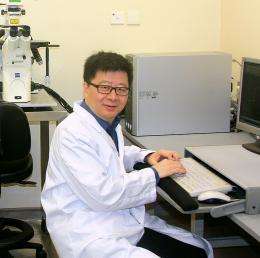
This cutting-edge research has combined the effort of three research teams including one led by Dr. Tao Ye, Associate Professor of PolyU’s Department of Applied Biology and Chemical Technology. This breakthrough may help the selective removal of cancer and potentially provide a novel strategy to eradicate cancers.

Cancer is a major cause of human death in China and all around the world. It is difficult to treat cause of the existence of cancer initiating cells/cancer stem cells. Although they exist in very few in numbers, cancer stem cells (CSCs) can proliferate and self-renew, and are pluripotent and multipotent, which have the capability to differentiate into various more heterogeneous that constitute the entire tumor mass. As stem cells, they are more resistant to most conventional cancer therapies such as chemotherapy or radiotherapy due to their differences in the cell cycle regulation and DNA repair processes. They also act as the source for metastasis and recurring drug resistant cancers after conventional cancer therapy. Currently, there are no or other agents that can specifically and selectively target cancer stem cells. The development of compounds that target cancer stem cells is an unmet medical demand for the eradication of malignant cancers.

According to Dr. Ye, the potential clinical applications of new LSD1 inhibitors include the following: They can be used to treat malignant germ cell tumors such as teratoma/teratocarcinomas, embryonic carcinomas, seminomas, choriocarcinomas, and tumors of yolk sac. These tumors are usually treated by surgery or cis-platinum, but after initial treatment, these tumors always become resistant to platinum drugs. So far, the LSD1 inhibitors are highly effective towards these pluriptont cancers with stem cell properties. The LSD1 inhibitors may also be used to remove teratomas/embryonic carcinomas during stem cell-based therapy. One major problem in stem/iPS cell-based therapy is the formation of embryonic carcinomas, teratomas, or teratocarcinomas by incomplete differentiation of ES/iPS cells in the organs of recipients. Because LSD1 selectively inhibit these pluripotent embryonic carcinomas, teratomas, or teratocarcinomas, LSD1 inhibitors may help ensure the successful application of stem cell-based therapy. More importantly, since teratomas/embryonic carcinomas are pluripotent cancer stem cells, researchers will probe whether cancer stem cells of other types of major organ-specific cancers such as breast, ovarian, lung, and brain cancers are sensitive to these LSD1 inhibitors. Further studies indicated that LSD1 inhibitors can also be used to inhibit many cancer stem cell-like cells such as breast and ovarian cancers.

A leading scientist in the field of chemical biology, Dr. Tao Ye has obtained large amounts of funding from the Research Grants Council to carry out basic research. Since 2010, his research activities have culminated in the publication of 12 original research papers in top research journals with an impact factor greater than five.

Dr. Tao Ye’s anti-cancer drug discovery programme was also supported by the generous donation of Fong Shu Fook Tong Foundation and Joyce M. Kuok Foundation.

More information: Write-up of the breakthrough in Nature (China)

Journal reference: Nature search and more info website

Provided by Hong Kong Polytechnic University

not rated yet  

Filter


Move the slider to adjust rank threshold, so that you can hide some of the comments.


Display comments: newest first

DaisyPatch
Feb 08, 2012

Rank: not rated yet
Dr. Tao Yes work is exciting. If tumor stem cells can be selectively killed, angiogenesis halted, glutamine and glucose metabolism pathways intercepted.... WHOOT! WHOOT!
Rank not rated yet
Related Stories
Relevant PhysicsForums posts
  • Potential Breakthrough in Seizure Control
    created15 hours ago
  • Popping/Cracked sternum.
    created20 hours ago
  • Which Mental Illness Encompasses This Problem?
    created20 hours ago
  • A question about drug tolerance
    createdMay 23, 2012
  • Poor nutrition leading to overeating?
    createdMay 23, 2012
  • Math and dyslexia?
    createdMay 21, 2012
  • More from Physics Forums - Medical Sciences

More news stories

Skp2 activates cancer-promoting, glucose-processing Akt

HER2 and its epidermal growth factor receptor cousins mobilize a specialized protein to activate a major player in cancer development and sugar metabolism, scientists report in the May 25 issue of Cell.

Cancer created May 25, 2012 | popularity not rated yet | comments 0 | with audio podcast

Pancreatectomy OK without downstaging from therapy

(HealthDay) -- Pancreatectomy improves median survival in pancreatic cancer patients even when presurgical neoadjuvant therapy does not lead to radiographic downstaging of tumors, according to a study published ...

Cancer created May 25, 2012 | popularity not rated yet | comments 0

Common therapies for basal cell carcinoma offer similar survival

(HealthDay) -- For patients with superficial basal cell carcinoma (sBCC), treatment with imiquimod or photodynamic therapy (PDT) results in similar long-term tumor-free survival, according to a review published ...

Cancer created May 25, 2012 | popularity not rated yet | comments 0

Cancer may require simpler genetic mutations than previously thought

Chromosomal deletions in DNA often involve just one of two gene copies inherited from either parent. But scientists haven't known how a deletion in one gene from one parent, called a "hemizygous" deletion, can contribute ...

Cancer created May 25, 2012 | popularity not rated yet | comments 0 | with audio podcast

New prostate cancer screening guidelines face a tough sell, study suggests

(Medical Xpress) -- Recent recommendations from the U.S. Preventive Services Task Force (USPSTF) advising elimination of routine prostate-specific antigen (PSA) screening for prostate cancer in healthy men are likely to encounter ...

Cancer created May 25, 2012 | popularity not rated yet | comments 1


Keep food safety in mind this memorial day weekend

(HealthDay) -- Picnics, parades and cookouts are as much a part of Memorial Day weekend as tributes to the United States' war veterans.

Travel to high altitudes tied to Crohn's, colitis flare-ups

(HealthDay) -- People with inflammatory bowel disease, which includes Crohn's disease and colitis, may be at increased risk for flare-ups when they fly or travel to high altitudes for skiing or mountain climbing, ...

Family history of Alzheimer's affects functional connectivity

(HealthDay) -- Cognitively normal individuals with a family history of late-onset Alzheimer's disease (AD) may display lower resting state functional connectivity in the default mode network (DMN) of the brain, ...

Transvaginal mesh op restores pelvic organ prolapse at price

(HealthDay) -- Transvaginal mesh (TVM) procedures are effective for anatomical restoration of pelvic organ prolapse (POP), but patients report a worsening of sexual function following surgery, according to ...

Of mice and mental models: Neuroscientific implications of risk-optimized behavior in the mouse

(Medical Xpress) -- Regardless of an organism’s biological complexity, every encephalized animal continuously makes under-informed behavioral choices that can have serious consequences. Despite its ubiquity, ...

Weight struggles? Blame new neurons in your hypothalamus

New nerve cells formed in a select part of the brain could hold considerable sway over how much you eat and consequently weigh, new animal research by Johns Hopkins scientists suggests in a study published in the May issue ...