For diabetics not on insulin, self-monitoring blood sugar has no benefit
January 20, 2012 By Christen Brownlee in Diseases, Conditions, Syndromes

For diabetics not on insulin, self-monitoring blood sugar has no benefit

Enlarge

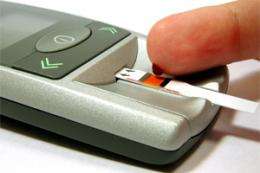
For type 2 diabetics who are not on insulin, monitoring their blood sugar does little to control blood sugar levels over time and may not be worth the effort or expense, according to a new evidence review.

Self-monitoring for type 1 diabetics and type 2 diabetics who require is recognized as a critical part of self-care. For these insulin taking diabetics, keeping track of blood sugar levels helps them attempt to keep within an acceptable range. However, it has been unclear if self-monitoring of blood sugar has the same value for type 2 diabetics who are not on insulin.

To answer this question, Uriëll L. Malanda of the VU University Medical Center in Amsterdam and his colleagues reviewed 12 studies, of more than 3,000 non-insulin-using diabetics. The review showed that self-monitoring of blood sugar by these had only a modest effect on a measure called HbA1c, a standard for assessing blood glucose control. Over a six-month period, patients who tested their own blood glucose levels reduced HbA1c by about 0.3 percent. This effect nearly completely dissipated after 12 months.

Additionally, the review showed that blood sugar self-monitoring had no effect on patients’ satisfaction, general well being, or general health-related quality of life. One study, which compared the cost of the first year of monitoring blood for glucose versus urine testing, found that monitoring blood glucose was 12 times more expensive.

The review appears in the latest issue of The Cochrane Library, a publication of The Cochrane Collection, an international organization that evaluates medical research.

Mayer Davidson, M.D., a professor of medicine at Charles Drew University in Los Angeles who authored one of the studies included in the review, notes that many endocrinologists recommend blood glucose self-monitoring as part of efforts to educate patients on the effect of lifestyle habits—for example, how eating an apple affects their blood glucose compared to drinking a glass of apple juice. However, knowing their numbers doesn’t appear to change patients’ behavior.

“Patients aren’t using these numbers to do anything clinically significant,” he says.

With the cost of blood glucose test strips for home monitoring equipment hovering around 1 dollar apiece, he adds, there doesn’t appear to be enough “bang for the buck” to recommend that form of self-monitoring for most patients.

Authors of the review agree. “Regular self-monitoring of in non-insulin treated patients has minimal impact on glycemic control, has no impact on general well-being or quality of life, and is rather expensive. Consequently, it does not add to a clinically relevant long-term benefit,” Malanda says.

More information: Malanda, U.L., et al. (2012). Self-monitoring of blood glucose in patients with type 2 diabetes mellitus who are not using insulin. The Cochrane Library, issue 1.

Provided by Health Behavior News Service search and more info website

3.7 /5 (3 votes)  

Rank 3.7 /5 (3 votes)
Related Stories
Relevant PhysicsForums posts

More news stories

Commonly used catheters double risk of blood clots in ICU and cancer patients

Touted for safety, ease and patient convenience, peripherally inserted central catheters have become many clinicians' go-to for IV delivery of antibiotics, nutrition, chemotherapy, and other medications.

Diseases, Conditions, Syndromes created 2 hours ago | popularity not rated yet | comments 0

Ginger compounds may be effective in treating asthma symptoms

Gourmands and foodies everywhere have long recognized ginger as a great way to add a little peppery zing to both sweet and savory dishes; now, a study from researchers at Columbia University shows purified components of the ...

Diseases, Conditions, Syndromes created 14 hours ago | popularity 5 / 5 (1) | comments 0

New research identifies practice changes to improve value and quality of GI procedures

There are significant cost and risk factors associated with two procedures commonly used to diagnose or treat gastrointestinal problems, according to research presented at Digestive Disease Week (DDW).

Diseases, Conditions, Syndromes created May 19, 2013 | popularity not rated yet | comments 0

Consuming coffee linked to lower risk of detrimental liver disease, study finds

Regular consumption of coffee is associated with a reduced risk of primary sclerosing cholangitis (PSC), an autoimmune liver disease, Mayo Clinic research shows. The findings were being presented at the Digestive Disease ...

Diseases, Conditions, Syndromes created May 19, 2013 | popularity not rated yet | comments 0 | with audio podcast

New case of SARS-like virus in Saudi: ministry

A new case of the deadly coronavirus has been detected in Saudi Arabia where 15 people have already died after contracting it, the health ministry announced on Saturday on its Internet website.

Diseases, Conditions, Syndromes created May 18, 2013 | popularity not rated yet | comments 0


US adviser on board of firm that sold anthrax drug

(AP)—Former Navy Secretary Richard J. Danzig, who has served as a bio-warfare adviser to the president, the Pentagon, and the Department of Homeland Security, urged the government to stockpile an anti-anthrax drug while ...

Consumer group flags high SPF ratings on sunscreen

(AP)—Sunbathers this summer will find new sunscreen labels that are designed to make the products more effective and easier to use.

Treatment of sleep apnea improves glucose levels in prediabetes

Optimal treatment of sleep apnea in patients with prediabetes improves blood sugar (glucose) levels and thus can reduce cardiometabolic risk, according to a study to be presented at the ATS 2013 International Conference in ...

Whole-cell vaccine was more effective than acellular vaccine during CA pertussis outbreak

Whole-cell pertussis vaccines were more effective at protecting against pertussis than acellular pertussis vaccines during a large recent outbreak, according to a new Kaiser Permanente study published in Pediatrics.

Blame your parents for bunion woes

A novel study reports that white men and women of European descent inherit common foot disorders, such as bunions (hallux valgus) and lesser toe deformities, including hammer or claw toe. Findings from the Framingham Foot ...

Genetic diversity within tumors predicts outcome in head and neck cancer

A new measure of the heterogeneity – the variety of genetic mutations – of cells within a tumor appears to predict treatment outcomes of patients with the most common type of head and neck cancer. In the May 20 issue ...