Scientists sound alarm over threat of untreatable gonorrhea in United States
February 9, 2012 By Bobbi Nodell in Diseases, Conditions, Syndromes

Scientists sound alarm over threat of untreatable gonorrhea in United States

Enlarge

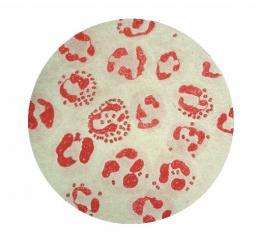
A stained sample of gonorrhea bacteria detected in a urinary tract specimen. Credit: CDC

(Medical Xpress) -- Researchers are continuing to sound the alarm on the growing threat of multi-drug resistant gonorrhea in the United States, according to a perspective  in the Feb. 9 issue of the New England Journal of Medicine.

In July of 2011, the U.S. Centers for Disease Control and Prevention released “Cephalosporin Susceptibility Among Neisseria gonorrhoeae Isolates - United States, 2000-2010,” which signaled the potential for resistance to the cephalosporins, the last line of defense for treating .

The New England Journal of Medicine piece,  “The Emerging Threat of Untreatable Gonococcal Infection,” by Gail A. Bolan, director of the Division of STD Prevention at  the Centers for Disease Control and Prevention in Atlanta, P. Frederick Sparling, professor emeritus at  the University of North Carolina, Chapel Hill, and Judith N. Wasserheit, professor and vice chair of  the Department of Global Health at the University of Washington in Seattle, issues an urgent call to action to halt the continued increases in drug-resistant gonorrhea.

“It is time to sound the alarm,” said co-author Wasserheit. “Though there is no evidence yet of treatment failures in the United States, trends in decreased susceptibility coupled with a history of emerging resistance and reported treatment failures in other countries point to a likelihood of failures on the horizon and a need for urgent action.”

According to the article, gonorrhea is the second most commonly reported communicable disease in the , with an estimated incidence of more than 600,000 cases annually. It disproportionately affects some populations such as minorities who are marginalized because of race, ethnic group or sexual orientation.

Scientists note that Neisseria gonorrhoeae has always readily developed resistance to antimicrobial agents: it became resistant to sulfanilamide in the 1940s, penicillins and tetracyclines in the 1980s, and fluoroquinolones by 2007.  The treatment options recommended by the CDC are now limited to third-generation cephalosporins.

But the effectiveness of cephalosporins for treating gonorrhea has been decreasing rapidly. Through CDC’s Gonococcal Isolate Surveillance Project , researchers are seeing a 17-fold increase in elevated minimum inhibitory concentrations (MICs) -- a measure of drug susceptibility. MICs for oral cefixime went from 0.1 percent in 2006 to 1.7 percent in the first six months of 2011.

In the past, when the prevalence of antimicrobial resistance in the Gonococcal Isolate Surveillance Project  exceeded 5 percent, national treatment recommendations were changed to focus on other effective drugs. But currently, there are no other drugs.

The most prominent increases in drug susceptibility to gonorrhea continue to be among men who have sex with men, and in the West, according to the authors. They wrote that these geographic and demographic patterns are worrisome because they mirror those observed during the emergence of fluoroquinolone-resistant N. gonorrhoeae.

Scientists are calling on a collective effort from physicians, drug companies, and health care providers to help stop the emergence and spread of resistant gonorrhea.

“Investing in rebuilding our defenses against gonococcal infections now, with involvement of the health care, public health, and research communities, is paramount if we are to control the spread and reduce the consequences of cephalosporin-resistant strains,” the scientists wrote.

Journal reference: New England Journal of Medicine search and more info website

Provided by University of Washington search and more info website

5 /5 (8 votes)  

Rank 5 /5 (8 votes)
Relevant PhysicsForums posts

More news stories

Ginger compounds may be effective in treating asthma symptoms

Gourmands and foodies everywhere have long recognized ginger as a great way to add a little peppery zing to both sweet and savory dishes; now, a study from researchers at Columbia University shows purified components of the ...

Diseases, Conditions, Syndromes created 6 hours ago | popularity not rated yet | comments 0

New research identifies practice changes to improve value and quality of GI procedures

There are significant cost and risk factors associated with two procedures commonly used to diagnose or treat gastrointestinal problems, according to research presented at Digestive Disease Week (DDW).

Diseases, Conditions, Syndromes created 18 hours ago | popularity not rated yet | comments 0

Consuming coffee linked to lower risk of detrimental liver disease, study finds

Regular consumption of coffee is associated with a reduced risk of primary sclerosing cholangitis (PSC), an autoimmune liver disease, Mayo Clinic research shows. The findings were being presented at the Digestive Disease ...

Diseases, Conditions, Syndromes created 18 hours ago | popularity not rated yet | comments 0 | with audio podcast

New case of SARS-like virus in Saudi: ministry

A new case of the deadly coronavirus has been detected in Saudi Arabia where 15 people have already died after contracting it, the health ministry announced on Saturday on its Internet website.

Diseases, Conditions, Syndromes created May 18, 2013 | popularity not rated yet | comments 0

Little evidence for prediction rules for low back pain

(HealthDay)—Few randomized clinical trials have been done to assess clinical prediction rules for patients with lower back pain, and the trials that have been done are of low quality and do not provide ...

Diseases, Conditions, Syndromes created May 17, 2013 | popularity not rated yet | comments 0 | with audio podcast


Researchers identify a potential new risk for sleep apnea: Asthma

Researchers at the University of Wisconsin have identified a potential new risk factor for obstructive sleep apnea: asthma. Using data from the National Institutes of Health (Heart, Lung, and Blood Institute)-funded Wisconsin ...

Study finds that sleep apnea and Alzheimer's are linked

A new study looking at sleep-disordered breathing (SDB) and markers for Alzheimer's disease (AD) risk in cerebrospinal fluid (CSF) and neuroimaging adds to the growing body of research linking the two.

Computational tool translates complex data into simplified 2-dimensional images

In their quest to learn more about the variability of cells between and within tissues, biomedical scientists have devised tools capable of simultaneously measuring dozens of characteristics of individual ...

New theory on genesis of osteoarthritis comes with successful therapy in mice

Scientists at Johns Hopkins have turned their view of osteoarthritis (OA) inside out. Literally. Instead of seeing the painful degenerative disease as a problem primarily of the cartilage that cushions joints, ...

'Gap' for HIV vaccine efforts after latest setback

The hunt for an HIV vaccine has gobbled up $8 billion in the past decade, and the failure of the most recent efficacy trial has delivered yet another setback to 26 years of efforts.

Alzheimer's leaves bilingual victims stranded in Canada

The devastating effect of Alzheimer's disease on bilingual people has been thrown into focus in Canada, where the sudden loss of a second language can leave sufferers feeling like strangers in their own country.