UCSD uses heat energy to fix odd heart beat
February 17, 2012 By Kim Edwards in Cardiology

UCSD uses heat energy to fix odd heart beat

Enlarge

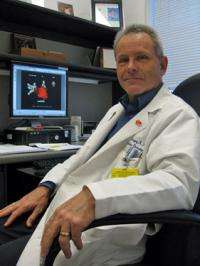
Gregory Feld, MD

(Medical Xpress) -- UC San Diego Sulpizio Cardiovascular Center is now offering patients with atrial fibrillation the breakthrough benefits of heat energy, or radio frequency waves, to irreversibly alter heart tissue that triggers an abnormal heart rhythm or arrhythmia. The THERMOCOOL SF Catheter is an FDA-approved outpatient procedure for an early-stage form of the condition called paroxysmal atrial fibrillation, when recurring symptoms are unresponsive to medicine. Patients typically experience rapid heartbeats that can lead to debilitating fatigue, dizziness, fainting or shortness of breath if left untreated.

“Atrial fibrillation has a devastating impact on more than 2.7 million Americans, yet for many patients unresponsive to medication, traditional treatment options are limited,” said Gregory Feld, MD, professor of medicine at University of California, San Diego and Director of the Cardiac Electrophysiology Program at UC San Diego Sulpizio Cardiovascular Center. “This catheter ablation technology is the latest treatment alternative for patients dealing with the disabling effects of cardiac arrhythmias, such as paroxysmal atrial fibrillation. This is a viable option for patients who do not benefit from their first medication.”

Atrial fibrillation causes the upper heart chambers to beat rapidly and uncontrollably, and is characterized by disorganized electrical activity in the heart. This results in an irregular pulse, and sometimes a “fluttering” feeling in the chest. An episode can last just seconds, or occur for minutes, hours or even days. Paroxysmal atrial fibrillation is an early-stage form of the condition, where episodes occur repeatedly but stop on their own, often in a few hours or less.

Performed by an electrophysiologist (EP), catheter ablation is a non-surgical procedure that addresses the underlying cause of arrhythmias. In real time, the clinician first pinpoints the source of irregular electrical activity using a 3-D mapping system, similar to a GPS device in your car. Guided by this map, the clinician directs a specialized catheter through the heart to the source of the abnormal electrical impulses. A small electrode in the tip of the catheter generates radio frequency waves that have enough heat to alter targeted areas of . This process blocks the electrical impulses that can cause heart rhythm disorders.

Unlike traditional catheter technologies, the THERMOCOOL SF catheter uniformly delivers a cooling saline solution through the catheter, allowing for cooling of the entire tip. Thus, the tip temperature does not rise significantly during ablation, which reduces the risk for clotting, and enhances treatment safety.

This takes approximately two-to-four hours, with some patients returning home the next day. The result is either a long-term reduction in the number of arrhythmias experienced and the severity of symptoms, or a permanent return to a more normal heart rhythm.

Atrial fibrillation is growing in prevelance. Up to 12 million Americans will have the condition by 2050. While not life-threatening, is a leading cause of stroke among people 65 years and older.

Provided by University of California - San Diego search and more info website

5 /5 (1 vote)  

Rank 5 /5 (1 vote)
Relevant PhysicsForums posts

More news stories

Registry confirms TAVI efficacy and safety in Asian patients

Transcatheter aortic valve implantation (TAVI) is effective and safe in Asian patients, according to early experience based on first results from a multicentre Asian registry reported at EuroPCR 2013.

Cardiology created 3 hours ago | popularity not rated yet | comments 0

Diagnostic coronary angiography: Functional flow reserve changes decisions in 25 percent of cases

Routinely measuring fractional flow reserve (FFR) using pressure wire assessment during coronary angiography for diagnosis of chest pain leads to significant changes in the management of one in four patients, according to ...

Cardiology created 6 hours ago | popularity not rated yet | comments 0

Feasibility trial reports deployment of new device for TAVI in aortic insufficiency

A new investigational device - the Helio System (TF-FA) - being developed for use with the Sapien XT Transcatheter Heart Valve was successfully deployed in all four patients in a small, first-in-human feasibility study of ...

Cardiology created 6 hours ago | popularity not rated yet | comments 0

Cardiac study used as source for new guidelines on treating people undergoing coronary artery bypass surgery

Cardiac research from the University of Alberta had serious impact as a source for the American College of Cardiology and the American Heart Association's new guidelines on how to treat patients undergoing coronary artery ...

Cardiology created 7 hours ago | popularity not rated yet | comments 0

Dual-source cardiac CT IDs CAD in hard-to-image patients

(HealthDay)—In patients who have previously been considered difficult to image, dual-source cardiac (DSC) computed tomography (CT) can identify clinically significant coronary artery disease, according ...

Cardiology created 20 hours ago | popularity not rated yet | comments 0


Researchers identify first drug targets in childhood genetic tumor disorder

Two mutations central to the development of infantile myofibromatosis (IM)—a disorder characterized by multiple tumors involving the skin, bone, and soft tissue—may provide new therapeutic targets, according to researchers ...

FDA warns of infections tied to Tennessee pharmacy

(AP)—Government health officials are investigating several health problems reported with potentially contaminated medications made by a Tennessee specialty pharmacy.

Engineered cytomegalovirus protects monkeys from HIV equivalent

(Medical Xpress)—A new study by researchers in the US has shown that an ancient virus can be modified to help in the fight against the simian immunodeficiency virus SIV, which is the equivalent in monkeys ...

Hormone levels may provide key to understanding psychological disorders in women

Women at a particular stage in their monthly menstrual cycle may be more vulnerable to some of the psychological side-effects associated with stressful experiences, according to a study from UCL.

Pollen count apps for smartphones are nothing to sneeze at

Kate O'Reilly's spring allergy survival kit includes the usual stuff - nasal sprays, allergy pills and a box of tissues. This season, she's added a new weapon to her line of defense: an app on her smartphone.

Going live: Immune cell activation in multiple sclerosis

Biological processes are generally based on events at the molecular and cellular level. To understand what happens in the course of infections, diseases or normal bodily functions, scientists would need to ...