Statin alternative looks promising in early trials
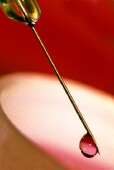
Administration of REGN727, a monoclonal antibody to proprotein convertase subtilisin/kexin 9, significantly reduces low-density lipoprotein cholesterol levels, according to the results of three phase 1 studies published in the March 22 issue of the New England Journal of Medicine.
(HealthDay) -- Administration of REGN727, a monoclonal antibody to proprotein convertase subtilisin/kexin 9 (PCSK9), significantly reduces low-density lipoprotein (LDL) cholesterol levels, according to the results of three phase 1 studies published in the March 22 issue of the New England Journal of Medicine.
A new anti-cholesterol drug appears safe and effective in people already taking statins such as Lipitor, making it a potential addition to statin therapy or an alternative, a preliminary new study suggests.
Two single-dose trials in healthy volunteers and a multiple-dose trial in a group with high cholesterol showed that the drug, known as a monoclonal antibody, reduced low-density lipoprotein (LDL, or "bad") cholesterol levels an average of 40 percent. The injectable drug was also well-tolerated by all participants, with headache the most commonly reported side effect.
The drug works by attacking a destructive enzyme in the liver, keeping LDL cholesterol from spilling into the bloodstream, according to the report published in the March 22 issue of the New England Journal of Medicine.
"It was entirely safe, as best they could tell, and LDL levels plummeted within a matter of a few days and remained low for three months," said Dr. Kirk Garratt, clinical director of interventional cardiovascular research at Lenox Hill Hospital in New York City, who was not involved in the study. "If this antibody turns out to be as safe and effective as it appears, this may very well be a very important method for controlling LDL cholesterol, particularly in patients with [drug-resistant] cases."
The study, by Dr. Evan Stein, of the Metabolic and Atherosclerosis Research Center in Cincinnati, and colleagues, was funded by Sanofi and Regeneron Pharmaceuticals -- makers of the antibody.
About one in four Americans aged 45 and older takes statins, which interfere with the production of cholesterol in the liver, to control their high cholesterol levels and improve their odds against heart disease, according to the U.S. Centers for Disease Control and Prevention. While widely effective, some patients experience intolerable side effects -- which include liver damage or muscle pain -- and others don't achieve the recommended LDL blood levels of 70 milligrams (mg) per deciliter or lower for those at risk of heart disease.
Two randomized, single-dose studies of the antibody, known as REGN727, were administered either intravenously (in 40 participants) or by injection (in 32 participants) and compared with a group given an inactive placebo. These trials were followed by a randomized study of multiple doses in 51 adults with high cholesterol who were taking atorvastatin (brand name Lipitor) and whose baseline LDL levels were more than 100 mg per deciliter.
Higher doses of REGN727 lowered LDL cholesterol levels by up to 64 percent, and the effect was similar across the board whether or not participants were also taking a statin, which works by a different mechanism.
Commenting on the study, Christine Metz, head of the Laboratory of Medicinal Biochemistry at the Feinstein Institute for Medical Research in Manhasset, N.Y., said, "The next step would be to test a much larger group of people for a much longer time. But this is very promising, apparently safe under the conditions used, and worth very quickly going forward."
Garratt noted that the new drug, which could take at least several years to reach the market, would need to be injected, since antibodies typically can't be formulated into pills. Such a compound would likely be extremely expensive, especially when compared to statins, which are now available as generic drugs. Also, like statins, such a drug would probably need to be taken for life, he said.
Metz pointed out that the trials were very small and consisted heavily of men, making it hard to generalize results for a broader population.
However, "I thought the study was very beautifully conceived and well done," she added. "It did everything it set out to do."
More information: Full Text (subscription or payment may be required)
Editorial (subscription or payment may be required)
Journal reference:
New England Journal of Medicine
Copyright © 2012 HealthDay. All rights reserved.
-
New medication increases HDL cholesterol and decreases LDL cholesterol levels
Nov 15, 2011 |
not rated yet |
0
-
Most heart attack patients' cholesterol levels did not indicate cardiac risk
Jan 12, 2009 |
not rated yet |
0
-
Consuming cholesterol-lowering foods results in greater decrease in LDL than low-saturated-fat diet
Aug 23, 2011 |
not rated yet |
0
-
High levels of cholesterol said better for longevity
Sep 16, 2010 |
not rated yet |
0
-
Two statin drugs similarly effective in reversing coronary heart disease
Nov 15, 2011 |
not rated yet |
0
-
Motion perception revisited: High Phi effect challenges established motion perception assumptions
Apr 23, 2013 |
3 / 5 (2) |
2
-
Anything you can do I can do better: Neuromolecular foundations of the superiority illusion (Update)
Apr 02, 2013 |
4.5 / 5 (11) |
5
-
The visual system as economist: Neural resource allocation in visual adaptation
Mar 30, 2013 |
5 / 5 (2) |
9
-
Separate lives: Neuronal and organismal lifespans decoupled
Mar 27, 2013 |
4.9 / 5 (8) |
0
-
Sizing things up: The evolutionary neurobiology of scale invariance
Feb 28, 2013 |
4.8 / 5 (10) |
14
-
Absorption of light by spherical nanoparticle
2 hours ago
-
Solvability of a circuit
6 hours ago
-
Question about perception of colors around light sources
10 hours ago
-
Does a charged particle rotate when traveling through a static Bf?
12 hours ago
-
Find a link between physics and assignment problems
13 hours ago
-
Light as a source of electricity
13 hours ago
- More from Physics Forums - Classical Physics
More news stories
Free fatty acids linked to cardiac risk in late adulthood
(HealthDay)—Blood levels of free fatty acids are associated with insulin resistance during young adulthood and cardiovascular risk factors in later adulthood, according to a study published online May 13 ...
Cardiology
May 17, 2013 |
not rated yet |
0
|
Diagnosing heart attacks: There's an app for that
An experimental, inexpensive iPhone application transmitted diagnostic heart images faster and more reliably than emailing photo images, according to a research study presented at the American Heart Association's Quality ...
Cardiology
May 17, 2013 |
not rated yet |
0
Study suggests new role for ECMO in treating patients with cardiac arrest and profound shock
Extracorporeal membrane oxygenation (ECMO), a procedure traditionally used during cardiac surgeries and in the ICU that functions as an artificial replacement for a patient's heart and lungs, has also been used to resuscitate ...
Cardiology
May 17, 2013 |
not rated yet |
0
Stroke patients respond similarly to after-stroke care, despite age difference
Age has little to do with how patients should be treated after suffering a stroke, according to new research from the University of Georgia.
Cardiology
May 17, 2013 |
not rated yet |
0
|
Depression linked to almost doubled stroke risk in middle-aged women
Depressed middle-aged women have almost double the risk of having a stroke, according to research published in Stroke: Journal of the American Heart Association.
Cardiology
May 16, 2013 |
not rated yet |
0
Blame your parents for bunion woes
A novel study reports that white men and women of European descent inherit common foot disorders, such as bunions (hallux valgus) and lesser toe deformities, including hammer or claw toe. Findings from the Framingham Foot ...
Whole-cell vaccine was more effective than acellular vaccine during CA pertussis outbreak
Whole-cell pertussis vaccines were more effective at protecting against pertussis than acellular pertussis vaccines during a large recent outbreak, according to a new Kaiser Permanente study published in Pediatrics.
Commonly used catheters double risk of blood clots in ICU and cancer patients
Touted for safety, ease and patient convenience, peripherally inserted central catheters have become many clinicians' go-to for IV delivery of antibiotics, nutrition, chemotherapy, and other medications.
Molecular marker from pancreatic 'juices' helps identify pancreatic cancer
Researchers at Mayo Clinic have developed a promising method to distinguish between pancreatic cancer and chronic pancreatitis—two disorders that are difficult to tell apart. A molecular marker obtained from pancreatic ...
New theory on genesis of osteoarthritis comes with successful therapy in mice
Scientists at Johns Hopkins have turned their view of osteoarthritis (OA) inside out. Literally. Instead of seeing the painful degenerative disease as a problem primarily of the cartilage that cushions joints, ...
Computational tool translates complex data into simplified 2-dimensional images
In their quest to learn more about the variability of cells between and within tissues, biomedical scientists have devised tools capable of simultaneously measuring dozens of characteristics of individual ...
Mar 22, 2012
Rank: 5 / 5 (1)
If true, and assuming REGN727 is not also an anti-inflammatory, it would be a great way to test this.