Artemisinin-resistant untreatable malaria increasing rapidly along the Thailand-Myanmar border: study
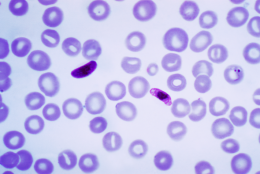
Evidence that the most deadly species of malaria parasite, Plasmodium falciparum, is becoming resistant to the front line treatment for malaria on the border of Thailand and Myanmar (Burma) is reported in The Lancet today. This increases concern that resistance could now spread to India and then Africa as resistance to other antimalarial drugs has done before. Eliminating malaria might then prove impossible.
The study coincides with research published today in Science in which researchers in south east Asia and the USA identify a major region of the malaria parasite genome associated with artemisinin resistance. This region, which includes several potential candidate genes for resistance, may provide researchers with a tool for mapping resistance.
Both studies, funded by the Wellcome Trust and the National Institutes of Health, follow reports in 2009 of the emergence of artemisinin-resistant malaria parasites in western Cambodia, 800km away from the Thailand-Myanmar border where the new cases of resistance have been observed. Resistance to artemisinin makes the drugs less effective and could eventually render them obsolete, putting millions of lives at risk.
According to the World Malaria Report 2011, malaria killed an estimated 655,000 people in 2010, mainly young children and pregnant women. It is caused by parasites that are injected into the bloodstream by infected mosquitoes. Plasmodium falciparum is responsible for nine out of ten deaths from malaria.
The most effective antimalarial drug is artemisinin; the artemisinin derivatives, most commonly artesunate, have the advantage over other antimalarial drugs such as chloroquine and mefloquine, of acting more rapidly and having fewer side-effects and, until recently, malaria parasites have shown no resistance against them. Although the drugs can be used on their own as a monotherapy, and these can still be obtained, fears over the possible development of resistance led to recommendations that they should only be used in conjunction with one or more other drugs as artemisinin-based combination therapies (ACTs). These are now recommended by the World Health Organization as the first-line treatment for uncomplicated falciparum malaria in all endemic countries. ACTs have contributed substantially to the recent decline in malaria cases in most tropical endemic regions.
In the Lancet study, researchers at the Shoklo Malaria Research Unit on the border of Thailand and Myanmar, part of the Wellcome Trust-Mahidol University-Oxford University Tropical Medicine Research Programme, measured the time taken to clear parasites from the blood stream in 3,202 patients with falciparum malaria using oral artesunate-containing medications over a ten year period between 2001 and 2010.
Over this period, the average time taken to reduce the number of parasites in the blood by a half – known as the 'parasite clearance half-life' – increased from 2.6 hours in 2001 to 3.7 hours in 2010, a clear sign that the drugs were becoming less effective. The proportion of slow-clearing infections – defined as a half-life of over 6.2 hours – increased over this same period from six to 200 out of every 1000 infections.
By examining the genetic make-up of the parasites, the researchers were able to provide compelling evidence that the decline in the parasite clearance rates was due to genetic changes in the parasites which had made them resistant to the drugs.
This finding is supported by the evidence reported in Science, in which the same researchers, together with an international team led by scientists at the Texas Biomedical Research Institute, San Antonio, identified a region on chromosome 13 of genome of the P. falciparum parasite that shows a strong association with slow parasite clearance rates. Whilst the actual mechanism involved is not clear, the region contains several candidate genes that may confer artemisinin resistance to the parasite.
Professor François Nosten, Director of the Shoklo Malaria Research Unit, said: "We have now seen the emergence of malaria resistant to our best drugs, and these resistant parasites are not confined to western Cambodia. This is very worrying indeed and suggests that we are in a race against time to control malaria in these regions before drug resistance worsens and develops and spreads further. The effect of that happening could be devastating. Malaria already kills hundreds of thousands of people a year – if our drugs become ineffective, this figure will rise dramatically."
Professor Nick White, Chairman of the Wellcome Trust's South-East Asia Major Overseas Programmes and Chair of the WorldWide Antimalarial Resistance Network (WWARN), added: "Initially we hoped we might prevent this serious problem spreading by trying to eliminate all P. falciparum from western Cambodia. Whilst this could still be beneficial, this new study suggests that containing the spread of resistance is going to be even more challenging and difficult than we had first feared."
Dr Tim Anderson from the Texas Biomedical Research Institute, who led the genetics studies in both papers, commented: "Mapping the geographical spread of resistance can be particularly challenging using existing clinical and parasitology tools. If we can identify the genetic determinants of artemisinin resistance, we should be able to confirm potential cases of resistance more rapidly. This could be critically important for limiting further spread of resistance.
"We know that the genome region identified harbours a number of potential genes to explore further to see which ones drive artemisinin resistance. If we can pinpoint the precise gene or genes, we can begin to understand how resistance occurs."
The Wellcome Trust-Mahidol University-Oxford Tropical Medicine Research Programme is one of the Wellcome Trust's major overseas programmes, working to achieve the Trust's strategic priorities, which include combating infectious diseases.
Dr Jimmy Whitworth, Head of International Activities at the Wellcome Trust, said: "These two studies highlight the importance of being vigilant against the emergence of drug resistance. Researchers will need to monitor these outbreaks and follow them closely to make sure they are not spreading. Preventing the spread of artemisinin resistance to other regions is imperative, but as we can see here, it is going to be increasingly difficult. It will require the full force of the scientific and clinical communities, working together with health policymakers."
More information: Study online: www.thelancet.com/journals/lan … (12)60484-X/abstract


