Professor links gene mutations with heart disease precursors
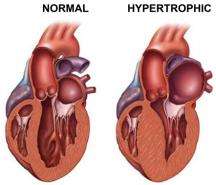
(Medical Xpress) -- It may be easier in the future to test and potentially provide early treatment for the one in 500 people affected by hypertrophic cardiomyopathy.
Heart disease in young people is always alarming, if not devastating: Sometimes without sign or symptom, people in their 30s and 40s, or even as young as in their teens, can suffer from sudden cardiac arrest. Some of these people suffer from a genetic heart disease known as hypertrophic cardiomyopathy, or HCM, which affects one in 500 people.
World-class scientist and cardiologist Jil Tardiff, who recently joined the University of Arizona as a professor in the department of medicine section of cardiology and the department of cellular and molecular medicine in the UA College of Medicine, and the BIO5 Institute, is working to understand HCM and develop preventative treatment. Tardiff holds the Steven M. Gootter Endowed Chair for the Prevention and Treatment of Sudden Cardiac Death at the UA Sarver Heart Center.
"The more we understand HCM, the better we will be able to intervene and potentially push the disease toward a better outcome, which we could never do before," said Tardiff. "That's really the goal here."
Tardiff and her former graduate students at the Albert Einstein College of Medicine Bronx in Bronx, New York, tracked down several mutations that can cause the disease and the symptoms associated with them.
Their research, published in a recent edition of the Journal of Biological Chemistry, represents a big step toward making it easier to know how to treat HCM patients who have these mutations. The study was funded by the National Institutes of Health, Predoctoral Training Grants, the American Heart Association and a Medical Scientist Training Grant.
"Blood flow through the heart is dependent on differences in pressure within the different chambers of the heart," said Tardiff. "Blood flows from high pressure to low." When a heart becomes malformed, as happens with HCM, the pressure gradients in the chambers begin to change, she said. "Sometimes so much that it becomes very hard for the heart to pump blood out."
The disease usually manifests as an enlargement of the left ventricle, the part of the heart that contracts to pump blood, but it can also result in a malformation that causes the heart to look perfectly normal but function abnormally.
Tardiff speculated that incidences of sudden cardiac arrest in athletes, which sometimes lead to early death, could be cases of HCM that potentially were missed in prior electrocardiogram, or EKG, or echocardiographic screenings. If the heart does not increase in size, structural abnormalities might not be perceived on these noninvasive tests.
The excessive stress athletes put on their hearts could lead to sudden cardiac arrest if they were developing HCM and their hearts were no longer able to handle the increased blood flow that comes with exercise.
Exercise makes the heart pump harder and faster, and "these hearts can't do that," said Tardiff. "This disease compromises the ability of the heart to do these normal things by changing its shape and geometry. The pressures start to build up very quickly."
The disease can be symptomless, or people might experience shortness of breath, especially when exercising. "Sometimes people develop symptoms because the heart begins to malfunction," said Tardiff.
Since HCM is strongly genetically correlated, the first thing Tardiff and her colleagues do when they suspect HCM in a patient is look at their family history. "Did anyone in your family die early?" they ask.
"The foundation of cardiology is a good history, both of the patient and their family," said Tardiff. "The key is finding the people first and then making sure that family members with these mutations are followed."
"The earlier we see the patient the better, both in terms of taking care of them and also to understand how this disease develops because less has gone wrong at the early stages of the disease," said Tardiff.
In many cases of sudden death, especially in people older than 50, the cause is most likely coronary artery disease leading to heart attack. But if someone at a younger age died suddenly or suffered an episode of sudden cardiac arrest, that could be an indication of HCM, said Tardiff.
"Unless someone's thinking about the family as a whole, these incidences could be missed," said Tardiff. People often don't think about early deaths that occurred while someone was swimming, for example, or died in a single-vehicle accident, she said. Yet incidents like these could be cases of HCM.
Strongly genetically correlated, HCM is caused by one of at least 800 known mutations in the genetic code of a cellular structure called a sarcomere. The sarcomere is made up of several proteins, and the mutations could tell the body to produce malformed proteins that in turn cause abnormal formation of the heart.
At present, very little is known about the development of the disease, said Tardiff, which is why following young patients who have a genetic mutation for HCM but have not developed it is vital to understand how the disease can develop.
Like many genetically correlated diseases such as breast cancer, having a mutation for HCM does not necessarily mean that a person will develop the disease.
HCM patients and potential patients who have a mutation for HCM but have not developed the disease are followed with repeated noninvasive echocardiographic screenings throughout their lives to make sure that if they develop the disease, it can be caught early and potentially treated preemptively.
Tardiff is working on developing computer models that will be able to predict pathogenic outcomes of different HCM mutations, which will assist doctors to know how to provide treatment.
Tardiff has done much of her work in collaboration with her husband, Steven Schwartz, a theoretical chemist who is joining the UA's department of chemistry. Tardiff said the strongly collaborative atmosphere is one reason she chose to join the UA.
"A great way to push science forward is getting people who are expert in different fields to work together," she said. "I think that can really happen here with great facility."
One of Tardiff's ambitions is to establish an HCM clinic in Tucson in the future. "Hypertrophic cardiomyopathy is a known problem, and there is no HCM clinic or facility in the Southwest," she said. "So why not build one in Tucson?"


