Women have clear melanoma survival advantage over men
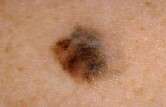
Women with localized melanoma have a consistent advantage over men of approximately 30 percent for survival and progression, according to a study published online April 30 in the Journal of Clinical Oncology.
(HealthDay) -- Women with localized melanoma have a consistent advantage over men of approximately 30 percent for survival and progression, according to a study published online April 30 in the Journal of Clinical Oncology.
Arjen Joosse, M.D., from the Erasmus University Medical Center in the Netherlands, and colleagues examined the female advantage across multiple end points in four phase III randomized adjuvant treatment trials conducted by the European Organization for Research and Treatment of Cancer Melanoma Group. A total of 2,672 patients diagnosed with stage I/II melanoma were included in the analyses.
The researchers identified a consistent and independent survival advantage for women in overall and disease-specific survival (adjusted hazard ratio [aHR], 0.70 and 0.74, respectively), and in time to lymph node and distant metastasis (aHR, 0.70 and 0.69, respectively). The survival advantage for female patients was consistent in both pre- and postmenopausal age groups and across all prognostic subgroups (except possibly for head and neck melanomas).
"Women have a consistent and independent relative advantage in all aspects of the progression of localized melanoma of approximately 30 percent, most likely caused by an underlying biologic sex difference," the authors write.
More information: doi: 10.1200/JCO.2011.38.0584
Journal reference:
Journal of Clinical Oncology
Copyright © 2012 HealthDay. All rights reserved.
-
Survival rates appear lower for scalp and neck melanoma than for other sites
Apr 21, 2008 |
not rated yet |
0
-
Sentinel node biopsy safe, effective in head and neck melanomas
Aug 05, 2011 |
not rated yet |
0
-
New drug, Vemurafenib, doubles survival of metastatic melanoma patients
Mar 01, 2012 |
not rated yet |
0
-
Pelvic lymphadenectomy does not improve survival in early stage endometrial cancer
Nov 25, 2008 |
not rated yet |
0
-
Interleukin-12 indicates survival prospects for melanoma patients
Apr 16, 2008 |
not rated yet |
0
-
Motion perception revisited: High Phi effect challenges established motion perception assumptions
Apr 23, 2013 |
3 / 5 (2) |
2
-
Anything you can do I can do better: Neuromolecular foundations of the superiority illusion (Update)
Apr 02, 2013 |
4.5 / 5 (11) |
5
-
The visual system as economist: Neural resource allocation in visual adaptation
Mar 30, 2013 |
5 / 5 (2) |
9
-
Separate lives: Neuronal and organismal lifespans decoupled
Mar 27, 2013 |
4.9 / 5 (8) |
0
-
Sizing things up: The evolutionary neurobiology of scale invariance
Feb 28, 2013 |
4.8 / 5 (10) |
14
-
How can there be a term called "intestinal metaplasia" of stomach
22 hours ago
-
Pressure-volume curve: Elastic Recoil Pressure don't make sense
May 18, 2013
-
If you became brain-dead, would you want them to pull the plug?
May 17, 2013
-
MRI bill question
May 15, 2013
-
Ratio of Hydrogen of Oxygen in Dessicated Animal Protein
May 13, 2013
-
Alcohol and acetaminophen
May 13, 2013
- More from Physics Forums - Medical Sciences
More news stories
Small cancer risk following CT scans in childhood and adolescence confirmed
The gap between life expectancy in patients with a mental illness and the general population has widened since 1985 and efforts to reduce this gap should focus on improving physical health, suggest researchers in a paper ...
Cancer
11 hours ago |
not rated yet |
0
Changing cancer's environment to halt its spread
By studying the roles two proteins, thrombospondin-1 and prosaposin, play in discouraging cancer metastasis, a trans-Atlantic research team has identified a five-amino acid fragment of prosaposin that significantly reduces ...
Cancer
12 hours ago |
not rated yet |
0
Novel RNA-based classification system for colorectal cancer
A novel transcriptome-based classification of colon cancer that improves the current disease stratification based on clinicopathological variables and common DNA markers is presented in a study published in PLOS Medicine this w ...
Cancer
12 hours ago |
not rated yet |
0
Low radiation scans help identify cancer in earliest stages
A study of veterans at high risk for developing lung cancer shows that low-dose computed tomography (LDCT) can be highly effective in helping clinicians spot tiny lung nodules which, in a small number of patients, may indicate ...
Cancer
14 hours ago |
not rated yet |
0
Poliovirus vaccine trial shows early promise for recurrent glioblastoma
An attack on glioblastoma brain tumor cells that uses a modified poliovirus is showing encouraging results in an early study to establish the proper dose level, researchers at Duke Cancer Institute report.
Cancer
16 hours ago |
not rated yet |
0
Study says empathy plays a key role in moral judgments
Is it permissible to harm one to save many? Those who tend to say "yes" when faced with this classic dilemma are likely to be deficient in a specific kind of empathy, according to a report published in the scientific journal ...
Phthalates: Study links chemicals widely found in plastics, processed food to elevated blood pressure in children, teens
Plastic additives known as phthalates (pronounced THAL-ates) are odorless, colorless and just about everywhere: They turn up in flooring, plastic cups, beach balls, plastic wrap, intravenous tubing and—according to the ...
If you can remember it, you can remember it wrong
(Medical Xpress)—Native peoples in regions where cameras are uncommon sometimes react with caution when their picture is taken. The fear that something must have been stolen from them to create the photo ...
B vitamins could delay dementia
(Medical Xpress)—Despite spending billions of dollars on research and development, drug companies have been unable to come up with effective treatments for dementia and Alzheimer's Disease (AD). Now, A. ...
Insight into the dazzling impact of insulin in cells
Australian scientists have charted the path of insulin action in cells in precise detail like never before. This provides a comprehensive blueprint for understanding what goes wrong in diabetes.
Reducing caloric intake delays nerve cell loss
Activating an enzyme known to play a role in the anti-aging benefits of calorie restriction delays the loss of brain cells and preserves cognitive function in mice, according to a study published in the May ...