Researchers make progress on early detection of resistance to colorectal cancer drugs
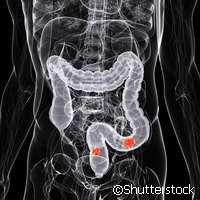
Mutations in a gene called KRAS are causally associated with acquired resistance to targeted therapies for colorectal cancers (CRC), according to new findings from EU-funded researchers from Italy and their research colleagues in the United States.
Writing in the journal Nature, the team explain that patients often develop resistance to colorectal cancer drugs that target epidermal growth factor receptors (EGFRs). The team show in cell-line models that KRAS mutations can cause resistance to an anti-EGFR therapy called cetuximab. These mutations can either be acquired during treatment or may have pre-existed in a small fraction of tumour cells before treatment.
Two of the Italian study authors, Professor Alberto Bardelli from the Institute for Cancer Research and Treatment in Turin and Salvatore Siena from the Falck Division of Medical Oncology at the Niguarda Ca' Granda Hospital in Milan, were supported by the EU-funded COLTHERES ('Modelling and predicting sensitivity to targeted therapies in colorectal cancers') project which received EUR 5,999,300 of funding under the 'Health' Theme of the EU's Seventh Framework Programme (FP7).
Professor Bardelli comments: 'Emergence of secondary resistance to anti EGFR therapies (disease progression) in colorectal cancers is presently established by radiological evaluation. In the paper we describe for the first time that KRAS gene alterations are a mechanism of acquired resistance to anti EGFR therapies in CRCs and occur in approximately 50% of patients.'
The findings in this latest study come at the same time as a second team of researchers publish results demonstrating that resistance mutations in KRAS and other genes are highly likely to be present in a subpopulation of tumour cells before treatment. In this complementary study, also published in Nature, researchers from Austria, China and the United States show that these mutations can be detected months before there is clinical evidence of treatment failure, which could provide a signal to start alternative treatments.
These researchers used mathematical modelling to provide evidence that KRAS mutations pre-exist in tumour cells before treatment with the anti-EGFR treatment panitumumab. This may explain why clinical recurrence usually occurs within the same timescale, about 5 to 7 months after treatment began.
Both studies show that DNA from these mutations can be detected in liquid biopsies several months before radiographic evidence of disease progression is observable. The hope now is that scientists will be able to build on these results by using combination therapy to anticipate and counter resistance before patients relapse.
Professor Bardelli explains that both study groups demonstrate that these mutations can be detected in plasma using an approach called 'liquid biopsy'.
He adds: 'This means that it is now possible to monitor the evolution of the tumour in response to therapy using a blood draw to detect early mutations that drive acquired resistance. The concept of liquid biopsy is an important step forward in the field. It was already known that the measurement of circulating tumour free DNA in the blood of patients could be used to monitor tumour burden. Our work shows that molecular determinants of acquired resistance can be detected several months before the clinical manifestation of relapse.'
Professor Bardelli also notes that it is important to clarify that what they have discovered is 'not a novel way to detect colon cancer' rather they have found a strategy to non-invasively detect early relapse from therapy in colorectal cancer patients.
As well as Italy, COLTHERES, which started in 2011 and runs until 2014, supports researchers from Belgium, the Netherlands, Spain, Switzerland and the United Kingdom, and its central aim is to help develop knowledge in the 'personalised' approach to cancer treatment where the 'right' combination of drugs is administered to the 'right' patients, based on a detailed understanding of their genetic background.
Some of the issues the COLTHERES project addresses are molecular profiling of colon cancer patient samples using multiple omics-based technologies for co-segregating lesions that could impart resistance to existing and emerging targeted therapies, and building and screening predictive in vitro models based on this data to enable the rapid and empirical determination of drug resistance biomarkers.
For more information, please visit:
More information: Misale, S., et al. Nature, 2012. doi:10.1038/nature11156
Journal reference:
Nature
Provided by
CORDIS
-
Advanced cancers destined to recur after treatment with single drugs that 'target' tumor cells: study
Jun 13, 2012 |
not rated yet |
0
-
Colorectal cancer patients with gene mutation show better response to cancer agent
Oct 26, 2010 |
not rated yet |
0
-
KRAS gene mutation and amplification status affects sensitivity to antifolate therapy
Apr 04, 2012 |
not rated yet |
0
-
Study identifies a cause of resistance to colon cancer treatment
Jan 22, 2012 |
not rated yet |
0
-
Predicting drug responsiveness in cancer patients
Jul 26, 2010 |
not rated yet |
0
-
Motion perception revisited: High Phi effect challenges established motion perception assumptions
Apr 23, 2013 |
3 / 5 (2) |
2
-
Anything you can do I can do better: Neuromolecular foundations of the superiority illusion (Update)
Apr 02, 2013 |
4.5 / 5 (11) |
5
-
The visual system as economist: Neural resource allocation in visual adaptation
Mar 30, 2013 |
5 / 5 (2) |
9
-
Separate lives: Neuronal and organismal lifespans decoupled
Mar 27, 2013 |
4.9 / 5 (8) |
0
-
Sizing things up: The evolutionary neurobiology of scale invariance
Feb 28, 2013 |
4.8 / 5 (10) |
14
-
Why is zone 1 in liver more prone to ischemic injury?
16 hours ago
-
How can there be villous adenoma in colon, if there are no villi there
May 22, 2013
-
How can there be a term called "intestinal metaplasia" of stomach
May 21, 2013
-
Pressure-volume curve: Elastic Recoil Pressure don't make sense
May 18, 2013
-
If you became brain-dead, would you want them to pull the plug?
May 17, 2013
-
MRI bill question
May 15, 2013
- More from Physics Forums - Medical Sciences
More news stories
Research identifies a way to make cancer cells more responsive to chemotherapy
Breast cancer characterized as "triple negative" carries a poor prognosis, with limited treatment options. In some cases, chemotherapy doesn't kill the cancer cells the way it's supposed to. New research from Western University ...
Cancer
2 hours ago |
5 / 5 (2) |
0
Mayo Clinic genomic analysis lends insight to prostate cancer
Mayo Clinic researchers have used next generation genomic analysis to determine that some of the more aggressive prostate cancer tumors have similar genetic origins, which may help in predicting cancer progression. The findings ...
Cancer
2 hours ago |
not rated yet |
0
When oxygen is short, EGFR prevents maturation of cancer-fighting miRNAs
Even while being dragged to its destruction inside a cell, a cancer-promoting growth factor receptor fires away, sending signals that thwart the development of tumor-suppressing microRNAs (miRNAs) before it's dissolved, researchers ...
Cancer
3 hours ago |
not rated yet |
0
|
Improved chemo regimen for childhood leukemia may offer high survival, no added heart toxicity
Treating pediatric leukemia patients with a liposomal formulation of anthracycline-based chemotherapy at a more intense-than-standard dose during initial treatment may result in high survival rates without causing any added ...
Cancer
7 hours ago |
not rated yet |
0
Protein preps cells to survive stress of cancer growth and chemotherapy
Scientists have uncovered a survival mechanism that occurs in breast cells that have just turned premalignant-cells on the cusp between normalcy and cancers-which may lead to new methods of stopping tumors.
Cancer
8 hours ago |
not rated yet |
0
|
Glucosamine supplements tied to risk of eye condition
(HealthDay)—Glucosamine supplements that millions of Americans take to help treat hip and knee osteoarthritis may have an unexpected side effect: They may increase risk for developing glaucoma, a small ...
Controlling mood through the motions of mitochondria
(Medical Xpress)—Regulating the distribution of power in neurons is done by a system that makes the national electric grid look simple by comparison. Each neuron has several thousand mitochondria confined ...
Scientists discover molecule triggers sensation of itch
Scientists at the National Institutes of Health report they have discovered in mouse studies that a small molecule released in the spinal cord triggers a process that is later experienced in the brain as ...
Multiple research teams unable to confirm high-profile Alzheimer's study
Teams of highly respected Alzheimer's researchers failed to replicate what appeared to be breakthrough results for the treatment of this brain disease when they were published last year in the journal Science.
Researchers find common childhood asthma unconnected to allergens or inflammation
Little is known about why asthma develops, how it constricts the airway or why response to treatments varies between patients. Now, a team of researchers at Weill Cornell Medical College, Columbia University Medical Center ...
Motion quotient: IQ predicted by ability to filter motion (w/ video)
A brief visual task can predict IQ, according to a new study. This surprisingly simple exercise measures the brain's unconscious ability to filter out visual movement. The study shows that individuals whose ...