Europe tackles ethics of biobanks
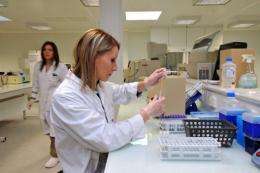
A technician conducts medical research in March 2012. Collections of human biological samples used in medical research should be governed by clear rules that safeguard ethics while advancing knowledge, scientists said Wednesday at a Council of Europe symposium.

Collections of human biological samples used in medical research should be governed by clear rules that safeguard ethics while advancing knowledge, scientists said Wednesday at a Council of Europe symposium.

The council, a 47-country organisation founded to promote democracy and human rights in Europe, plans to release new recommendations on such collections, known as biobanks, after this week's meeting of experts at its headquarters in Strasbourg, France.

The text will replace a set of recommendations adopted in 2006.

Biobanks "are now recognised as very important to advance research," said Laurence Lwoff, secretary of the council's bioethics committee.

"A consensus is emerging on the need for a coherent framework on biobanks, between restrictive legal measures on and less strict codes of conduct to allow them to develop," she added.

Key questions include protecting donors' and addressing what samples can be used for.

At the moment, not all the council's member states follow the same rules on getting donors' consent or informing them what becomes of their samples.

"We need to establish confidence with the donors, and convince them that biobanks are a ," said Christian Chabanon, head of the Paoli-Calmettes Institute's cancer in the French city of Marseille, home to almost 250,000 specimens.

Chabanon said months or years can pass before a sample is used, so initial consent given by donors should specify if the samples would be used only for a specific type of research or for all kinds of research.

add to favorites email to friend print save as pdf

Related Stories

Public prefers limited informed consent process for biobanks

Jun 29, 2011

Biobanks are repositories for tissue samples, usually in the form of blood or saliva or leftover tissue from surgical procedures. These samples are collected and used for future research, including genetic research. They ...

Keeping DNA 'all in the family'

Oct 06, 2009

Scientists look for clues about therapies and cures for life-threatening childhood illnesses in children's DNA -- it seems only logical to do so. But the decision as to who should have access to DNA samples from children ...

Recommended for you

Hormonal therapy for transsexualism safe and effective

20 hours ago

Hormonal therapy for transsexual patients is safe and effective, a multicenter European study indicates. The results will be presented Saturday at The Endocrine Society's 95th Annual Meeting in San Francisco.

Royalty Pharma lets Elan takeover bid expire

Jun 18, 2013

Royalty Pharma has let its latest takeover bid for Irish drugmaker Elan lapse as it decided against pressing ahead with a court challenge of a requirement that it withdraw the offer.

FDA approves new silicone breast implants

Jun 17, 2013

(HealthDay)—MemoryShape breast implants have been approved by the U.S. Food and Drug Administration for breast augmentation in women 22 and older, and for breast reconstruction, the FDA said Friday.

User comments

More news stories

Taxing unhealthy food spurs people to buy less

Labeling foods and beverages as less-healthy and taxing them motivates people to make healthier choices, finds a recent study in the American Journal of Preventive Medicine. When faced with a 30 percent tax on ...

Renewed hope in a once-abandoned cancer drug class

Could drugs that block the body's system for repairing damage to the genetic material DNA become a boon to health? As unlikely as it may seem, those compounds are sparking optimism as potential treatments ...

New technologies for retinal therapies

The future of the investigation and treatment of retinal disorders is already here at the MedUni Vienna: in the new Christian Doppler "OPTIMA" (Ophthalmic Image Analysis) laboratory headed by Ursula Schmidt-Erfurth, ...

Protalix signs supply deal with Brazilian govt

Shares of Protalix BioTherapeutics Inc. jumped in premarket trading Wednesday after the drug developer announced a deal that requires the Brazilian government to buy at least $280 million of the company's Gaucher disease ...

Laughing gas does not increase heart attacks

(Medical Xpress)—Nitrous oxide—best known as laughing gas—is one of the world's oldest and most widely used anesthetics. Despite its popularity, however, experts have questioned its impact on the risk ...