MicroRNAs link the pathways that control growth during animal development and in disease
June 20, 2012 in Medical research
Credit: Stockphoto.com/arlindo71
Cellular mechanisms that enable healthy growth can spiral out of control and give rise to cancer. For this reason, signal transduction pathways that underlie cell growth are tightly regulated, with multiple checkpoints and extensive cross-talk in between signal cascades that drive cell division and differentiation. Stephen Cohen and co-workers at the A*STAR Institute of Molecular and Cell Biology have identified a new link between growth controlling microRNAs and this cellular circuitry.
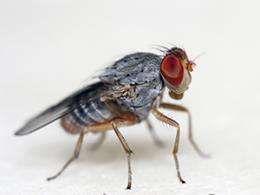
MicroRNAs (miRNAs) bind complementary nucleotide sequences on specific target messenger RNA molecules to suppress their expression of proteins. One of these miRNAs, bantam, is known to regulate cell proliferation and survival. Cohen and co-workers set out to determine how this molecule contributes to tissue development in fruit flies.
Growth control pathways are often complicated. The epidermal growth factor (EGF) signaling pathway is important in growth control and in cancer, EGF receptor (EGFR) sends signals into cells that control many aspects of cellular function, including gene expression. One of the ways EGFR signals is by reducing expression of capicua, a protein that inhibits other growth-promoting genes.
When Cohen and his team experimentally reduced capicua levels, they observed a boost in bantam expression, flagging bantam as a target of capicua-mediated inhibition. More importantly, they learned that bantam in turn feeds back to inhibit expression of capicua. The end result is a negative feedback loop that can accelerate the activation or inactivation of EGFR-mediated growth signals for example, as bantam level rises, capicua level drops, and then bantam level rises even faster to promote cell growth.
The researchers also uncovered an additional layer of complexity in the story. They have previously found that a separate growth regulatory and cancer pathway, triggered by the protein Hippo, also modulates the level of bantam. This places bantam as a link between the Hippo and EGFR pathways; that is, a microRNA could mediate the flow of information between these pathways, so that each can influence the effectiveness of the other.
Regulation of bantam by both EGFR and Hippo reveals an unexpected link between these two growth-regulatory pathways, explains Cohen. EGFR activity can change sensitivity to Hippo activity, and vice versa.
A better understanding of the connections between these pathways could illuminate potential triggers for tumorigenesis, although the connection between fly and human is not a straight line. The bantamcapicua connection is not conserved in humans, explains Cohen. However, we have identified other new growth regulatory targets of bantam and are now studying their roles as tumor suppressors.
More information: Herranz, H., et al. Mutual repression by bantam miRNA and Capicua links the EGFR/MAPK and Hippo pathways in growth control. Current Biology 22, 17 (2012).
Journal reference:
Current Biology
Provided by
Agency for Science, Technology and Research (A*STAR), Singapore
-
A switch between life and death
Aug 28, 2006 |
not rated yet |
0
-
Two pathways in the cell interact to spur tumor growth: study
Mar 28, 2011 |
not rated yet |
0
-
Using the structure of the epidermal growth factor receptor to fight cancer
Sep 13, 2010 |
not rated yet |
0
-
Fruit fly protein acts as decoy to capture tumor growth factors
May 28, 2008 |
not rated yet |
0
-
New tumor suppressor gene identified
Feb 13, 2012 |
not rated yet |
0
-
Motion perception revisited: High Phi effect challenges established motion perception assumptions
Apr 23, 2013 |
3 / 5 (2) |
2
-
Anything you can do I can do better: Neuromolecular foundations of the superiority illusion (Update)
Apr 02, 2013 |
4.5 / 5 (11) |
5
-
The visual system as economist: Neural resource allocation in visual adaptation
Mar 30, 2013 |
5 / 5 (2) |
9
-
Separate lives: Neuronal and organismal lifespans decoupled
Mar 27, 2013 |
4.9 / 5 (8) |
0
-
Sizing things up: The evolutionary neurobiology of scale invariance
Feb 28, 2013 |
4.8 / 5 (10) |
14
-
Why is zone 1 in liver more prone to ischemic injury?
12 hours ago
-
How can there be villous adenoma in colon, if there are no villi there
May 22, 2013
-
How can there be a term called "intestinal metaplasia" of stomach
May 21, 2013
-
Pressure-volume curve: Elastic Recoil Pressure don't make sense
May 18, 2013
-
If you became brain-dead, would you want them to pull the plug?
May 17, 2013
-
MRI bill question
May 15, 2013
- More from Physics Forums - Medical Sciences
More news stories
Study reveals new mechanism for estrogen suppression of liver lipid synthesis
By discovering the new mechanism by which estrogen suppresses lipid synthesis in the liver, UC Irvine endocrinologists have revealed a potential new approach toward treating certain liver diseases.
Medical research
49 minutes ago |
not rated yet |
0
|
MRI-based measurement helps predict vascular disease in the brain
Aortic arch pulse wave velocity, a measure of arterial stiffness, is a strong independent predictor of disease of the vessels that supply blood to the brain, according to a new study published in the June issue the journal ...
Medical research
53 minutes ago |
not rated yet |
0
Antibiotics: A new understanding of sulfonamide nervous system side effects
Since the discovery of Prontosil in 1932, sulfonamide antibiotics have been used to combat a wide spectrum of bacterial infections, from acne to chlamydia and pneumonia. However, their side effects can include serious neurological ...
Medical research
2 hours ago |
not rated yet |
0
|
Scientists discover molecule triggers sensation of itch
Scientists at the National Institutes of Health report they have discovered in mouse studies that a small molecule released in the spinal cord triggers a process that is later experienced in the brain as the sensation of ...
Medical research
2 hours ago |
5 / 5 (1) |
0
|
Discarded immune cells induce the relocation of stem cells
Spanish researchers have discovered that the daily clearance of neutrophils from the body stimulates the release of hematopoietic stem cells from the bone marrow into the bloodstream, according to a report published today ...
Medical research
4 hours ago |
5 / 5 (1) |
0
Diabetes' genetic underpinnings can vary based on ethnic background, studies say
Ethnic background plays a surprisingly large role in how diabetes develops on a cellular level, according to two new studies led by researchers at the Stanford University School of Medicine.
Scientists discover cinnamon compounds' potential ability to prevent Alzheimer's
Cinnamon: Can the red-brown spice with the unmistakable fragrance and variety of uses offer an important benefit? The common baking spice might hold the key to delaying the onset of –– or warding off ...
Ferrets, pigs susceptible to H7N9 avian influenza virus
Chinese and U.S. scientists have used virus isolated from a person who died from H7N9 avian influenza infection to determine whether the virus could infect and be transmitted between ferrets. Ferrets are often used as a mammalian ...
Death rates decline for advanced heart failure patients, but outcomes are still not ideal
UCLA researchers examining outcomes for advanced heart-failure patients over the past two decades have found that, coinciding with the increased availability and use of new therapies, overall mortality has decreased and sudden ...
Second child contracts polio in Pakistan's Waziristan
A second child has contracted polio in a restive Pakistani tribal region near the Afghan border after the Taliban banned vaccinations there nearly a year ago, a UN official said Thursday.
McDonald's can't shake criticism about nutrition
(AP)—McDonald's once again faced criticism that it's a purveyor of junk food that markets to children at its annual shareholder meeting Thursday.