New guidelines issued for biopsy use in melanoma patients
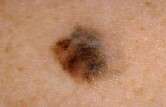
Expert panel said sentinel lymph node biopsy to show if cancer has spread could be used more consistently.
(HealthDay) -- Sentinel lymph node biopsy -- a minimally invasive surgical technique that lets doctors see whether cancer has spread -- should be performed on patients with melanoma tumors of intermediate thickness and may also be appropriate for thick melanoma tumors, according to new guidelines released Monday.
The American Society of Clinical Oncology (ASCO) and the Society for Surgical Oncology issued the evidence-based recommendations to clarify the use of this type of biopsy, which they said has been inconsistent.
A sentinel lymph node is the first lymph node to which cancer cells are most likely to spread from the original tumor, according to the U.S. National Cancer Institute. There can be more than one sentinel lymph node. During a biopsy, the node is identified, removed and examined for cancer cells.
"When used for the right patients at the right time, sentinel lymph node biopsy is one of our best tools for personalizing melanoma treatment, and for sparing patients from unnecessary procedures or therapies," study lead author Dr. Sandra Wong, co-chair of the guideline panel and an assistant professor of surgery at the University of Michigan, said in an ASCO news release.
The panel of 14 clinical and methodological experts from various disciplines reviewed 73 studies, involving 25,000 patients, that were published over the past two decades. After examining this evidence, the panel made the following recommendations:
- The procedure is recommended for all patients with melanoma tumors between 1 millimeter (mm) and 4 mm (intermediate thickness). Sentinel lymph node biopsy detects cancer in the sentinel node in about 18 percent to 26 percent of these patients, the panel noted.
- Sentinel lymph node biopsy may be beneficial to patients with melanoma tumors greater than 4 mm ("thick"). The panel noted, however, that few studies focus on the use of the biopsy in patients with thick melanomas.
- The panel found there is not enough evidence to recommend routine sentinel lymph node biopsy for patients with melanoma tumors less than 1 mm ("thin"). The experts added that thin melanomas can usually be cured through surgical removal of the primary tumor. However, the biopsy could be considered in patients with thin melanoma who have certain high-risk factors, such as rapidly dividing cancer cells.
Patients with a positive sentinel lymph node biopsy should undergo complete removal of the remaining lymph nodes, the experts added. This procedure has been shown to prevent the spread of cancer.
The panel also advised doctors to discuss sentinel lymph node biopsy, particularly the procedure's potential risks and benefits, with their patients as part of the treatment-planning process.
"Our rapidly growing understanding of the biology of melanoma is driving development of more effective treatments with fewer side effects for patients," panel co-chair Dr. Gary Lyman, a professor of medicine and director of comparative effectiveness and outcomes research at Duke University School of Medicine and the Duke Cancer Institute, said in the news release.
"But to take advantage of this progress, we need to know the true extent of the disease from the start. This guideline will help ensure that sentinel lymph node biopsy is used appropriately whenever it can provide that vital information while avoiding unnecessary procedures in patients who are unlikely to benefit."
Information on the guidelines was published online by ASCO.
More information:
The U.S. National Cancer Institute has more about melanoma.
Copyright © 2012 HealthDay. All rights reserved.
-
Sentinel node biopsy safe, effective in head and neck melanomas
Aug 05, 2011 |
not rated yet |
0
-
Breast cancer patients with positive ultrasound guided axillary node biopsy need dissection
May 03, 2012 |
not rated yet |
0
-
Microbubble ultrasound and breast biopsies
Feb 01, 2011 |
not rated yet |
0
-
Largest-ever breast cancer surgery study published
Sep 22, 2010 |
not rated yet |
0
-
Rare skin tumor responds better to treatment than melanoma
Feb 02, 2009 |
not rated yet |
0
-
Motion perception revisited: High Phi effect challenges established motion perception assumptions
Apr 23, 2013 |
3 / 5 (2) |
2
-
Anything you can do I can do better: Neuromolecular foundations of the superiority illusion (Update)
Apr 02, 2013 |
4.5 / 5 (11) |
5
-
The visual system as economist: Neural resource allocation in visual adaptation
Mar 30, 2013 |
5 / 5 (2) |
9
-
Separate lives: Neuronal and organismal lifespans decoupled
Mar 27, 2013 |
4.9 / 5 (8) |
0
-
Sizing things up: The evolutionary neurobiology of scale invariance
Feb 28, 2013 |
4.8 / 5 (10) |
14
-
Why is zone 1 in liver more prone to ischemic injury?
May 23, 2013
-
How can there be villous adenoma in colon, if there are no villi there
May 22, 2013
-
How can there be a term called "intestinal metaplasia" of stomach
May 21, 2013
-
Pressure-volume curve: Elastic Recoil Pressure don't make sense
May 18, 2013
-
If you became brain-dead, would you want them to pull the plug?
May 17, 2013
-
MRI bill question
May 15, 2013
- More from Physics Forums - Medical Sciences
More news stories
New fluorescent tools for cancer diagnosis
In recent years, microRNAs (miRNAs) and other non-coding RNAs are small molecules that help control the expression of specific proteins. In recent years they have emerged as disease biomarkers. miRNA profiles have been used ...
Cancer
May 24, 2013 |
not rated yet |
0
Modulating the immune system to combat metastatic cancer
Cancer cells spread and grow by avoiding detection and destruction by the immune system. Stimulation of the immune system can help to eliminate cancer cells; however, there are many factors that cause the immune system to ...
Cancer
May 24, 2013 |
5 / 5 (1) |
0
Scientists put bowel cancer under the microscope
Researchers from London's Kingston University have begun a two-year study which could help prolong the lives of people with colorectal tumours.
Cancer
May 24, 2013 |
5 / 5 (1) |
0
Researcher identifies breast cancer fighting hormone
Transformative research from Western University has identified new hormones in the body which may suppress breast cancer and stimulate the regression of breast tumors.
Cancer
May 24, 2013 |
5 / 5 (2) |
0
Ground breaking cancer research finds immune system link
(Medical Xpress)—Curtin University researchers have found evidence that targeting specific cells in the body can reverse the effects of cancer on the immune system.
Cancer
May 24, 2013 |
5 / 5 (4) |
0
First drug to improve heart failure mortality in over a decade
Coenzyme Q10 decreases all cause mortality by half, according to the results of a multicentre randomised double blind trial presented today at Heart Failure 2013 congress. It is the first drug to improve heart failure mortality ...
Seniors more likely to crash when driving with pet, study finds
(HealthDay)—Animals make great companions for senior citizens, but elderly people who always drive with a pet in the car are far more likely to crash than those who never drive with a pet, researchers have ...
Heart failure accelerates male 'menopause'
Heart failure accelerates the aging process and brings on early andropausal syndrome (AS), according to research presented today at the Heart Failure Congress 2013. AS, also referred to as male 'menopause', was four times ...
Death highest in heart failure patients admitted in January, on Friday, and overnight
Mortality and length of stay are highest in heart failure patients admitted in January, on Friday, and overnight, according to research presented today at the Heart Failure Congress 2013. The analysis of nearly 1 million ...
Feds fight morning-after pill age ruling in NY
(AP)—Department of Justice lawyers have again asked a federal appeals court in New York to delay lifting age restrictions and prescription requirements on an emergency contraceptive popularly known as the morning-after ...
New immune system discovered
(Medical Xpress)—A research team, led by Jeremy Barr, a biology post-doctoral fellow, unveils a new immune system that protects humans and animals from infection.