Research shows nerve stimulation can reorganize brain
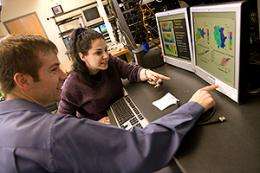
(Medical Xpress) -- UT Dallas researchers recently demonstrated how nerve stimulation paired with specific experiences, such as movements or sounds, can reorganize the brain. This technology could lead to new treatments for stroke, tinnitus, autism and other disorders.
In a related paper, UT Dallas neuroscientists showed that they could alter the speed at which the brain works in laboratory animals by pairing stimulation of the vagus nerve with fast or slow sounds.
A team led by Dr. Robert Rennaker and Dr. Michael Kilgard looked at whether repeatedly pairing vagus nerve stimulation with a specific movement would change neural activity within the laboratory rats’ primary motor cortex. To test the hypothesis, they paired the vagus nerve stimulation with movements of the forelimb in two groups of rats. The results were published in a recent issue of Cerebral Cortex.
After five days of stimulation and movement pairing, the researchers examined the brain activity in response to the stimulation. The rats who received the training along with the stimulation displayed large changes in the organization of the brain’s movement control system. The animals receiving identical motor training without stimulation pairing did not exhibit any brain changes, or plasticity.
People who suffer strokes or brain trauma often undergo rehabilitation that includes repeated movement of the affected limb in an effort to regain motor skills. It is believed that repeated use of the affected limb causes reorganization of the brain essential to recovery. The recent study suggests that pairing vagus nerve stimulation with standard therapy may result in more rapid and extensive reorganization of the brain, offering the potential for speeding and improving recovery following stroke, said Rennaker, associate professor in The University of Texas at Dallas’ School of Behavioral and Brain Sciences
“Our goal is to use the brain’s natural neuromodulatory systems to enhance the effectiveness of standard therapies,” Rennaker said. “Our studies in sensory and motor cortex suggest that the technique has the potential to enhance treatments for neurological conditions ranging from chronic pain to motor disorders. Future studies will investigate its effectiveness in treating cognitive impairments.”
Since vagus nerve stimulation has an excellent safety record in human patients with epilepsy, the technique provides a new method to treat brain conditions in which the timing of brain responses is abnormal, including dyslexia and schizophrenia.
In another paper in the journal Experimental Neurology, Kilgard led a team that paired vagus nerve stimulation with audio tones of varying speeds to alter the rate of activity within the rats’ brains. The team reported that this technique induced neural plasticity within the auditory cortex, which controls hearing.
The UT Dallas researchers are working with a device developed by MicroTransponder, a biotechnology firm affiliated with the University. MicroTransponder currently is testing a vagus nerve stimulation therapy on human patients in Europe in hopes of reducing or eliminating the symptoms of tinnitus, the debilitating disorder often described as “ringing in the ears.”
“Understanding how brain networks self-organize themselves is vitally important to developing new ways to rehabilitate patients diagnosed with autism, dyslexia, stroke, schizophrenia and Alzheimer’s disease,” said Kilgard, a professor of neuroscience.
Treatment of neurological disease is currently limited to pharmacological, surgical or behavioral interventions. But this recent research indicates it may be possible to effectively manipulate the plasticity of the human brain for a variety of purposes. Patients then could benefit from brain activity intentionally directed toward rebuilding lost skills.
If subsequent studies confirm the UT Dallas findings, human patients may have access to more efficient therapies that are minimally invasive and avoid long-term use of drugs.


