Parents of severely disabled kids say they enrich their lives
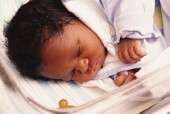
(HealthDay) -- When Vanessa Hernandez's sixth child was born, she knew right away her daughter was different.
Hernandez's pediatrician wept as she told her the diagnosis. The baby had trisomy 13, a devastating chromosomal abnormality. Most children die before their first birthday and have serious mental and physical disabilities, including heart and breathing problems.
Hernandez's daughter, now 19 months old, hasn't had an easy time. She's had seizures, has a tracheotomy to assist her with breathing and has been fed mostly through a feeding tube.
Despite the hurdles, Isabel is a source of great joy to her family, Hernandez said. Isabel smiles and laughs frequently, and there are no indications she is in pain. Her parents celebrate small achievements. Isabel's five siblings love her fiercely. "She gets the most love in the house. They are very protective of her. Nobody leaves the room without giving her a hug and a kiss," Hernandez said.
Though many people believe that raising child with severe birth defects would be more than they could bear, many parents of children with severe disabilities say that couldn't be further from the truth.
In a new study, nearly all -- 97 percent -- of 332 parents of children with trisomy 13 or trisomy 18, another chromosomal abnormality that can cause similarly severe problems and shortened lifespans, described their child as "happy." Parents also said that no matter how short their lives, their child enriched their family.
"Despite the fact that often these children live less than a year and they are disabled, families find they are happy children. They find joy in their children. They enrich the family, enrich the couple and the child's life had meaning," said study author Dr. Annie Janvier, an associate professor of pediatrics and clinical ethics at University of Montreal. "None of the parents said they regretted not terminating the pregnancy. None said the life was unworthy of living. All of the parents reported the quality of life of their child was a good quality of life."
But that's not always what doctors tell parents to expect, according to the study in the August issue of Pediatrics. Many parents -- 87 percent -- were told their child's condition was "incompatible with life," 57 percent were told their child would live a life of suffering, 50 percent were told their child would be a "vegetable" and 23 percent were told their child would "ruin their family."
The medical community, including the American Academy of Pediatrics Neonatal Resuscitation Program textbook, recommends against resuscitation for trisomy 13 and 18.
Dr. Roya Samuels, a pediatrician at Cohen Children's Medical Center in New Hyde Park, N.Y., called the research "eye-opening." Physicians need to present objective information and statistics on what parents should expect with trisomy 13, 18 or other congenital conditions for that matter. But those numbers, she added, need to be tempered with compassion, an understanding that quality of life is highly subjective and that parents may readjust their own beliefs about what constitutes quality of life after the birth of their child.
"There are a lot of lessons for pediatricians and health care professionals to learn. It highlights the divide that there is between the physician and the patient," Samuels said. "Sometimes the physician can be a little bit too objective, a little bit too harsh with statistics and invoking the element of fear when it comes to delivering news of a diagnosis like trisomy 13 or 18."
Rick Santorum, who recently ran for president, spoke about his youngest daughter, Bella, who was diagnosed at 5 days old with trisomy 18, in a campaign video. "We felt blessed that we had Bella, yet we were told by the medical community, 'Why do anything? Just let her go.'"
Santorum went on to say, "We felt we owed her the opportunity, the chance to do as well as she could. Over the past few years, she has been a wonderful, joyful, center of the universe, if you will, for our family."
That sentiment isn't unusual, said Barbara Farlow, a study co-author and mother of nine from Toronto who gave birth to a daughter with trisomy 13 in 2005. The condition was detected by a prenatal test at 21 weeks. An engineer and financial analyst, Farlow considered terminating the pregnancy -- she had a busy life with five typically developing kids who excelled in school and sports.
But she and her husband researched the condition. They chose not to terminate after meeting families who had children with the same diagnosis, and seeing the love they had for their children.
"Doctors have controlled all the information about these conditions. Many would say, 'Your child will be a vegetable. This will ruin your life. Your child will live a life of suffering, and parents made decisions based on that," Farlow said. "A lot of people equate disability with suffering. Not necessarily 'pain' suffering but if you can't do what other people do, then you're suffering."
"With the Internet and the development of online parent support groups, parents have been able to acquire a different view than what the doctor described to them," Farlow said.
Farlow's daughter, Annie, lived 80 days. During her life, she helped teach the family compassion, patience and to appreciate every day, Farlow said. "Before you're in this type of situation, it's easy to make a passing judgment about what lives are worth living," she said. "That changes when you have a life placed in your hands."
The stories of these families are uplifting, and give pediatricians and parents facing difficult decisions a point of view many may not have considered, Samuels said. But it's also important for families to realize that caring for a child with trisomy 13 and 18 is a tough road, financially and emotionally for parents, while children may be in and out of the ICU. And though some kids beat the odds, many parents of children with trisomy 13 and 18, which involves an extra copy of chromosome 13 or 18, face the grief of burying their child.
"We have children with these conditions, and the parents go through hell at times," she said.
Those sorts of worries don't escape Hernandez, who lives on Long Island, N.Y. She urges parents to reach out to online support groups like the one she runs, Living with Trisomy 13. At least 18 other such groups exist, according to background information in the article.
"I don't want to tell anybody any pipe dream. It's not all sugarplum fairies. The first year my other children basically didn't have parents. My house didn't get cleaned and the laundry didn't get done. It was all about Isabel," she said. "But we want people to know the real story. To give them both sides, and let them make a decision. Don't try to scare them into something."
"My life is better because of Isabel. All of our lives are better because of her."
More information: Lucile Packard Children's Hospital at Stanford has more on trisomy 13 and 18.
Copyright © 2012 HealthDay. All rights reserved.


