Daily aspirin may help fight prostate cancer, but not breast cancer
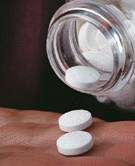
(HealthDay)—Two new studies paint a complex portrait of aspirin's impact on cancer risk and mortality, with one suggesting the drug may lower the risk of dying from prostate cancer and the other seeing no significant drop in the risk for developing breast cancer.
"These were different types of studies," explained Dr. Stanley Liauw, author of the prostate cancer study and an associate professor in the department of radiation and cellular oncology at the University of Chicago Medical Center. "The breast cancer group was looking at how aspirin might affect new formations of cancer, while we looked at how it might inhibit cancer progression."
"And we're also talking about different disease sites," he added, "which may involve different pathways. So, it's possible that aspirin might affect these pathways differently."
"But there is some rationale, based on previous research, for why we might expect to see an aspirin benefit," Liauw added. "And for our study looking at prostate cancer death we actually saw a pretty dramatic effect."
Both findings are published online Aug. 27 in the Journal of Clinical Oncology.
The breast cancer research team, led by Dr. Xuehong Zhang, an instructor in medicine at Brigham and Women's Hospital in Boston, pointed out that the disease is the most frequently diagnosed cancer among American women.
With previous research suggesting that routine aspirin and/or nonsteroidal anti-inflammatory drug (NSAID) use reduced the risk for colon cancer (some of which was conducted by Zhang's team), the Harvard researchers set out to see whether either might have a similar impact on breast cancer.
Between 1980 and 2008, the team tracked nearly 85,000 postmenopausal women, all of whom were working as registered nurses when the study first launched.
Nearly every two years, the women completed questionnaires on their medical histories and lifestyle. All were asked about their routine use of aspirin and/or other NSAIDS.
Over the course of three decades, more than 4,700 of the women developed some form of invasive breast cancer. Yet, Zhang's team found that neither regular aspirin nor other NSAIDs had any significant impact on overall breast cancer risk, regardless of how much they were used.
Meanwhile, Liauw and his team explored the potential benefit of aspirin use among nearly 6,000 men diagnosed with, and undergoing treatment for, prostate cancer.
The men were drawn from 41 different health centers across the United States, and all had undergone either surgery (radical prostatectomy) or radiotherapy.
The team noted that 37 percent of the patients were already taking some type of anticoagulant (aspirin, warfarin (Coumadin), clopidogrel (Plavix), and/or enoxaparin). No aspirin or other anticoagulant was prescribed once the study began.
After more than 10 years of follow-up, the team found that among those taking some type of anticoagulant, the risk of dying from prostate cancer was significantly lower than it was among those not taking one.
Further analysis revealed that most of the benefit came from aspirin use, which Liauw said was responsible for a 57 percent reduction in the risk of prostate cancer death.
Because dosage information was not collected, no conclusions could be drawn about exactly how much aspirin was most beneficial. However, the team noted that the protective effect was strongest among patients with particularly "high-risk" disease.
Both study teams said that more research is needed to confirm their respective findings. And neither study proved a cause-and-effect relationship between aspirin use and its effect on cancer.
"So, at this point, this is just hypothesis-generating," Liauw said. "It may be true, but it needs to be tested more formally."
Zhang added that although aspirin showed little benefit with respect to breast cancer risk, he doesn't see any cancer-related downside to their long-term use. However, for women seeking to reduce their breast cancer risk, "the best strategies remain to maintain an ideal weight, exercise, avoid long-term use of postmenopausal hormones, and minimize alcohol intake," he noted.
Two experts who wrote an accompanying editorial in the journal suggested that aspirin might make a difference among very specific subgroups of people.
"When looking at aspirin's impact on breast cancer risk, looking at all-comers and including all sorts of people who take anti-inflammatory drugs for all sorts of reasons might miss the kernel," said editorial lead author Dr. Clifford Hudis, chief of the breast cancer medicine service at Memorial Sloan-Kettering Cancer Center, in New York City. "That is to say that there may very well be a subset of people for whom taking aspirin can be of protective benefit "
"But," he added, "the answer always is and remains that you should talk to your doctor about this before deciding to take or not take anything, including aspirin, because none of these studies prove anything definitively one way or another."
Editorial co-author Dr. Andrew Dannenberg, director of the Weill Cornell Cancer Center, agreed.
"It continues to seem to me that aspirin does have a use for reducing the risk for certain cancers," he said. "However, aspirin also has side effects—peptic ulcer disease and hemorrhagic stroke, which are real diseases. And therefore I'm still reluctant at this time to make specific recommendations that people take aspirin for the prevention for cancer. And I believe that prospective trials that better define dose and duration are required before anyone should make definitive recommendations for the use of aspirin in this context."
More information: For more on aspirin and cancer, visit the U.S. National Cancer Institute.
Copyright © 2012 HealthDay. All rights reserved.


